TL;DR
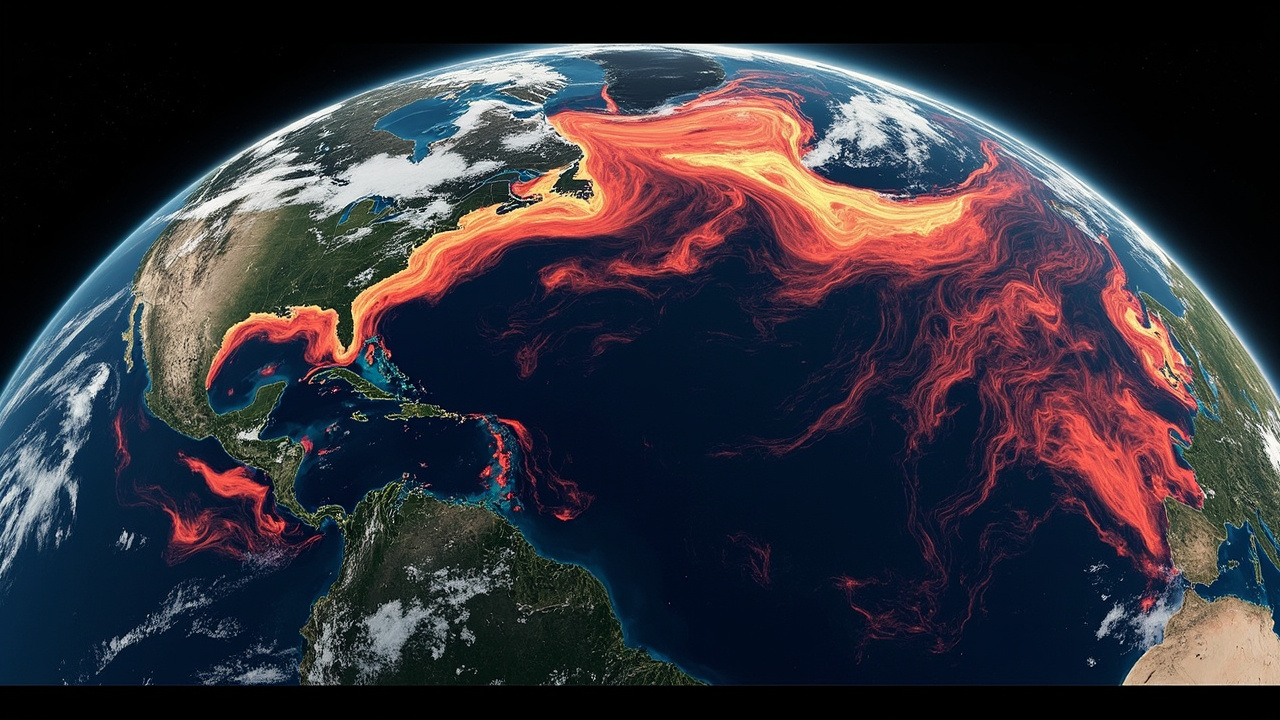
The WMO's annual report found Earth's energy imbalance at its highest since records began in 1960 — with 90% of the excess heat absorbed by oceans.
MSM Perspective
UN News led with the 11-hottest-years finding; mainstream coverage has been thin relative to the report's significance, partly crowded out by war coverage.
X Perspective
Climate scientists on X call the energy imbalance the report's most important finding; skeptics cite a preprint claiming the imbalance is statistically zero.
The World Meteorological Organization released its annual State of the Global Climate report this week, and the headline number is one most people have never encountered: Earth's energy imbalance has reached its highest level in the 65-year observational record. [1]
The concept is simple in principle and terrifying in scale. Earth receives energy from the sun and radiates energy back into space. When those two quantities are equal, the climate is stable. When more energy arrives than departs, the planet warms. The WMO report found that this imbalance — the gap between incoming and outgoing energy — reached a new high in 2025, meaning the planet is accumulating heat faster than at any point since measurements began in 1960.
Ninety percent of that excess energy is absorbed by the oceans. This is not a metaphor. The ocean is a heat sink of extraordinary capacity, and it has been absorbing the consequences of atmospheric greenhouse gas concentrations for decades. The result is warmer water at greater depths, altered ocean circulation patterns, and accelerating ice melt at both poles. Three billion people depend directly on marine and coastal ecosystems for food and livelihood. The heat entering those systems is not an abstraction for them.
The report's other findings reinforce the trend line. The years 2015 through 2025 are now the eleven hottest years in the instrumental record, a streak that is statistically incompatible with natural variability. Carbon dioxide, methane, and nitrous oxide concentrations are all at all-time highs, with 2025 recording the largest year-on-year increase in CO2 since monitoring began. The three major greenhouse gases are rising simultaneously, each reinforcing the others.
The energy imbalance metric matters because it is more fundamental than surface temperature. Temperature is a symptom. The energy imbalance is the disease. A planet that is accumulating more energy than it can radiate is a planet whose climate will continue changing regardless of what surface temperatures do in any given year. A cool year does not mean the imbalance has resolved. It means the ocean absorbed the heat instead of the atmosphere.
The WMO designated the energy imbalance as a key global climate indicator for the first time this year — an acknowledgment that the metric belongs alongside temperature, sea level, and ice extent as a measure of planetary health. The designation is bureaucratic. The physics it describes is not.
The report arrived during a week in which the world's attention was directed at a war in the Persian Gulf. The war will end. The energy imbalance will not, at least not on any timescale relevant to the people alive today.
-- Kenji Nakamura, Tokyo
Sources & X Posts
X Posts