TL;DR
CENTCOM just published the biggest naval destruction scorecard since World War II -- and Iran responded by launching missiles further than anyone thought it could.
MSM Perspective
Anadolu Agency ran the CENTCOM numbers straight -- 8,000 targets, 130 vessels, longest Army field artillery strike in combat history -- while The Hill sidebar noted Iran's same-day reply.
X Perspective
Military accounts are sharing the Cooper briefing like a highlight reel; OSINT accounts are replying with the Diego Garcia intercept, and the juxtaposition is doing all the editorial work.
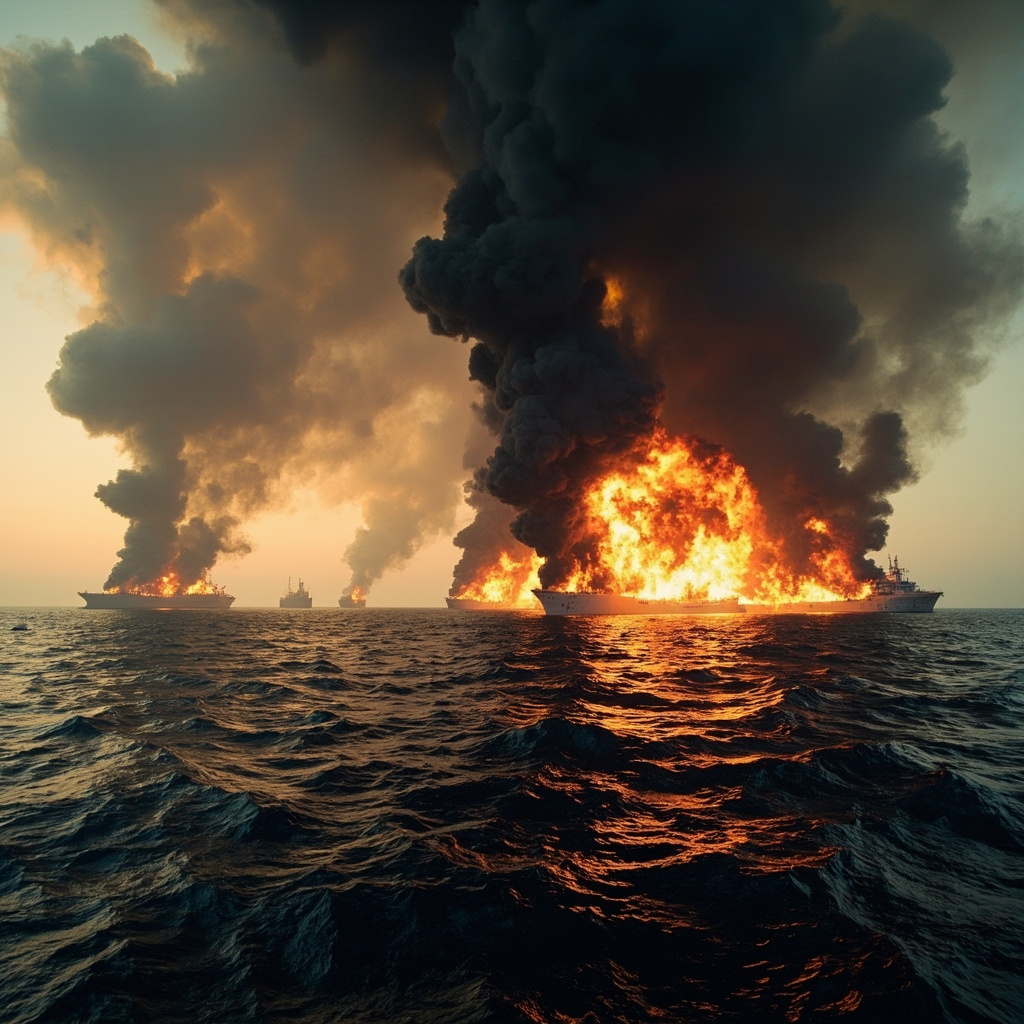
Admiral Brad Cooper stood in front of a camera on Saturday and read numbers that belonged in a history textbook. Eight thousand military targets struck. One hundred and thirty Iranian naval vessels destroyed. The longest field artillery strike in Army combat history, using precision strike missiles, launched just two days prior. "The largest elimination of a navy over a three-week period since World War II," the CENTCOM commander said [1].
The comparison to 1945 was deliberate. Cooper was telling the world that Operation Epic Fury has achieved a scale of naval destruction not seen since the Allied campaigns against Imperial Japan. The Iranian Navy and Islamic Revolutionary Guard Corps Navy, which three weeks ago operated hundreds of vessels across the Persian Gulf, are functionally gone from the surface. "Their navy is not sailing," Cooper said [2].
These are staggering numbers. They describe a campaign of annihilation, not attrition. In twenty-one days, the United States has conducted over 8,000 combat flights and systematically dismantled Iran's ability to project naval power in the Gulf [1]. CENTCOM claims air superiority over the entire Middle Eastern theatre and describes "the most extensive air defense umbrella in the world" now deployed across the region [1].
And yet.
On the same day Cooper published his scorecard, Iran fired two intermediate-range ballistic missiles at Diego Garcia -- a base 4,000 kilometers from Iranian territory [3]. One was intercepted. One failed in flight. Neither hit the target. But both reached further than any Iranian missile in this war, and further than Iran's foreign minister had publicly claimed his country's missiles could fly.
This is the problem with damage assessments during a war that keeps expanding. The numbers are real. The destruction is verifiable. Satellite imagery confirms the cratered airfields, the burning port facilities, the obliterated coastal batteries. But military capability is not a single ledger. You can destroy a navy and still face missiles from a different axis entirely.
Cooper's briefing also revealed operational details that had not previously been confirmed at this level. The precision strike missile barrage -- which he described as the longest field artillery strike in U.S. Army combat history -- targeted Iranian military infrastructure deep inland [1]. This is not naval interdiction. This is a sustained ground-strike campaign conducted from standoff range, suggesting that the Army's role in Operation Epic Fury extends well beyond support functions.
The 130 vessels destroyed include both regular Iranian Navy ships and IRGCN fast-attack boats [1]. The IRGCN fleet -- small, fast, swarming -- had been the primary tool of Iranian harassment operations in the Strait of Hormuz for decades. Its elimination removes a capability that shaped U.S. naval planning in the Gulf for thirty years.
But "degraded" is not "defeated." Cooper said Iran's military abilities are causing a "dangerous risk" for international shipping and that CENTCOM remains "zeroed in on dismantling Iran's decades-old threat to the free flow of commerce throughout the Strait of Hormuz" [1]. That language -- present tense, ongoing -- does not describe a concluded campaign.
The same-day juxtaposition tells the story that no briefing can contain. The United States publishes record destruction. Iran demonstrates range nobody publicly credited it with. The campaign's metrics say dominance. The enemy's actions say persistence. Both are true simultaneously, and neither resolves the question that matters: when does this end?
Eight thousand targets. One hundred and thirty ships. The largest naval kill since the Pacific War. And on the same day, two missiles flew further than the map said they could. That is the war's defining contradiction: overwhelming force has not produced strategic resolution.
Sources & X Posts
News Sources