TL;DR
More than half of Americans say nobody sees them, and the WHO says loneliness now kills at the rate of 15 cigarettes a day.
MSM Perspective
Forbes and Psychology Today frame loneliness as a public health emergency, with the Surgeon General's advisory as the policy anchor.
X Perspective
X threads on the loneliness epidemic are raw and personal, with users describing invisibility as the defining emotional condition of 2026.
The number is 58 percent. That is the share of American adults who report feeling invisible — not merely lonely, but unseen. The Science of People research group published the figure in late 2025, and it has circulated through clinical literature and social media ever since with the quiet persistence of something people recognize as true. [1]
The loneliness epidemic is no longer a metaphor. The WHO's Commission on Social Connection reported last year that one in six people globally experience significant loneliness. Former Surgeon General Vivek Murthy's 2023 advisory declared loneliness a public health crisis equivalent in mortality risk to smoking 15 cigarettes a day. The physiological mechanisms are documented: chronic loneliness elevates cortisol, impairs immune function, increases cardiovascular risk, and accelerates cognitive decline. It is not a feeling. It is a condition, and it is killing people. [1]
Forbes contributor Jann Freed identified five structural drivers: remote work eliminating casual social contact, social media replacing conversation with performance, geographic mobility severing community roots, economic precarity making socializing expensive, and a culture that treats busyness as virtue and stillness as failure. None of these are individual choices. All of them are policy outcomes. [2]
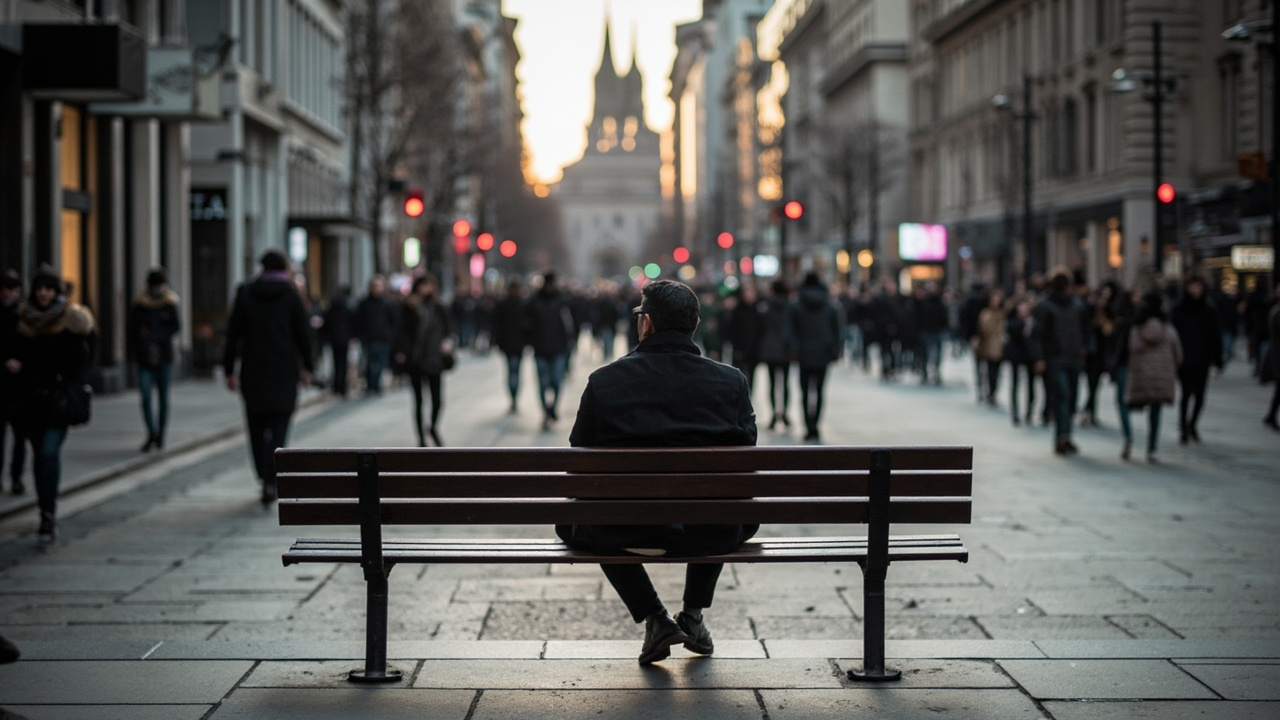
What the 58 percent figure captures that loneliness statistics miss is the quality of the experience. Loneliness means wanting connection and not having it. Invisibility means being present and not mattering. The distinction is the difference between an empty room and a crowded one where nobody looks up.
A nation where more than half the population feels unseen is a nation with a structural problem that no app, no community center, and no Surgeon General's advisory can solve alone.
-- MAYA CALLOWAY, New York
Sources & X Posts
News Sources