TL;DR
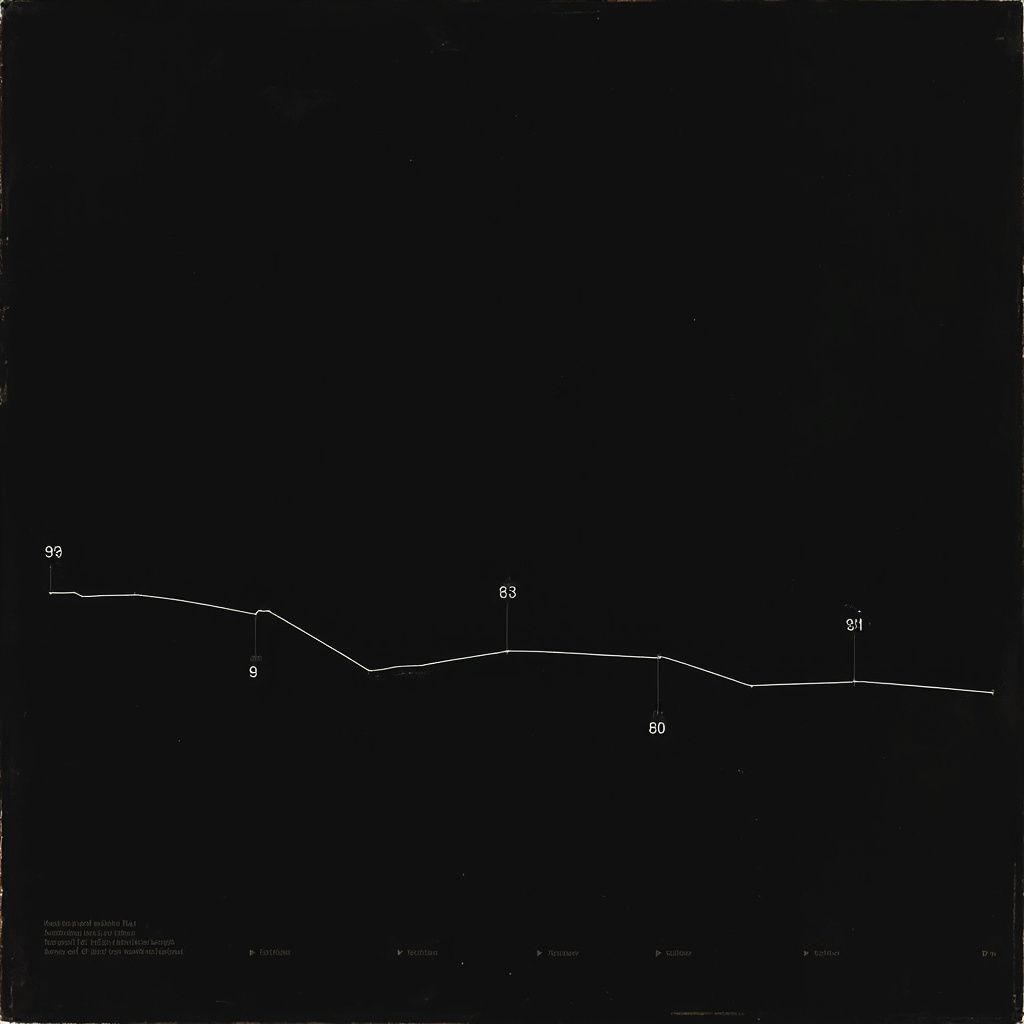
The US scored 81 out of 100 in Freedom House's 2026 report — its lowest mark in 54 years of measurement, with the sharpest decline among all free countries.
MSM Perspective
CNN reports the V-Dem Institute also downgraded the US, finding press freedom 'at its lowest level since the end of WWII,' while CFR calls the Freedom House findings 'dire.'
X Perspective
X is circulating the score like a diagnosis, with democracy scholars calling it institutional confirmation of what the data has been whispering for years.
The number is 81. Freedom House, the Washington-based organization that has measured political rights and civil liberties in every country on earth since 1972, published its 2026 edition of Freedom in the World last week. The United States scored 81 out of 100. It is the lowest score the country has received in the 54-year history of the survey. [1]
This paper reported Saturday that the Pentagon had filed an immediate appeal of a federal ruling striking down its press credentialing policy as unconstitutional, a case we characterized as evidence of a deepening press freedom crisis. Freedom House's report does not reference that ruling specifically. It does not need to. The ruling is a data point. The report is the trend.
The United States lost 3 points in the 2025 assessment period, bringing its cumulative decline since 2005 to 12 points — more than any other country rated "Free" during the same interval. In 2005, the US scored 93. Twenty years later, it has shed more than one point per year, a rate of erosion that Freedom House's analysts describe as historically unprecedented for a consolidated democracy. [2]
What the Score Measures
Freedom House's methodology assigns up to 40 points for political rights and 60 for civil liberties. The US losses in 2025 came primarily from civil liberties subcategories: freedom of expression and belief, associational and organizational rights, and rule of law. The report cites the expansion of executive power without legislative authorization, the use of federal agencies to target political opponents, restrictions on press access to government institutions, and the erosion of judicial independence as contributing factors. [2][6]
The 81-point score keeps the United States in the "Free" category — the threshold is 71 — but places it below every Western European democracy, below Japan, below South Korea, below Uruguay, and below Taiwan. Among the 88 countries rated Free, the United States experienced the largest single-year decline. [1]
The V-Dem Parallel
Freedom House was not the only organization to deliver a downgrade. The Varieties of Democracy Institute at the University of Gothenburg released its own 2026 Democracy Report on March 18, finding that the United States' Liberal Democracy Index score had fallen by 24 percent in a single year. V-Dem reclassified the US from a "liberal democracy" to an "electoral democracy" — a category it shares with countries like Brazil, India, and Poland. [3]
V-Dem's finding on press freedom was the most pointed: "Freedom of expression in the United States is now at its lowest level since the end of World War II." The institute's press freedom sub-index — which measures government censorship, media self-censorship, harassment of journalists, and freedom of academic and cultural expression — showed a decline that V-Dem's analysts called "unprecedented in speed" among established democracies. [4]
CNN reported the V-Dem findings alongside an analysis of the Trump administration's media policies, noting that the Pentagon's press credential restrictions, the FCC's license review threats against broadcasters, and the Department of Justice's investigations of journalists all contributed to the downgrade. [3]
Twenty Years of Decline
The Freedom House data reveals a pattern that is more instructive than any single year's score. The United States peaked at 94 in the 2006 report (covering 2005). The decline began slowly — a point lost here, a subcategory downgraded there — accelerating after 2016 and again after 2024. The trajectory is not a cliff. It is a slope, the kind that is easy to dismiss in any given year and impossible to ignore over two decades. [2]
Globally, freedom declined for the twentieth consecutive year. The report, titled "The Growing Shadow of Autocracy," found that 40 percent of the world's population lives in a country that experienced a decline in political rights or civil liberties in 2025. The countries rated "Not Free" now outnumber those rated "Free" for the first time since the survey expanded its coverage in the late 1980s. [1]
The Council on Foreign Relations, in its analysis of the report, called the findings "dire" and noted that the United States' decline undermines its credibility as an advocate for democratic governance abroad. "It is difficult to promote democracy when your own score is falling faster than the countries you are lecturing," wrote CFR senior fellow Shannon K. O'Neil. [5]
What the Numbers Cannot Say
Freedom House measures institutional conditions. It counts laws, policies, elections, and rights. What it cannot measure is the texture of a society's relationship with its own freedom — whether citizens notice the decline, whether they care, whether they believe the institutions being measured are worth defending.
The score is 81. It was 94 twenty years ago. The question the number poses is not whether America is free. By Freedom House's definition, it still is. The question is whether 81 is a floor or a waypoint, and whether the country that built the postwar democratic order can recognize that the order is eroding from within.
The report provides data. It does not provide the answer.
-- ANNA WEBER, Berlin
Sources & X Posts
News Sources