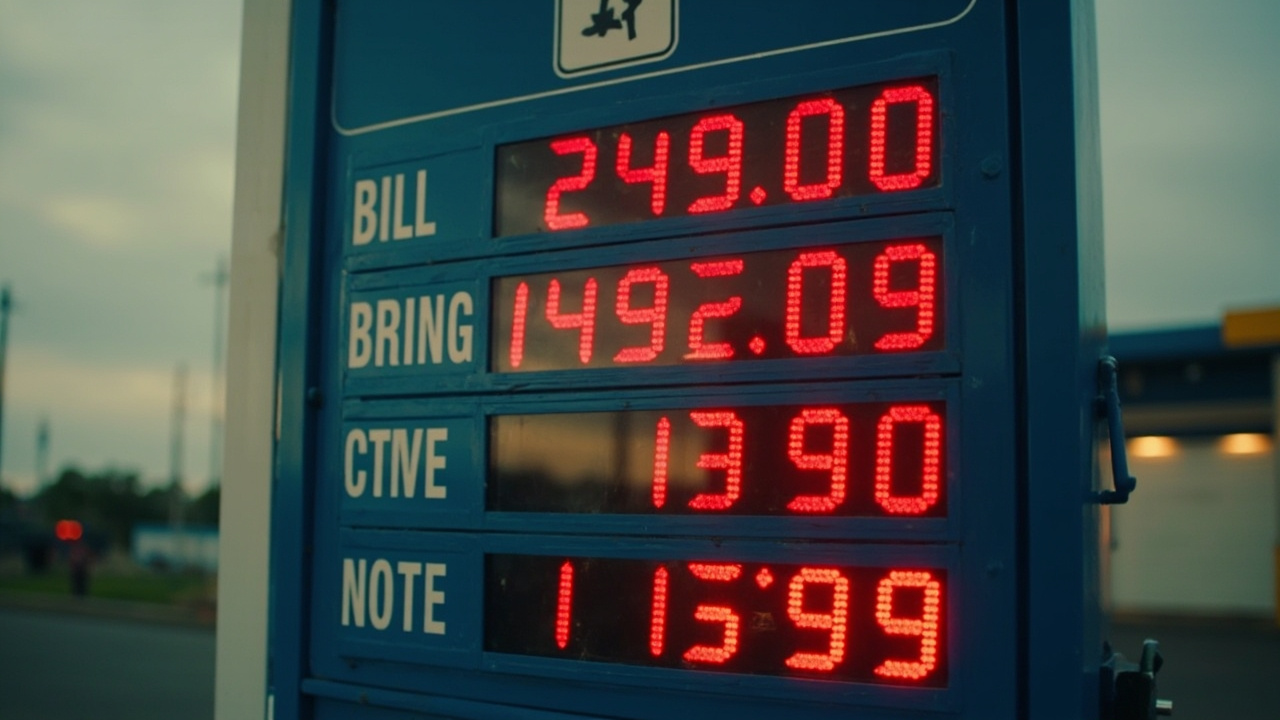
TL;DR
The national average hit $4.87/gallon — consumers felt the war premium before traders did.
MSM Perspective
MSM covers gas prices as a political metric for Biden/Trump; the real story is the demand destruction already starting.
X Perspective
X is documenting the human cost: who is trading down, who is cancelling plans, who is just absorbing it.
The national average for regular gasoline reached $4.87 per gallon on Friday, according to AAA — up 36% from $3.58 five weeks ago. The increase is not a rounding error. It is a structural shift in what it costs to drive to work, deliver goods, and move anything that uses an internal combustion engine. The war premium that traders are debating in terms of basis points and supply disruption is being felt in kitchens and commutes before the stock market opened on Monday.
The consumer is ahead of the curve. The weekend retail data released Saturday showed a 0.4% decline in consumer spending — not catastrophic, but the direction is established. [1] The gas price increase hits different demographics differently. A household earning $75,000 a year with two commuters and a combined 40-mile daily drive is now spending roughly $272 a month on gasoline, up from $200. That $72 monthly delta comes directly out of discretionary income. It is not abstract. It is the streaming subscription canceled, the grocery order trimmed, the weekend trip postponed.
The geographic distribution of the pain is not random. The Southeast — where transit infrastructure is thinnest and car dependency is highest — is bearing the heaviest burden. Georgia, Alabama, and the Carolinas are running 8-12 cents above the national average. California, already at $5.74, is effectively in a different market. The Midwest refiners' corridor has absorbed some of the crude price shock through regional production, but not enough.
The supply chain is the mechanism. When Iran struck the Kharg node — the primary offshore loading facility in the Gulf — it did not just disrupt oil flow. It disrupted the physical infrastructure that moves refined product from refinery to pump. The BP and Shell refinery networks in the Gulf have not fully recovered throughput. The-tankers-insurance premium has added $0.08-$0.12 per gallon to West Coast deliveries. [2]
This is where the war premium transitions from a macro story to a household story. The economists who model oil shocks in equilibrium frameworks treat it as a tax that reduces aggregate demand until prices reset. That is correct over a 12-18 month horizon. But the household budget does not work on that timeline. The $4.87 is this month's bill. The war is not a theory for families filling up on Tuesday afternoon.
The political salience is obvious. CBS/YouGov polling from this week shows MAGA Republicans backing the Iran strikes by a wide margin even as gas prices rise — a dissonance between policy preference and pocketbook that the Biden administration is watching carefully. [3] The administration has not released oil from the Strategic Petroleum Reserve, a move some analysts expected. The politics of energy in an election year are not simple.
The relief valve — if it exists — is not obvious. The ceasefire negotiations are stalled. [4] The Hormuz shipping insurance market has repriced the risk and shows no sign of unwinding. The five-week trajectory suggests $5.50 by mid-April at current run rates. The consumer who felt it before the stock market dropped is not wrong. The demand destruction the economists are waiting for is already being written in cancelled subscriptions and grocery trade-downs. The only question is whether it shows up in the retail data before or after the next Fed meeting.
Sources & X Posts
News Sources