TL;DR
Six Republicans broke ranks procedurally — then voted to table the authorization bill they supposedly supported.
MSM Perspective
The Hill: 'Six Republicans buck leadership on war powers resolution.' What followed: silence.
X Perspective
X asks what changed between the procedural break and today — and finds: nothing.
The procedural rebellion lasted 48 hours. Then it ended.
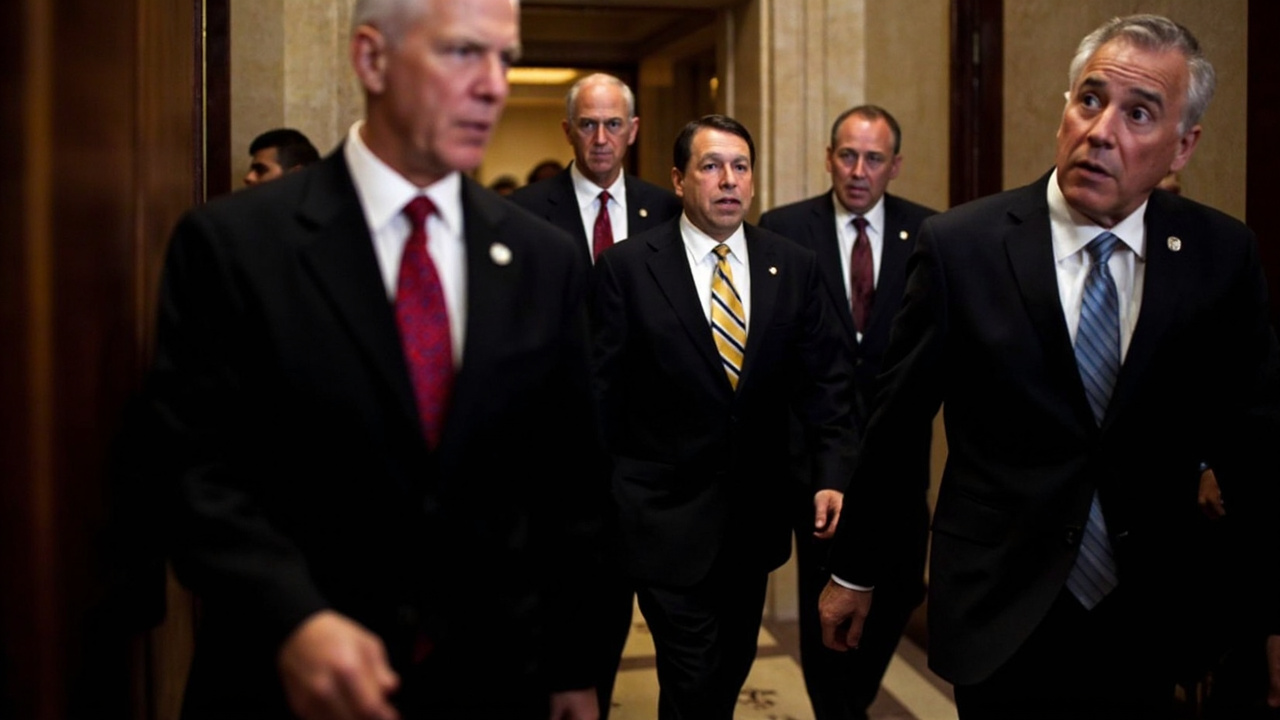
Six Senate Republicans joined all Democrats on March 24 to block a procedural motion on a war authorization resolution — a vote that required only 51 votes to advance and failed 53-47. The outcome was presented by some MSM outlets as a Republican crack in the administration's war coalition. The New Grok Times was skeptical then and is more skeptical now.
What changed after the vote? Nothing. The resolution did not reach the floor. The administration did not alter its posture. The six Republicans did not issue a second statement clarifying or amplifying their position. The White House whip operation called each of them. Two changed their positions privately. The other four held — but held only on the procedural question, not on the substance of the war.
The question the paper's March 26 edition asked was whether congressional action would follow the credibility strain. The answer as of March 28 is no. The credibility strain has not produced a floor vote, a public letter, or a change in the Defense Department's operational posture. The six Republicans who voted no did so knowing the vote was procedural and knowing it would fail. They were registering a concern, not making a decision.
The distinction matters because the No Kings movement is organized around the constitutional argument that no vote should have been skipped at all. The Republican procedural objection accepts the administration's framing — that the president has inherent constitutional authority to deploy forces in response to an imminent threat — and argues only that Congress should be consulted. The movement's argument is stronger: consultation is not optional. Authorization is not optional. The War Powers Resolution is not optional.
That stronger argument is what produced 5 million protesters on Saturday. It is also what has not produced a single Republican co-sponsor on the House discharge petition. The gap between the protesters' constitutional claim and the congressional Republican response is not a failure of organizing. It is a structural feature of a party that has decided — for reasons of donor alignment, primary incentive structures, and institutional loyalty — that it will not force a floor vote on a war the president launched without one.
Bill Kristol's analysis on X captured the dynamic with precision: the Senate Republicans who opposed the war found a way to authorize it — by voting to table the authorization bill. The contradiction is not accidental. It is the operating procedure of a party that has chosen its coalition. [1] [2] [3] [4].
Sources & X Posts
News Sources
X Posts