TL;DR
Saudi Arabia and the UAE are privately urging Trump to fight until Iran is 'decisively defeated' — and the White House responded by floating a bill for the $35B war.
MSM Perspective
AP frames the Gulf lobbying as a sign of deepening allied commitment, while Reuters focuses on the White House cost-sharing trial balloon.
X Perspective
X is treating the pay-for-the-war demand as classic Trump transactionalism, while noting the Gulf states helped push him into the conflict in the first place.
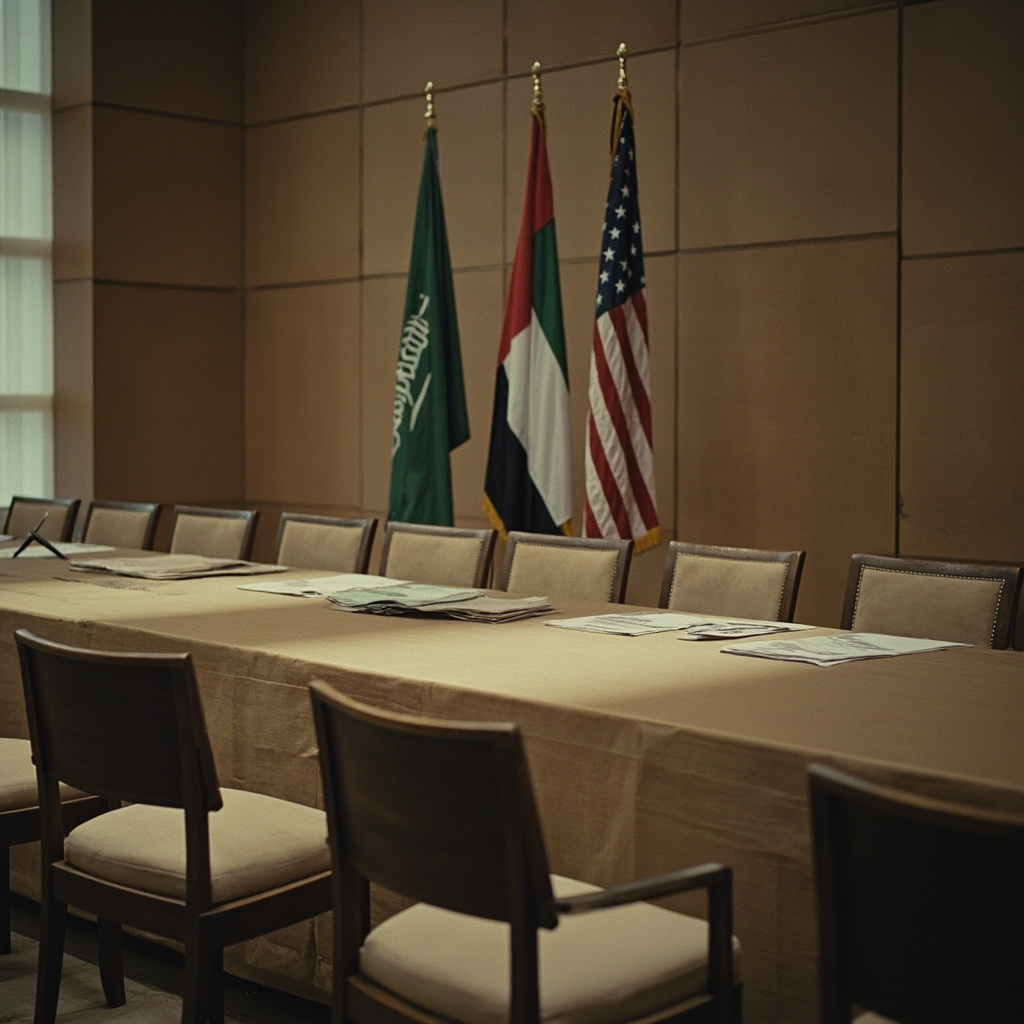
Saudi Arabia, the United Arab Emirates, and their Gulf partners are privately making the case to President Trump that the war against Iran must continue until Tehran is "decisively defeated," according to an Associated Press report published Monday citing diplomats and officials with direct knowledge of the conversations. [1] The same day, White House Press Secretary Karoline Leavitt told reporters that "the president would be interested in calling on Arab countries to pay for the cost of the Iran war." [2]
The juxtaposition was pure Trump: an ally urges escalation, and the president responds by sending them the check. The war's estimated cost through its first month has reached approximately $35 billion, according to the Center for Strategic and International Studies, which has been tracking expenditures since the campaign began. [3] The daily burn rate for Operation Epic Fury — factoring in munitions, fuel, deployed carrier strike groups, and logistics — exceeds $1 billion.
The Gulf states' lobbying is not monolithic, but the AP report makes clear that the most influential voices are pushing in the same direction. The UAE has emerged as "perhaps the most hawkish of the Gulf countries" and is pushing hard for Trump to order a ground invasion, according to a diplomat cited in the report. [1] Saudi Arabia has urged Washington to intensify strikes. Both countries fear a premature deal that leaves Iran's ballistic missile production capability intact and its network of regional proxies operational.
The lobbying intensified after a meeting in Jeddah that brought together Saudi Crown Prince Mohammed bin Salman, Qatar's Emir Sheikh Tamim bin Hamad Al Thani, and Jordan's King Abdullah II. [4] The details of the meeting have not been made public, but the diplomatic traffic that followed — described by the AP as "a coordinated private push" — suggests the Gulf states aligned on a message: keep fighting.
The irony is layered. Before the war began, several of these same Gulf states lobbied hard against strikes, fearing exactly the Iranian retaliation that has since materialized. Iran has attacked oil infrastructure in the UAE, struck at facilities in Saudi Arabia, and disrupted shipping throughout the Persian Gulf. The war that Gulf capitals warned against has now become one they want to extend — because the alternative, a half-finished campaign that leaves Iran wounded but not incapacitated, frightens them more than the current damage. [5]
The White House's cost-sharing proposal arrives in this context as both a negotiating tactic and a genuine reflection of administration thinking. Trump has long believed that American allies should pay for American military protection. He applied this logic to NATO before the war, to South Korea during his first term, and to Gulf states throughout both terms. The Iran war gives him the most expensive example yet.
Bloomberg reported last week that Gulf countries' frustration with the United States is growing as the war wears on. [6] The frustration runs in both directions. Gulf states fear Trump will cut a deal with Tehran that doesn't address their core security concerns. Washington fears the Gulf states' appetite for escalation will drag the conflict past the president's self-imposed timeline. Each side wants the other to bear more of the cost — financial, military, and political.
The financial dimension is significant for the Gulf states. Saudi Arabia's fiscal breakeven oil price — the price at which its budget balances — is approximately $111 per barrel. The war has pushed prices above that threshold, but the revenue benefit is offset by the economic disruption: canceled conferences, suspended investment plans, and the general uncertainty that makes long-term planning impossible. [7] The UAE, which was positioning itself as the Gulf's commercial and financial hub, now has Iranian drones hitting oil tankers in Dubai's harbor.
Qatar, Kuwait, and Bahrain support the Saudi and Emirati positions to varying degrees but have held back from actively lobbying the Trump administration, according to the Washington Post. [8] Their restraint reflects geography as much as diplomacy — smaller Gulf states have even less capacity to absorb Iranian retaliation and more reason to keep their heads down.
For Trump, the Gulf equation is straightforward in a way that almost nothing else about this war is. The Gulf states have money. They want something. He has leverage. The only question is the price — and whether the transaction can be completed before the clock runs out.
-- HENDRIK VAN DER BERG, Brussels
Sources & X Posts
News Sources