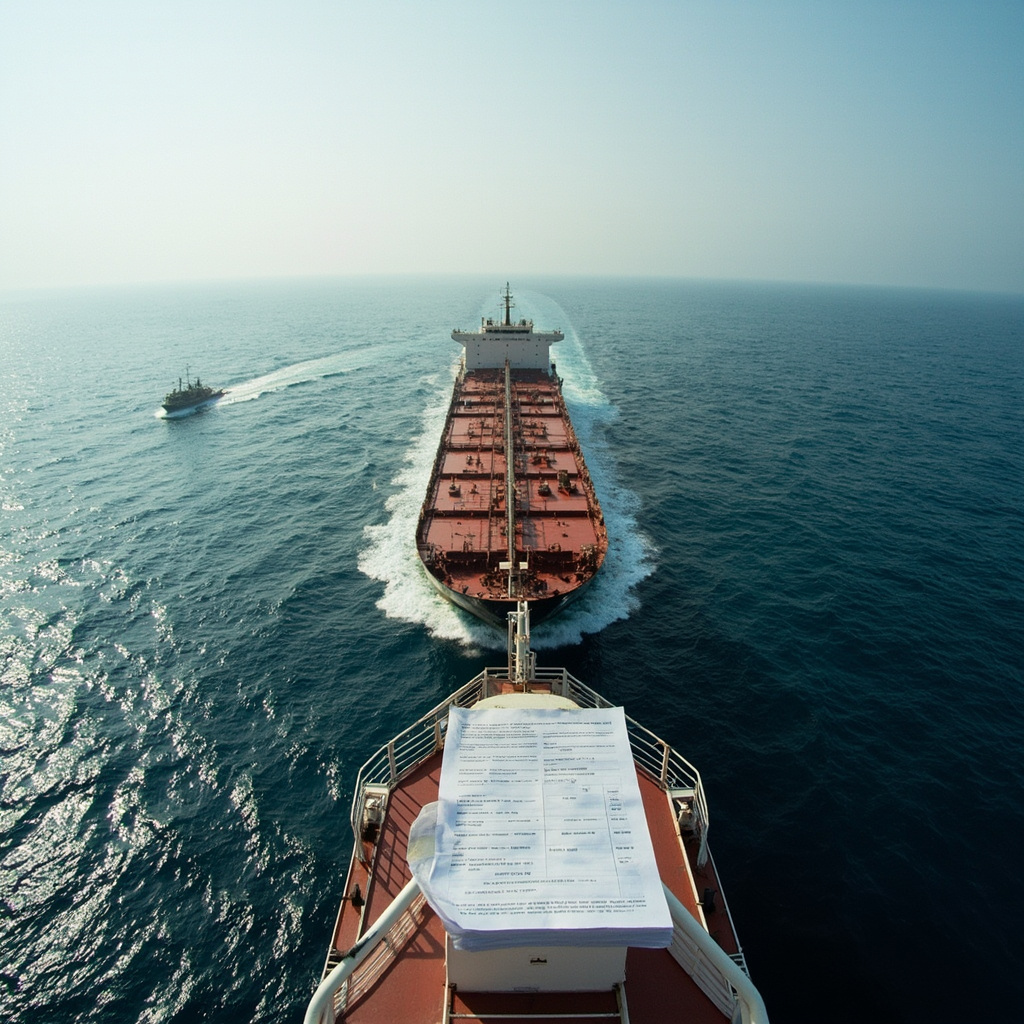
War risk insurance premiums for vessels transiting the Strait of Hormuz have climbed to approximately 5 percent of hull value, up from negligible levels before the conflict. For a standard VLCC tanker valued at $100-120 million, a single transit now costs $5-6 million in insurance alone — a figure that gets passed through to oil prices, shipping rates, and ultimately consumers. [1]
The mechanism is elegant in its brutality. Iran does not need to close Hormuz physically. Minefield reports, drone activity, and the selective "toll" system that allows some vessels through while blocking others create enough uncertainty that insurers price the risk at levels many shipowners cannot absorb. Ships that do transit increasingly seek Iranian clearance first, effectively accepting Tehran's authority over international waters. [2]
Bloomberg reported that a $20 billion reinsurance program has been proposed to revive Hormuz shipping, with insurers expressing interest. But the program requires government backing that has not materialized. Until it does, the insurance market remains the war's most effective weapon — a financial blockade that operates at the speed of a spreadsheet.
The Red Sea faces a parallel problem. Houthi threats have pushed Red Sea transit premiums to 3.2 percent of cargo value. Two chokepoints, two insurance crises, one war.
-- DARA OSEI, London