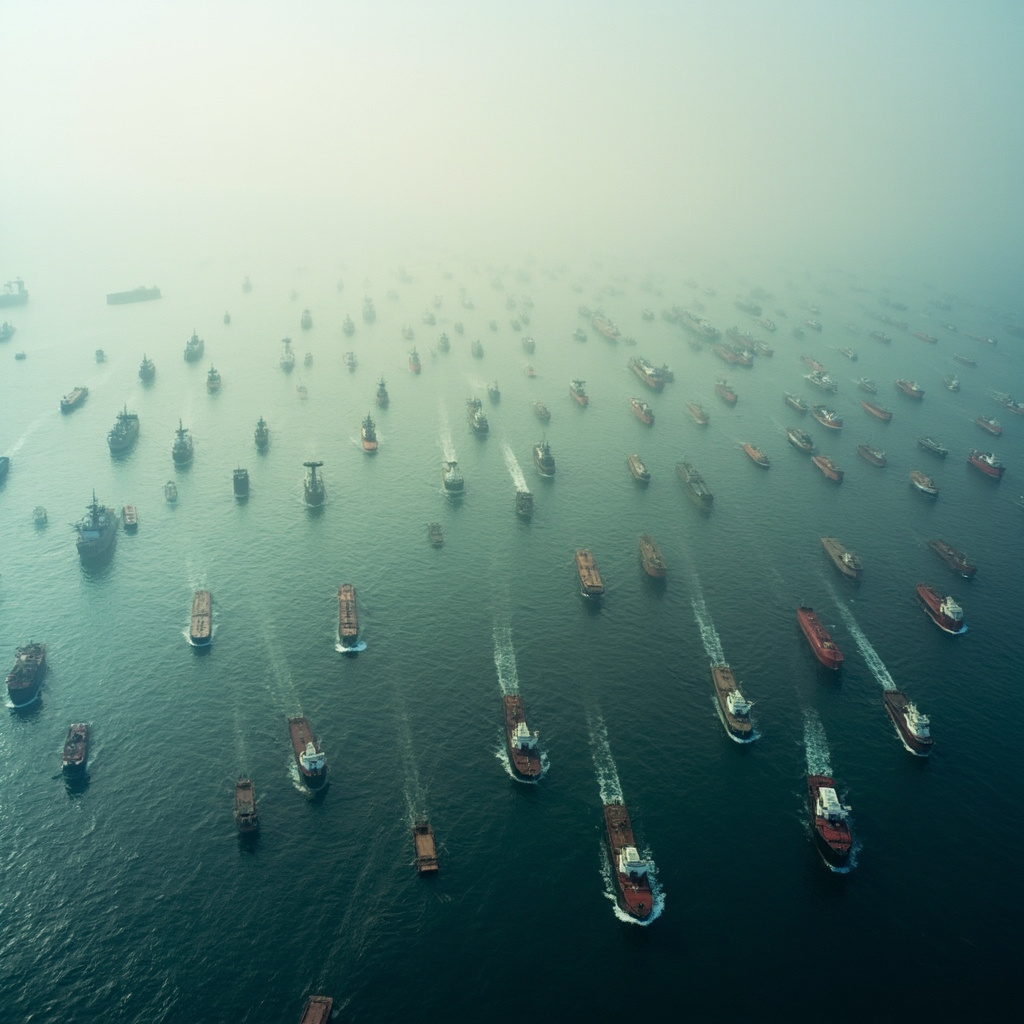
The Strait of Hormuz is still moving ships. It is just doing so in a way that barely resembles normal commerce.
CNBC reports that only 21 tankers had transited the route since the war began, compared with more than 100 ships daily before the conflict. [1] Hundreds more have stacked up nearby, while others broadcast Chinese ownership or crew presence, wait for negotiated safe passage, or reroute cargo through secondary ports and inland trucking.
That is not closure in the dramatic absolute sense. It is something messier and, for global trade, arguably more corrosive: a bottleneck ruled by selective access, fear, backlog, and improvisation.
In a normal market, shippers price time. In this one they are pricing uncertainty, political signaling, and the possibility that any trip through the strait is less a voyage than a negotiation.
-- KATYA VOLKOV, Moscow