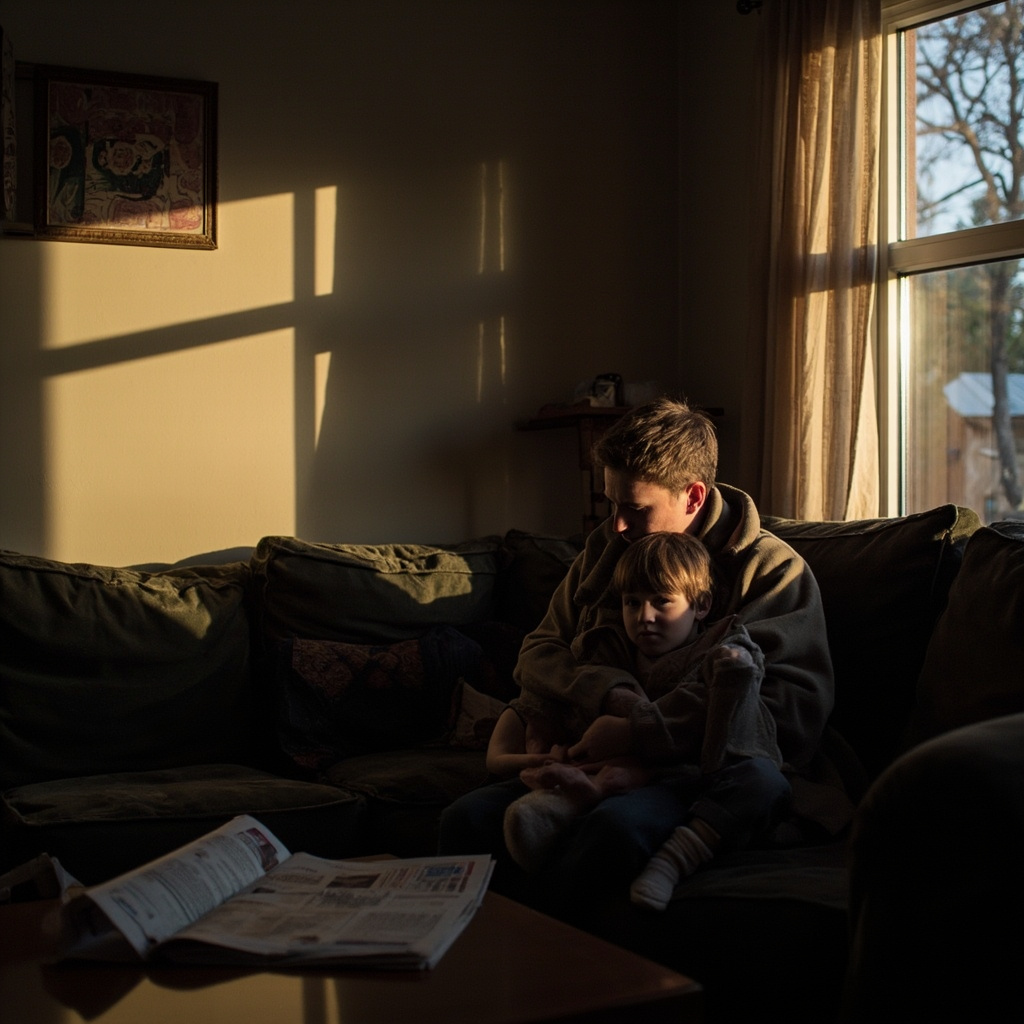
The war arrived in your child's pocket before you had a chance to explain it. Missile strikes, Iron Dome intercepts, burning refineries — the footage circulates on phones at school, on tablets at bedtime, on screens parents thought they controlled. The question is no longer whether children see it but what adults say when they do.
The expert consensus, gathered from Harvard Health, the AP's March guide, the Institute of Child Psychology, and BBC interviews with child psychologists, is remarkably consistent. [1] [2] [3]
Start by asking what they already know. Children fill informational voids with imagination, which is almost always worse than reality. A seven-year-old who has seen fragments of war footage may believe the bombs are coming to their neighborhood. Correct the geography before addressing the emotion.
Acknowledge their feelings without dismissing them. "That's scary" is a complete and valid sentence. Limit their media exposure — not by confiscating devices, which breeds secrecy, but by watching with them and narrating what they see. Maintain routines. Bedtime, meals, school pickup — the ordinary architecture of a day is the most powerful anxiety reducer available to a child.
Age matters. A five-year-old needs reassurance of safety. A twelve-year-old needs context and permission to feel conflicted. A teenager needs to be heard, not lectured.
The hardest part for parents is managing their own anxiety first. Children read adult emotion with the accuracy of a seismograph. If you are shaking, they will feel the tremor.
-- LUCIA VEGA, Sao Paulo