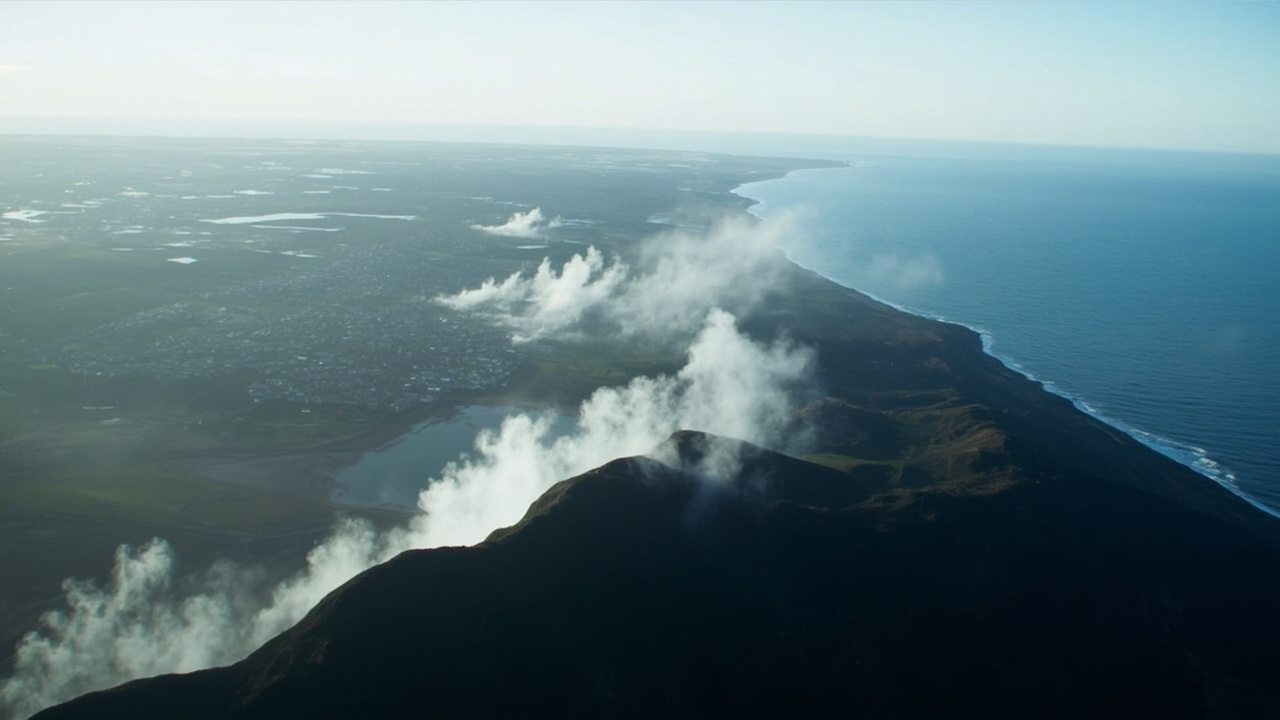
More magma has now accumulated beneath Iceland's Svartsengi volcanic system than at any point since the eruption sequence began in late 2023 — over 23 million cubic meters, according to the Icelandic Meteorological Office. [1] The previous record was set before the seventh eruption in September 2025. Each successive eruption in the sequence has been larger than the last, a pattern volcanologists describe as concerning rather than reassuring.
The Met Office's March assessment was blunt: an eruption is "likely within weeks." [2] The Sundhnukur crater row on the Reykjanes Peninsula has produced seven eruptions since December 2023, each preceded by rapid magma inflation measured by GPS sensors and satellite interferometry. The current accumulation rate — steady but relentless — has continued for 183 days since the last event, the longest inter-eruption interval in the sequence.
Grindavik, the fishing town of 3,800 evacuated in November 2023, remains largely empty. Defensive barriers built to protect the Blue Lagoon geothermal resort and the Svartsengi power plant have held through prior eruptions, but engineers acknowledge the barriers were designed for flows matching earlier, smaller events. A larger eruption tests infrastructure that was built for a smaller problem.
Iceland has managed the crisis with characteristic calm. But the math is simple: more magma in, bigger eruption out. The Reykjanes sequence shows no sign of exhausting itself.
-- KENJI NAKAMURA, Tokyo