TL;DR
Over 52,000 Indians have fled the Gulf in a week as the Iran war disrupts flights, gas supplies, and the $100 billion remittance pipeline sustaining Indian households.
MSM Perspective
Indian Express reports 8.8 million Indian lives are in the balance; BBC documents gas supply disruptions already hitting Indian businesses.
X Perspective
Indian accounts track the exodus in real time: cancelled flights, closed airspaces, and remittance fears dominate the discourse.
India has 8.8 million citizens working in the Gulf states. Their remittances — exceeding $100 billion annually — sustain families across Kerala, Tamil Nadu, Andhra Pradesh, and Uttar Pradesh. The Iran war has placed every one of those lives and every one of those dollars in jeopardy [1].
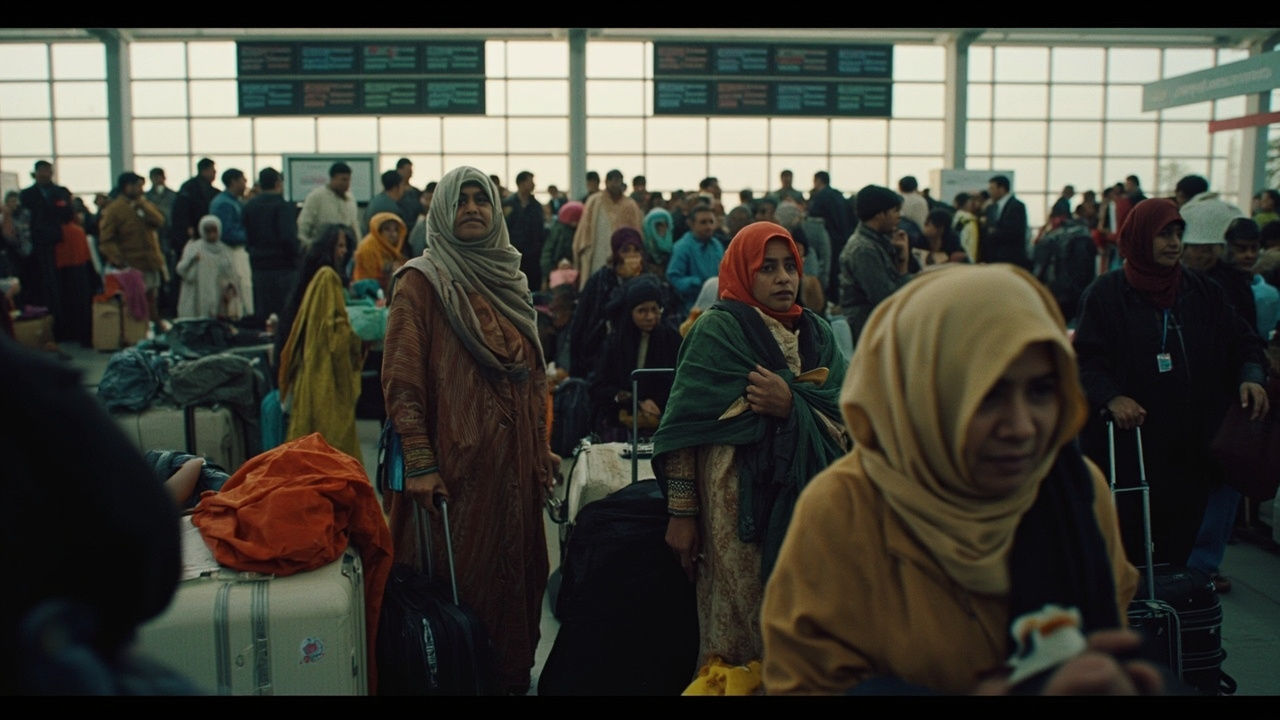
Over 52,000 Indians flew home from the UAE and other Gulf countries within a single week in early March as airspaces closed, commercial flights were cancelled, and Iranian drone and missile strikes expanded across the region. Human Rights Watch reported that civilians, "particularly migrant workers," across Gulf states were being "threatened, killed, and injured" by Iranian attacks. India's Ministry of External Affairs said the developments in the Gulf caused "great anxiety" — diplomatic language that translates, in practice, to a government watching its largest overseas diaspora community come under fire [2][3][4].
The economic disruption extends beyond the workers themselves. BBC reports that Indian businesses dependent on Gulf LNG supplies are "struggling to keep operations running" as gas shipments through the Strait of Hormuz have stalled. Indian Express describes the crisis as "8.8 million lives in the balance" — a figure that does not include the tens of millions of family members in India who depend on Gulf remittances for housing, education, and medical care [5][1].
India's foreign policy response has been characteristically careful. New Delhi opposes the war, maintains its energy relationship with the Gulf states, and has not broken with Washington on the broader conflict. But India cannot remain "impervious," as the government itself has acknowledged. The war's economic casualties are not limited to the combatants. They include every Indian worker whose flight home was cancelled and every family whose monthly transfer did not arrive.
-- PRIYA SHARMA, Delhi
Sources & X Posts
News Sources