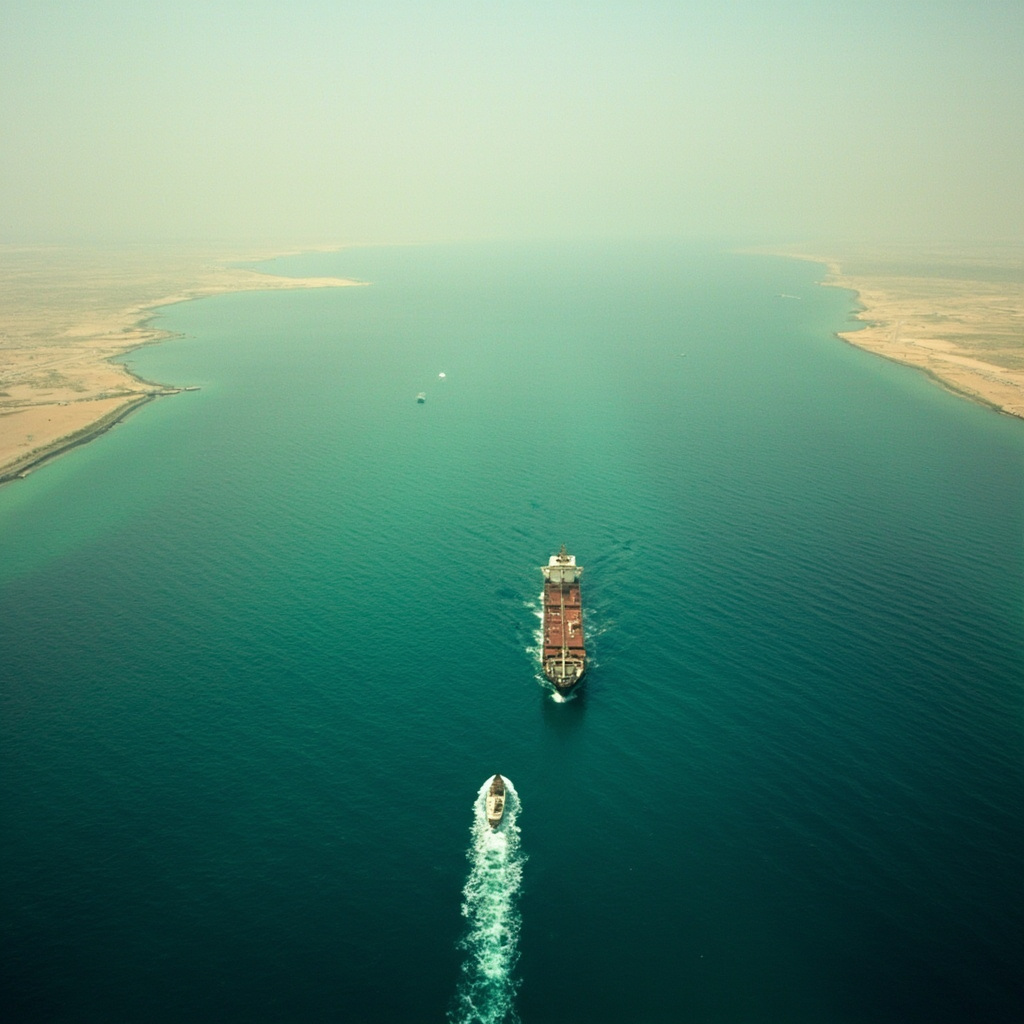
Two Indian-flagged LPG tankers, the Jag Vasant and the Pine Gas, transited the Strait of Hormuz on Monday carrying over 92,000 tons of liquefied petroleum gas — roughly one day's supply for India's domestic cooking-fuel needs [1][2]. Ship-tracking data on the MarineTraffic platform showed both vessels sailing through Iranian territorial waters near Qeshm and Larak islands, with the Pine Gas leading and the Jag Vasant following close behind [3]. They are expected at Indian ports between March 26 and 28. The vessels carry a combined sixty Indian crew members [2].
The transit is the second successful Indian passage through Hormuz since the war began. Two earlier LPG carriers crossed the strait around March 14, establishing the precedent that India appears to enjoy a separate arrangement with Iran — one that the rest of the world's merchant fleet does not [4].
The terms of that arrangement are the subject of a contradiction so brazen it would be comic if less were at stake. Alaeddin Boroujerdi, a member of Iran's parliamentary national security committee, told Iranian media that the Islamic Republic is charging certain vessels $2 million for transit, describing the toll as a consequence of war: "War has costs" [5][6]. Marine Insight reported that at least one tanker operator paid approximately $2 million to secure safe passage [7]. Bloomberg confirmed that the route taken by the Indian vessels — hugging Iran's coast rather than the international shipping lane — was consistent with an escorted transit [1].
Iran's embassy in India denied all of it. "Claims regarding the alleged receipt of a sum of 2 million dollars by the Islamic Republic of Iran from vessels transiting the Strait of Hormuz are unfounded," the embassy said in a statement posted on social media [8]. The Indian government, for its part, confirmed the movement but said nothing about money [2].
The diplomatic geometry is not subtle. India is Iran's largest remaining customer for non-sanctioned trade and one of its few significant diplomatic relationships that has not collapsed since the war began. Iran needs India's business. India needs Iran's gas. The $2 million toll — if it exists — is not an extortion fee but a service charge, dressed in the language of sovereignty, for the only naval escort available in a waterway where the United States Navy is actively engaged in combat operations against Iranian forces.
What the two tankers' transit does not change is the larger picture. Shipping through the Strait of Hormuz has collapsed by ninety-five percent since the war began. From March 1 to March 19, commodities carriers made just 114 crossings, according to analytics firm Kpler — compared to a peacetime average of roughly 138 per day [9]. No crude oil tankers transited the strait in the twenty-four hours preceding the Indian passage. Approximately 20,000 seafarers remain stranded on vessels unable or unwilling to attempt the crossing [10].
The strait, which in peacetime carries roughly twenty percent of the world's oil supply, has become what one shipping analyst described as "a museum of what global trade used to look like." The handful of vessels that do cross are overwhelmingly Iranian — tankers carrying Iran's own oil and gas exports, which continue to flow because Iran does not blockade itself [9].
India's ability to punch through the blockade is a function of political leverage, not military power. New Delhi has maintained working diplomatic relations with Tehran throughout the war, has not joined Western sanctions, and has signaled through back-channel communications that it regards the Hormuz closure as a temporary disruption rather than an act of war against Indian interests. The transit route through Iranian territorial waters — rather than the international shipping lane — is itself a form of diplomatic acknowledgment: India is asking Iran's permission, not asserting freedom of navigation [3][4].
The cost is significant but not prohibitive. Two million dollars on a cargo worth approximately $50 million in current LPG spot prices represents a four percent surcharge — expensive, but within the margin that India's state-owned oil marketing companies can absorb without raising retail prices. Whether the toll is formalized or remains in the realm of deniable side payments will depend on how long the war lasts and how many other countries attempt to negotiate similar arrangements [7].
For now, the strait remains functionally closed to the majority of global shipping. Two Indian tankers carrying cooking gas do not constitute a reopening. They constitute an exception — purchased, escorted, and denied — that proves how thoroughly the war has broken the most important chokepoint in global energy.
-- PRIYA SHARMA, Delhi