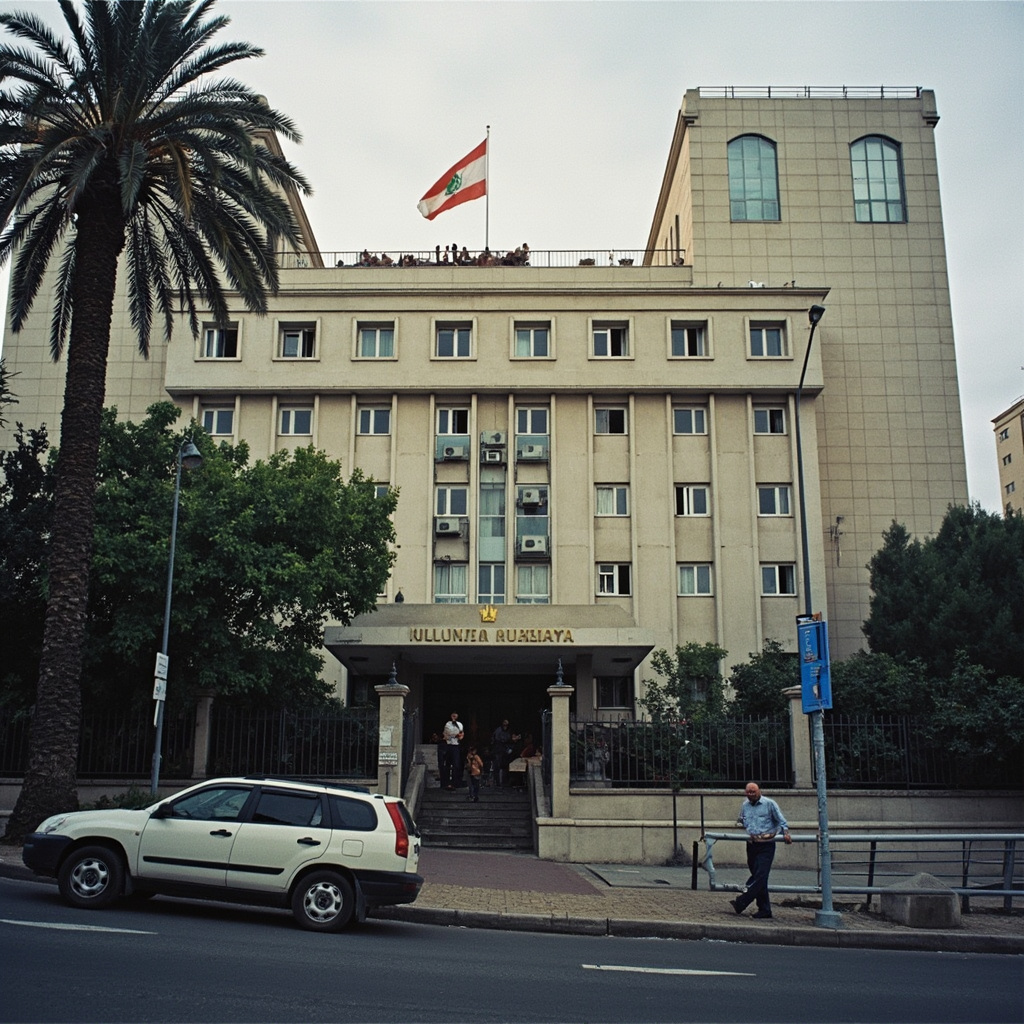
Mohammad Reza Sheibani did not leave. The March 29 deadline passed. He remained in the Iranian ambassador's residence in Beirut, technically persona non grata, practically immovable, protected by Hezbollah militiamen and the structural reality that Lebanon cannot compel any outcome that Iran's proxy forces have decided to prevent.
The paper's question yesterday — whether Lebanon's sovereignty was real or performative — has its answer, and the answer is the kind that strips the pretension from the question. Lebanese sovereignty is real when Iran permits it to be real. When Iran decides otherwise, the Lebanese foreign ministry issues statements, the deadline passes, and Sheibani orders another coffee.
The mechanics were not even subtle. Hezbollah issued a statement condemning the Lebanese government's expulsion order as "capitulation to foreign pressure" — by which they meant American and Saudi pressure, though they were too tactful to specify. Amal, the second Shia faction whose political infrastructure runs much of southern Lebanon and whose parliamentary presence is decisive, issued a parallel statement calling for the order to be withdrawn. The Lebanese prime minister, caught between a foreign ministry that had publicly committed to the deadline and parliamentary allies who would not back enforcement, said nothing useful. [1]
This is the classic Lebanese political condition: formal sovereignty expressed through formal acts — the revocation of accreditation, the setting of a deadline — and actual sovereignty determined by whoever controls the armed men. The foreign ministry controls the paperwork. Hezbollah controls the ground. Sheibani remained because the men with weapons wanted him to remain, and the men with weapons are not accountable to the foreign ministry. [2]
The legal position deserves a moment's attention, if only because it will occupy international lawyers for weeks. A declared persona non grata who refuses to leave has no diplomatic immunity. The Vienna Convention on Diplomatic Relations is clear: once accreditation is withdrawn, the receiving state has the right — and the obligation under customary international law — to treat the individual as a private person subject to domestic law. Lebanon could, in principle, physically remove Sheibani. In practice, the Lebanese Armed Forces, which have spent three decades carefully avoiding any direct confrontation with Hezbollah, are not going to arrest an Iranian ambassador backed by the militia that has killed Lebanese soldiers who tried to disarm it.
Iran's interest in keeping Sheibani in place is not sentimental. The Beirut embassy is operational infrastructure for IRGC-Quds Force communications, financial flows, and personnel movement throughout the Levant. Sheibani is not merely a diplomat. He is, by the accounts of multiple intelligence services, the senior IRGC liaison in the eastern Mediterranean. His departure would not simply be a diplomatic embarrassment. It would close a node in the network that Iran has spent twenty years building in Lebanon. [3]
The sovereignty test has failed, then, as sovereignty tests in Lebanon tend to fail. The question is what the failure costs Beirut in its relationships with the Arab states and Western powers that have been financing Lebanese institutional survival since 2006. Saudi Arabia, which has historically used financial leverage to discipline Lebanese politics, is watching. The Gulf states that fund Lebanon's public sector salaries are watching. Whether the failure to enforce the Sheibani deadline becomes a condition for further financial assistance — the Gulf states have used this lever before — will become clear in the next seventy-two hours. [4]
For now, Sheibani is in Beirut, Iran has demonstrated that its presence in Lebanon is effectively permanent regardless of what the Lebanese government decides, and the foreign ministry has filed its statement in the drawer where Lebanese sovereignty is stored for safekeeping.
-- CHARLES ASHFORD, London