TL;DR
Iran declared its retaliation against the US and Israel will be asymmetric and disproportionate, escalating through Hormuz and proxy networks.
MSM Perspective
Western officials warn that Iran's shift to disproportionate retaliation risks dragging Gulf states deeper into the conflict.
X Perspective
Analysts note Iran's asymmetric strategy aims to impose economic pain rather than win a conventional war it cannot.
Iran's military leadership declared over the weekend that its response to the ongoing US-Israeli campaign will no longer follow the principle of proportionality, a rhetorical shift that defense analysts say signals a deepening commitment to asymmetric warfare across the Persian Gulf and beyond. The statement, attributed to acting IRGC commander Brigadier General Esmail Qaani, came as Iranian-backed forces continued strikes on Gulf energy infrastructure and US forward bases in the region [1].
As we reported in our previous coverage, the question of what "disproportionate" means in practice has been the subject of intense debate in Washington and Tel Aviv. The answer, according to multiple intelligence assessments cited by Reuters and the Institute for the Study of War, is a strategy designed to impose maximum economic pain without seeking a conventional military victory Iran cannot win [2].
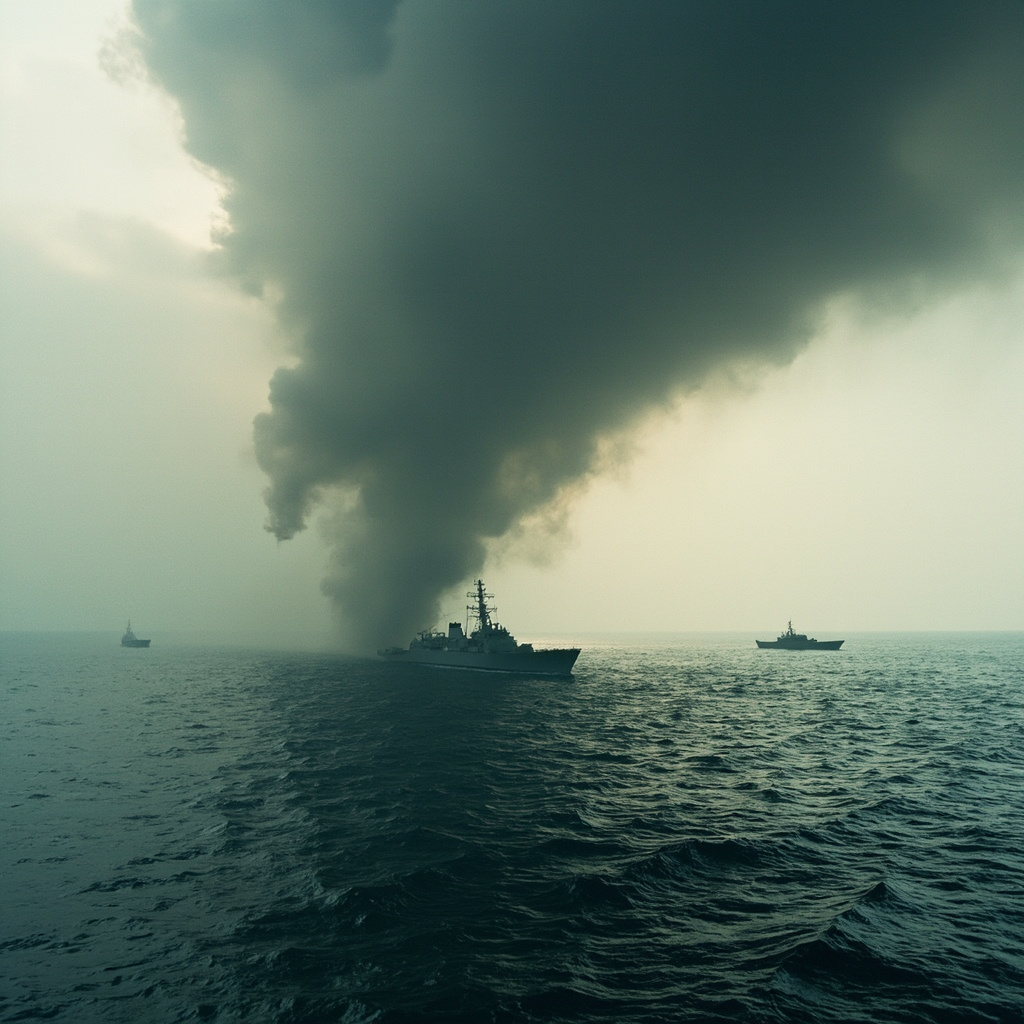
Since the joint US-Israeli strikes began on February 28, Iran has employed a layered approach: ballistic missile attacks on US bases in the Gulf, drone swarms targeting Saudi and Emirati desalination plants, and mine-laying operations in the Strait of Hormuz that have effectively halted tanker traffic through the world's most critical oil chokepoint [3]. The UN Office of the High Commissioner for Human Rights called for de-escalation on March 4, citing civilian casualties on both sides [4].
The shift away from proportionality carries specific doctrinal meaning. Under previous Iranian military doctrine, retaliation was calibrated to match the scale and type of attack received. That framework collapsed after the killing of Supreme Leader Ali Khamenei in the opening hours of Operation Epic Fury, which Iran's interim leadership described as an existential strike requiring an existential response [5].
Intelligence analysts on X have noted that Iran's strategy is less about destroying American military assets and more about making the war economically unsustainable. With Brent crude holding above $100 a barrel and sixteen vessels attacked in the Strait of Hormuz since early March, the cost to the global economy already dwarfs the direct military expenditure [6].
The Pentagon has acknowledged the challenge. "This is attrition warfare," one defense official told reporters. Iran's forces cannot match American firepower, but they can impose costs that make domestic support for the war politically untenable. The question now is whether Trump's stated desire for an exit ramp will translate into actual de-escalation before Iran's proxy network activates further operations across the region [7].
European allies have grown increasingly alarmed. Spain became the first NATO member to close its airspace to US military operations, and France has called for an emergency UN Security Council session this week [8].
-- KATYA VOLKOV, Washington
Sources & X Posts
News Sources
X Posts