TL;DR
Iran hit US bases in Kuwait, Jordan, and Bahrain on the same day it received Trump's 15-point ceasefire plan, signaling escalate-to-negotiate.
MSM Perspective
Iran's simultaneous strikes and diplomacy engagement show the conflict has entered a dangerous new phase of escalation.
X Perspective
Iran is negotiating the way it fights — by raising the cost of delay while leaving room for a deal.
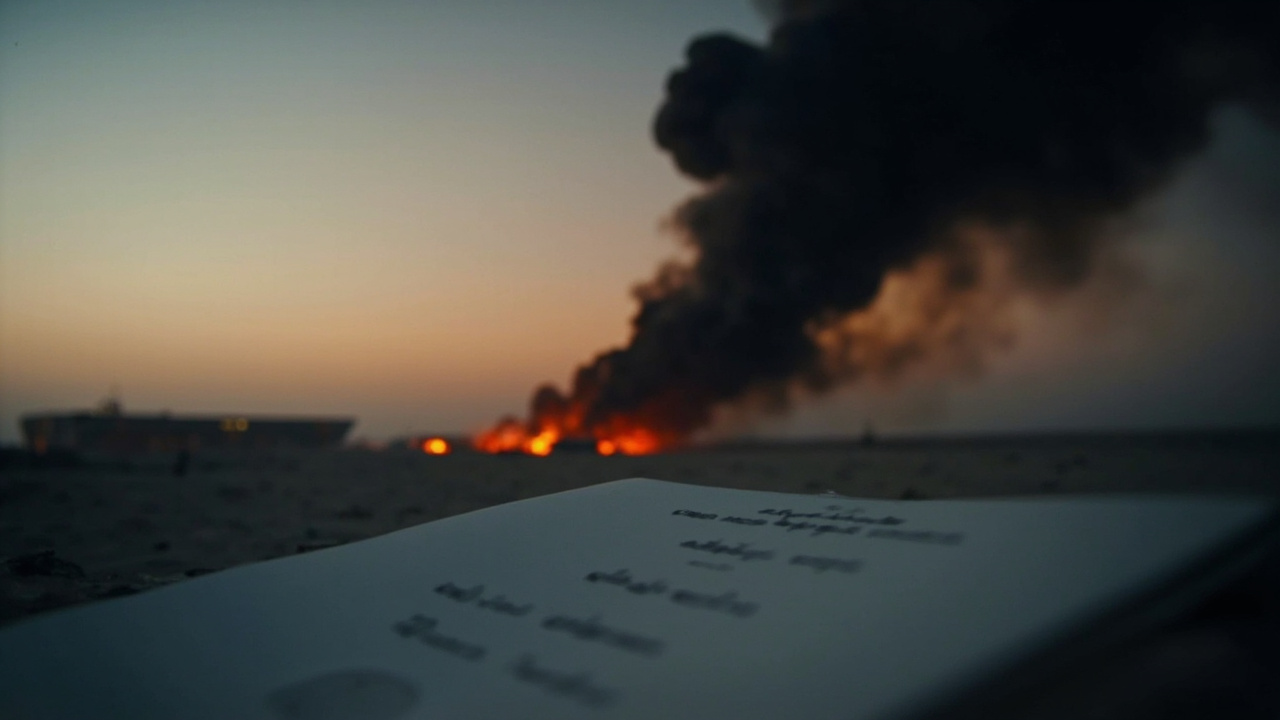
On Monday, March 24, Iranian drones struck a fuel tank at Kuwait International Airport, sending a column of black smoke over the terminal while travelers scrambled for cover [1]. The same day, missiles targeted US military positions in Jordan and Bahrain, extending a retaliatory campaign that has hit American installations across four countries since the war began on February 28 [2]. And on that same day — on that very same day — Tehran received a 15-point ceasefire plan from Washington, hand-delivered through intermediaries, according to the New York Times [3].
The timing was not coincidental. It was the point.
As we reported in Tel Aviv Hit During Ceasefire That Isn't a Ceasefire, the gap between diplomatic language and military reality in this conflict has become a permanent feature rather than a temporary contradiction. Iran has now made that gap into a strategy.
The 15-point plan, details of which remain partially classified, reportedly demands Iran permanently abandon its nuclear weapons program, cease all proxy warfare, and accept restrictions on its ballistic missile arsenal [3]. In exchange, Washington has offered a pathway to sanctions relief and a ceasefire. Vice President Vance's name has been floated as a potential envoy. The plan arrived while the US military was simultaneously preparing to deploy at least 1,000 additional troops, including elements of the 82nd Airborne Division, to the Middle East [1].
Iran's response was to keep shooting while leaving the diplomatic channel open. Parliament Speaker Mohammad Bagher Ghalibaf declared Tuesday that conditions in the Strait of Hormuz would "not return to their pre-war status" [4]. Supreme Leader Mojtaba Khamenei's message was blunter: "the lever of blocking the Strait of Hormuz must definitely be used" [4]. Yet neither statement rejected negotiations outright. Both men spoke of terms, not termination.
This is the grammar of escalate-to-negotiate, a doctrine Iran has practiced since the Iran-Iraq War. You raise the cost of the status quo until your adversary's offer improves, and you do it while the offer is still on the table — not after it has been withdrawn.
The Kuwait airport strike was particularly calibrated. Drones hit a fuel storage tank, not the runway itself. Air traffic was disrupted for hours, but the airport was not destroyed. The attack demonstrated capability and restraint in equal measure — a message that said "we can reach your logistics" without saying "we are trying to close your airports permanently." Military analysts noted the precision was consistent with IRGC targeting patterns observed earlier in the conflict [2].
In Jordan, at least two US installations were struck by ballistic missiles, though US Central Command reported "no casualties and minimal damage to infrastructure." Bahrain's Isa Air Base, home to the US Fifth Fleet's aviation assets, received a barrage of cruise missiles that were largely intercepted by Patriot batteries, though debris struck a maintenance hangar [2].
The simultaneity across four countries — Kuwait, Jordan, Bahrain, and continuing strikes into Israel — represents a deliberate demonstration of Iran's multi-front capability. The IRGC has increasingly targeted sites across the Gulf, further regionalizing the war [5]. Each strike was calibrated below the threshold of mass casualties but above the threshold of deniability.
What makes the current moment distinctive is not Iran's willingness to fight while talking. That has been Tehran's approach for four decades. What is distinctive is that Washington appears to be operating under the same logic. The 15-point plan was sent while the Pentagon requested supplemental funding exceeding $200 billion for the campaign. The US-Israeli onslaught against Iranian nuclear facilities continued through the weekend even as intermediaries carried the ceasefire document [3].
Both sides are negotiating from positions they intend to strengthen, not freeze. The ceasefire plan is not a white flag. It is an opening bid in a negotiation where the currency is measured in missile strikes and barrel prices.
Defense Secretary Pete Hegseth reportedly told colleagues he was "disappointed" by the ceasefire concept, suggesting even within the administration there is no consensus on whether the plan is sincere or performative [6]. Trump, for his part, claimed Iran had given the US "a very big present" related to oil and gas — a characteristically opaque statement that may refer to Iran's decision to allow some vessels from "non-hostile" countries to transit the Strait of Hormuz [6].
The 15-point plan will be studied in Tehran, debated in committee, and answered — if it is answered — through a combination of military adjustments and diplomatic counter-proposals. Iran struck three bases while reading the peace plan because, in the logic of this war, striking and reading are not contradictory activities. They are the same activity conducted through different instruments.
The question is not whether Iran will negotiate. The question is at what price.
-- YOSEF STERN, Beirut
Sources & X Posts
News Sources
X Posts