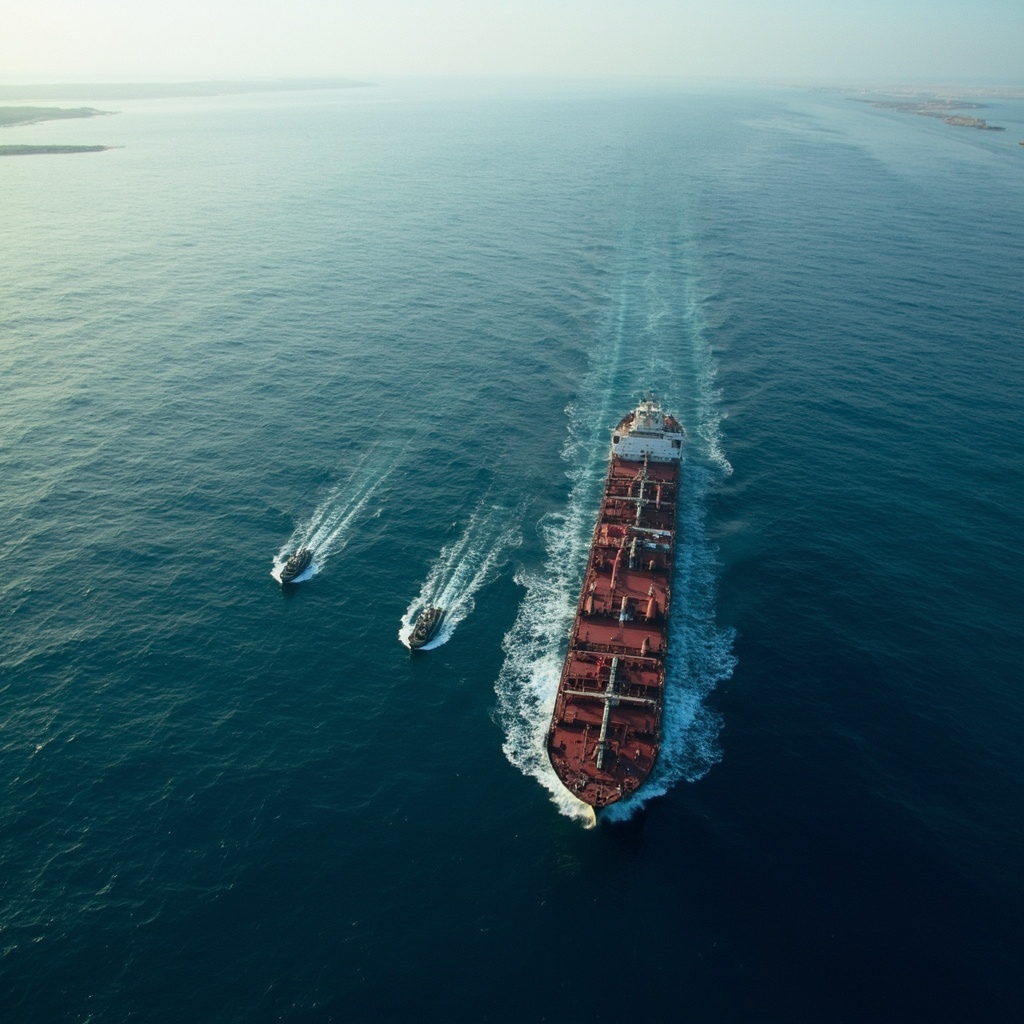
An Iranian lawmaker told state media on Sunday that Iran collects approximately $2 million per vessel for transit through the Strait of Hormuz. [1] Hours later, Iran's embassy in India denied the fee exists. At least one tanker operator has reportedly already paid it. [2]
The mechanism, according to Lloyd's List and the Financial Times, works through intermediaries who negotiate with the Islamic Revolutionary Guard Corps. A fee is agreed — reportedly up to $2 million per voyage — and the vessel is cleared through an IRGC-controlled corridor along the Iranian coast. [3] Preferred currency: yuan.
Traffic through Hormuz has dropped to roughly 5 percent of normal volume since the war began. [4] For tankers still transiting, the math is stark: a VLCC carrying two million barrels pays $1 per barrel in toll alone, on top of quadrupled charter rates and war-risk insurance premiums that can reach $6 million per voyage.
Iran has turned a military chokepoint into a revenue operation. The denial from its embassy and the confirmation from its parliament occupied the same news cycle — a contradiction that suggests the toll is real, informal, and politically inconvenient to acknowledge.
-- PRIYA SHARMA, Delhi