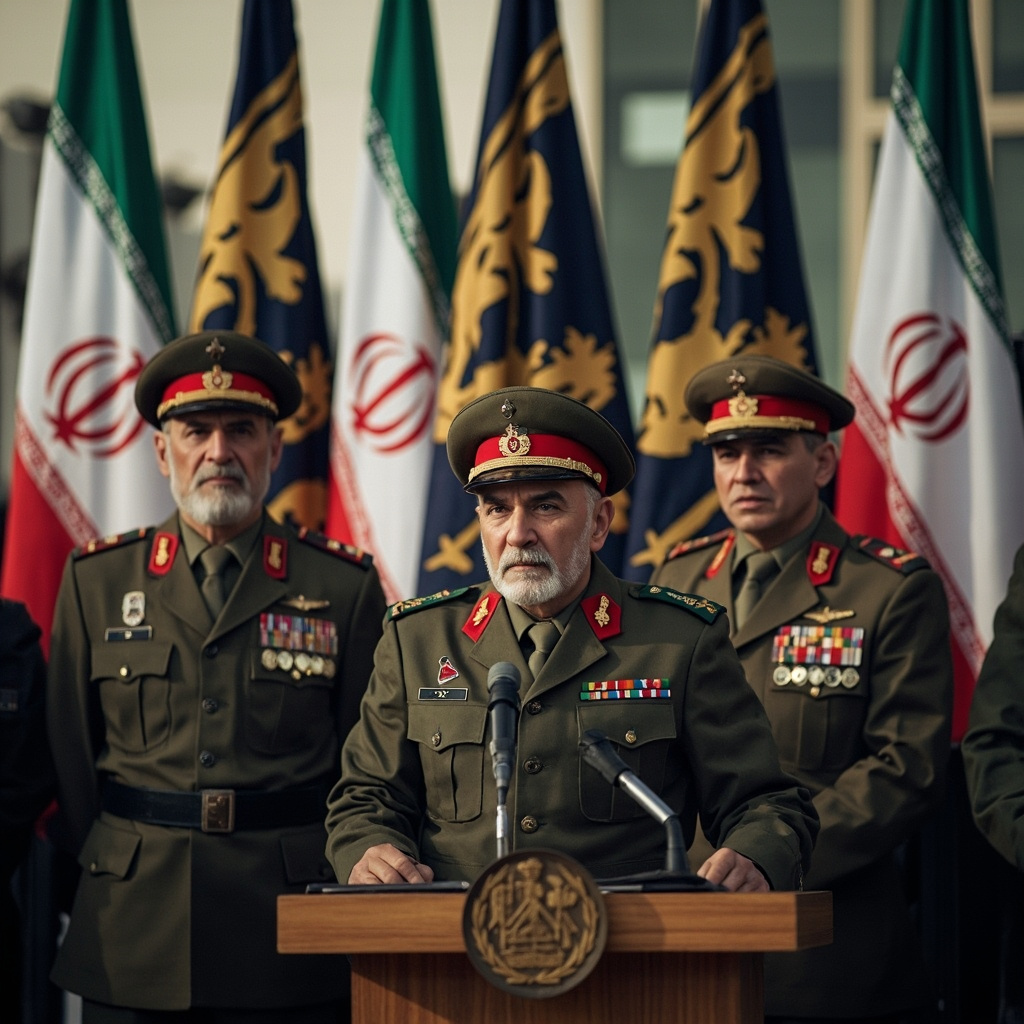
Supreme Leader Ali Khamenei told the Iranian Supreme National Security Council on Saturday that future retaliatory strikes "will no longer be calibrated to the scale of the attack received." The statement, broadcast on Iranian state television and confirmed by three regional diplomatic sources, marks the first explicit abandonment of the proportional response doctrine that has governed Iranian military behavior since the war began on February 28. [1]
The doctrine mattered because it was the architecture of restraint. For four weeks, Iran responded to American and Israeli strikes with attacks that matched their scope: an airfield strike for an airfield strike, a naval engagement for a naval engagement. The calculus was transparent enough that both sides could anticipate the escalation cycle and manage it. That transparency is what Khamenei's statement dismantles. [1] [2]
The trigger appears to be the Israeli strikes on the Arak and Yazd nuclear facilities earlier this week. Iranian officials have described the attacks as crossing a threshold that invalidates the existing framework. IRGC spokesman Ramezan Sharif said Saturday that "when the enemy strikes at the foundations of our sovereign capability, proportionality becomes complicity in our own destruction." The language is theatrical, but the operational shift it signals is not. [2]
Three consequences follow. First, the targeting calculus changes. Proportional response meant military-for-military. Disproportionate response opens civilian infrastructure, energy assets, and Gulf state economic targets to Iranian retaliation. Second, coalition partners in Saudi Arabia and the UAE now face risks they had not priced into their participation. The strike on Prince Sultan Air Base on Friday already demonstrated Iran's willingness to target allied bases; the doctrinal shift makes that a floor, not a ceiling. Third, American deterrence theory assumes rational actors operating within predictable escalation ladders. Removing the proportionality constraint forces Pentagon planners to model scenarios they had treated as tail risks. [2] [3]
The administration has not responded to the statement. The Pentagon's Saturday briefing made no reference to a doctrinal change. The gap between what Tehran said publicly and what Washington acknowledged publicly is itself a measure of how quickly the information space has fractured. [3]
-- KATYA VOLKOV, Moscow