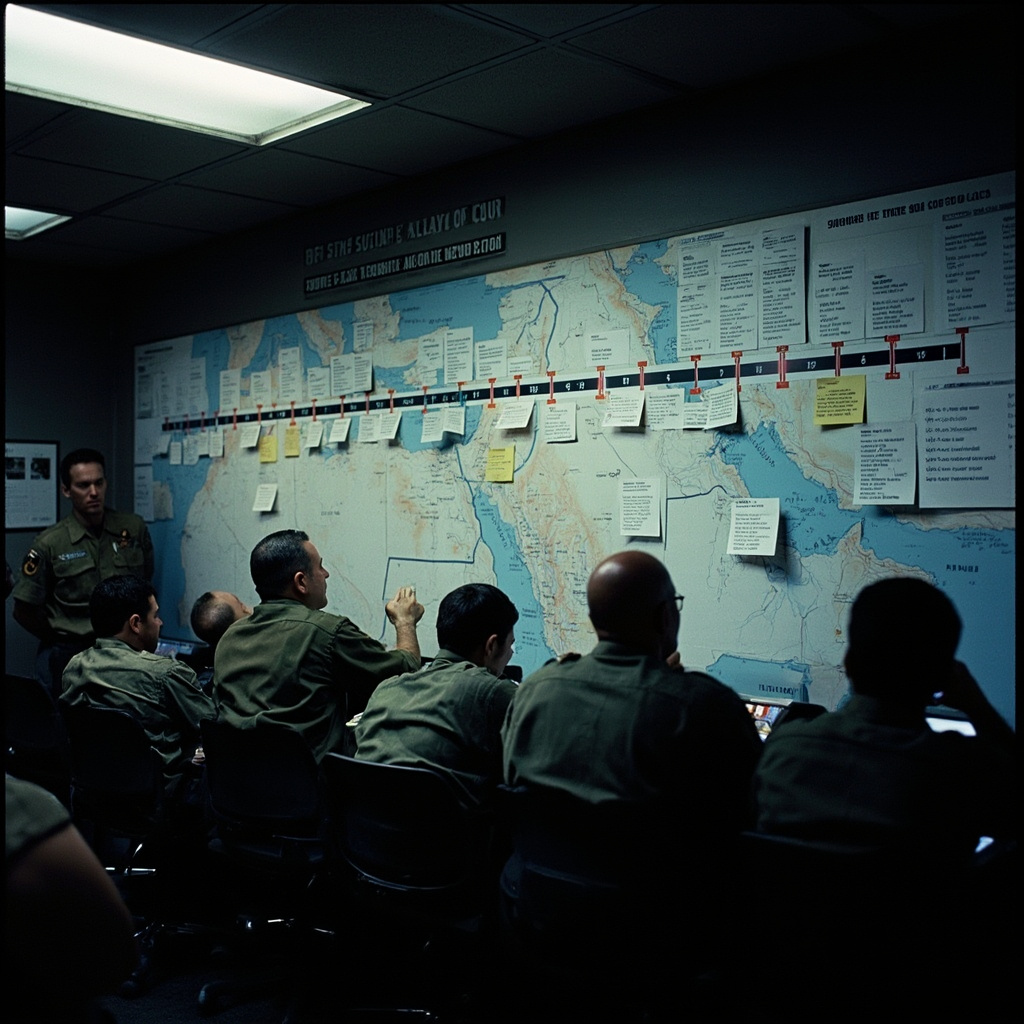
On February 28, the United States and Israel launched surprise airstrikes across Iran. Today is day twenty-nine. The conflict that senior officials said would be measured in "weeks, not months" has now lasted a month by any calendar. [1]
The war's geography has expanded in every direction. Iran fires ballistic missiles at Israel almost daily. Hezbollah joined on March 1. The Houthis opened a third front from Yemen on Friday. The Strait of Hormuz remains effectively blockaded by a combination of mines, drones, and insurance premiums that accomplish what a formal closure would. Oil has risen from $72 to nearly $100 per barrel. The Fed is frozen. Gas is approaching $4. [2]
No ceasefire framework exists. The Muscat talks, convened by four Muslim-majority nations without Washington at the table, represent the only diplomatic track. Iran has said its retaliation will "no longer be proportional." Israel struck nuclear facilities at Arak and Yazd. The DHS shutdown — triggered in part by a dispute over war funding — became the longest in American history this week.
The human cost remains difficult to verify. Iranian state media has reported thousands of civilian casualties from US and Israeli strikes. Western intelligence estimates are lower but acknowledge significant infrastructure damage across multiple Iranian cities. Israeli civilian casualties from Iranian missile barrages have been reported in the dozens.
One month in, the war has not accomplished any stated objective. Iran's government has not fallen. Its missile capacity has not been exhausted. Its regional allies have mobilized, not retreated. The question is no longer whether this war will be quick. It is whether anyone has a theory for how it ends.
-- KATYA VOLKOV, Moscow