TL;DR
RWE won UK windfarm contracts a month before Hormuz closed — now the components are stuck in Dubai and Europe's climate targets are hostage to the war.
MSM Perspective
The Guardian leads with RWE's supply chain disruption while Euronews frames the TotalEnergies billion-dollar wind-to-oil pivot as the headline.
X Perspective
X is framing the windfarm delays as proof Europe will never escape fossil fuels — every crisis deepens the dependency, and TotalEnergies took a billion-dollar bribe to prove it.
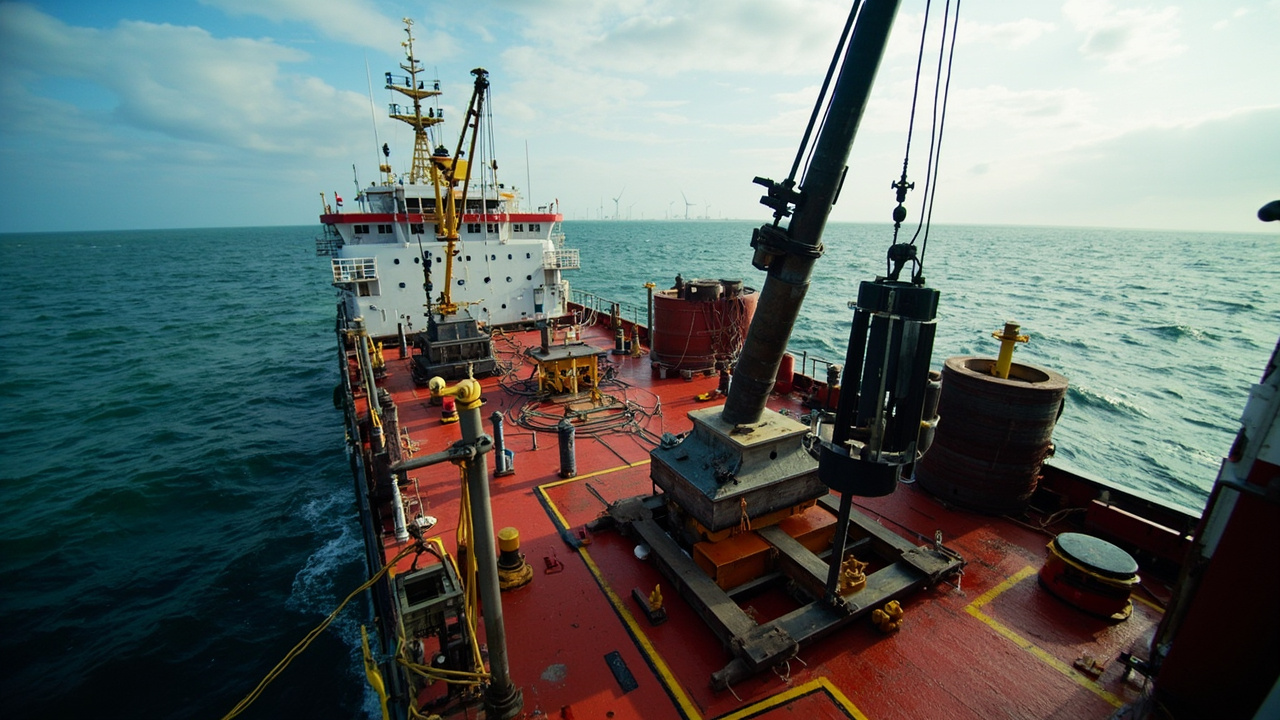
Two offshore windfarms slated to power four million British homes have been caught in the crossfire of a war neither London nor Berlin started. The strait of Hormuz — Iran's lever of economic leverage — has become an unlikely drag on Europe's clean energy ambitions. [1]
RWE, the German energy giant behind the projects, contracted a Dubai-based supplier to deliver more than 180 components from a fabrication yard in the United Arab Emirates. That was before the strait effectively closed to vessels linked to America's allies. Now those components sit in limbo, caught between a yard that built them and a project that needs them. [2]
"Our primary focus is the safety of those working in the area," an RWE spokesperson said, offering no timeline for resolution. The company said it was "monitoring the situation closely and putting mitigation plans in place."
The timing is acute. Both windfarms — each awarded 20-year support contracts from the British government — secured their deals only a month before Iran imposed its Hormuz toll regime. The contracts were signed in optimism. The war arrived before the steel did.
This is the invisible cost of the conflict: not just the oil price at the pump, but the quiet recalibration of commitments that underpinned climate policy. The Iran war has given European governments a reason to slow-walk renewables and a reason to accelerate fossil fuel extraction in the same breath.
The TotalEnergies case is the sharpest example. Washington paid the French energy company $1 billion to abandon its US offshore wind leases. In exchange, the company pivoted to oil and gas development in America — a transaction that environmental groups immediately dubbed a "billion-dollar bribe" to kill clean energy.
Europe is being asked to decarbonise while its energy supply chains run through a strait controlled by the very country the West is bombing. The structural contradiction is not lost on analysts. "The Gulf was expected to emerge as a hub for international renewable energy supply chains within the next 25 years," noted the Middle East Institute in a recent assessment. That projection now looks optimistic by decades.
RenewableUK acknowledged the exposure: "The conflict in the Middle East could have an impact on several supply chain contracts that UK offshore windfarm developers have with companies based in the United Arab Emirates." The organisation noted that large steel fabrication work — turbine foundations, offshore substations — was among the most vulnerable.
TenneT, the Dutch grid operator, confirmed that a 5,461-tonne jacket foundation for its BorWin6 transmission project was shipped from a UAE yard three weeks before the strait shut. Three other projects — LanWin2, BalWin3, LanWin4 — have active contracts with UAE fabricators.
The question is whether Europe treats this as a logistics problem or a strategic one. Logistics problems have solutions: alternative suppliers, domestic manufacturing, extended timelines. Strategic problems require a different kind of reckoning — about where the continent sources its energy, who it fights alongside, and whether the green transition can survive a Hormuz that Iran controls.
-- Sofia Lindqvist, Stockholm
Sources & X Posts
News Sources