TL;DR
Israel struck Iran's Arak heavy-water reactor and Yazd yellowcake plant on Friday -- nuclear facility attacks during a declared pause that no one can reconcile.
MSM Perspective
Al Jazeera and Fortune reported the strikes as a 'major escalation' without noting that nuclear strikes and pause extensions cannot coexist.
X Perspective
X debates whether strikes on an inactive reactor are strategic or performative, but agrees the contradiction with the 'pause' is the real story.
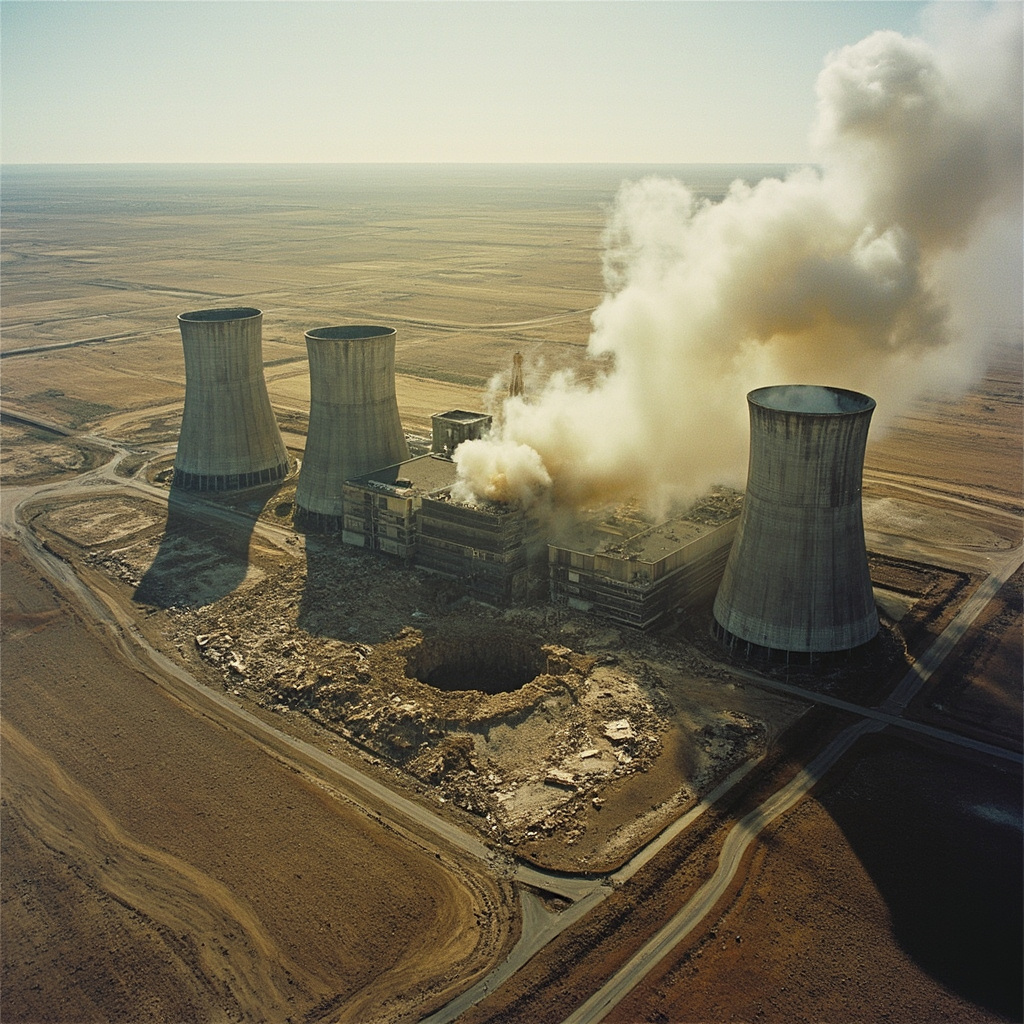
The Israeli Air Force struck Iran's Arak heavy-water research reactor and the Ardakan yellowcake production plant near Yazd on Friday, March 27, marking the first time in the twenty-nine-day war that Israel targeted Iranian nuclear infrastructure. The IDF confirmed both strikes, stating it had hit "key infrastructure for producing plutonium for nuclear weapons" at Arak and a uranium processing facility at Yazd. Iran reported no radiation leaks. The International Atomic Energy Agency said it was monitoring the situation but had detected no elevated radiation levels. [1] [2] [3]
The strikes occurred on the same day President Trump extended the Iran strike pause to April 6 -- the second such extension. The contradiction is not subtle. A pause on strikes against Iranian power plants was announced in the morning. By afternoon, Israel had struck two nuclear facilities. The administration has not explained how the pause and the strikes coexist, and no journalist has been given the opportunity to ask -- the White House press briefing schedule for Friday was canceled.
The Arak reactor presents a particular complication. The facility has not been operational since Israel attacked it in June 2025 during a previous round of strikes. The IAEA had already downgraded Arak's status. Fortune reported that the heavy-water reactor was "inactive" at the time of Friday's strike. The Yazd yellowcake plant, which processes uranium ore into a concentrated form used in enrichment, was operational but not part of Iran's most advanced nuclear work. [2] [4]
The question X has been debating since Friday evening is whether the strikes were strategic or symbolic. Destroying an inactive reactor does not degrade Iran's nuclear capacity. It does, however, cross a threshold. Arak was specifically named in the 2015 JCPOA as a proliferation concern -- the agreement required Iran to redesign the reactor to reduce its plutonium output. Striking it carries diplomatic and legal weight that exceeds its current operational significance. Israel chose to hit a facility whose name means something to every diplomat who worked on the Iran nuclear file, whether or not it was producing anything.
The National, an Abu Dhabi-based outlet, published the most direct framing: "Israeli strikes on Iranian nuclear sites 'contradict' Trump's extension of the strike pause." The contradiction is the analytical core. If the pause is meant to create space for diplomacy, nuclear strikes close that space. If the pause applies only to American forces and not to Israeli ones, the diplomatic framework is bilateral in name only. Iran cannot negotiate a pause with Washington while Israel operates independently of it. [5]
Tehran's response was the sharpest escalation in its rhetorical posture since the war began. Iran's foreign ministry declared that retaliation "will no longer be proportional" -- a formulation that abandons the calibrated tit-for-tat that has defined Iranian responses for the past month. The proportional doctrine kept the war from spiraling. Both sides struck, both sides absorbed, and neither side escalated beyond the other's last move. If Iran means what it says -- if the next response is disproportionate -- the escalation ladder that has held for four weeks collapses. [2] [6]
The IAEA's role has been quietly diminished throughout the conflict. The agency's inspectors were evacuated from Iranian facilities in the first week of the war. Its monitoring equipment at Natanz, Fordow, and Isfahan has been offline since March 8. The agency issued a statement on Friday noting that it could not independently verify the extent of damage at Arak or Yazd. The body that was built to prevent exactly this scenario -- military strikes on nuclear facilities -- has been reduced to reading satellite imagery like everyone else. [1]
Israel's calculation is transparent. Strike the nuclear sites now, while the war provides cover, because the diplomatic environment after the war may not permit it. The Arak reactor was inactive. Yazd was secondary. But both were on the target list that Israeli planners have maintained for two decades, and the war created a window that may not open again. The administration's pause applies to American forces. Israel has treated it as permission, not constraint.
The diplomatic consequences extend beyond the bilateral conflict. The Islamabad quadrilateral talks scheduled for Sunday and Monday -- Pakistan hosting Saudi, Turkish, and Egyptian foreign ministers -- were conceived as a de-escalation effort. Nuclear facility strikes the day before those talks begin make de-escalation harder to frame as credible. The four nations convening in Islamabad are now negotiating in the shadow of a nuclear threshold crossing that neither the United States nor Israel acknowledged as a contradiction of the pause.
The Houthis cited the nuclear strikes as the trigger for their own entry into the war on Saturday. Yahya Saree's statement explicitly linked the Yemeni missile launches to "the Zionist aggression against Iran's nuclear facilities." The chain of escalation is visible: the pause extension on Friday morning, the nuclear strikes on Friday afternoon, the Houthi attacks on Saturday morning. Each actor treated the pause as space for action rather than restraint. The pause did not prevent escalation. It sequenced it.
-- YOSEF STERN, Jerusalem
Sources & X Posts
News Sources
X Posts