TL;DR
Defense Minister Katz ordered destruction of all Litani River bridges as IDF chief said fighting has 'only just begun.'
MSM Perspective
NYT and Times of Israel reported the escalation as part of a widening Israeli ground campaign, with Beirut warning of a humanitarian catastrophe.
X Perspective
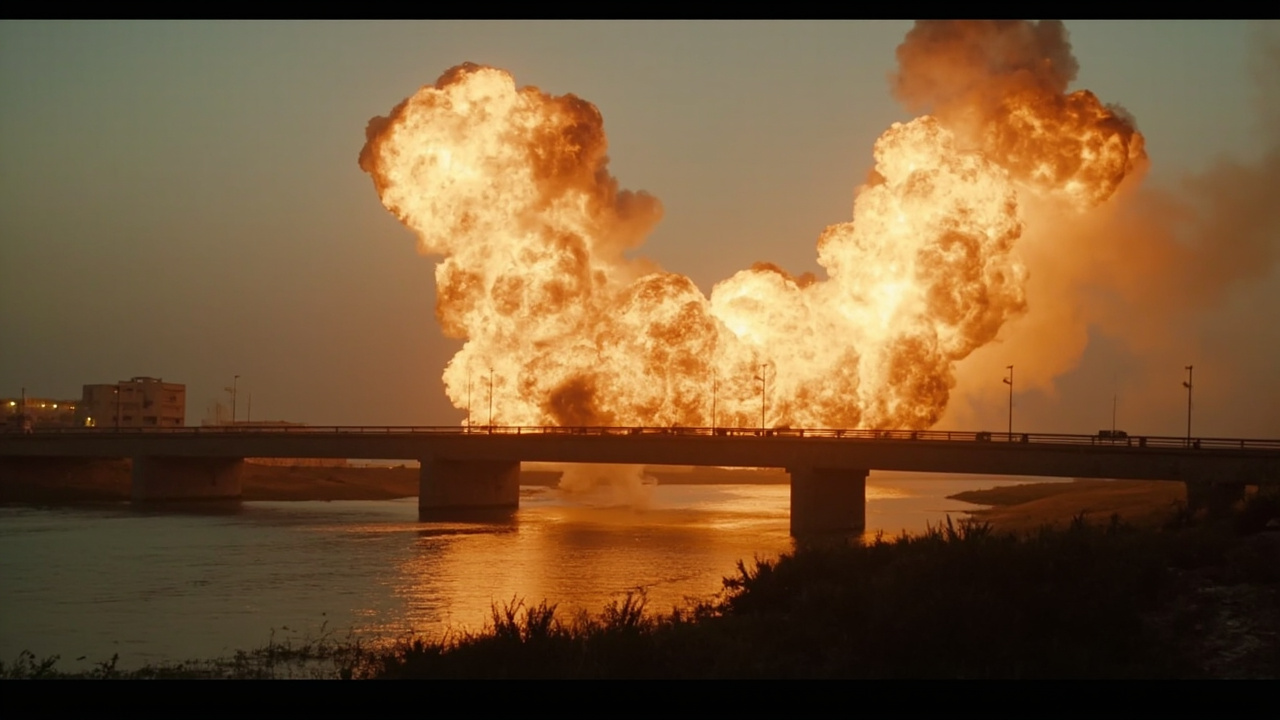
Footage of the Qasmiya Bridge strike circulated widely, with observers calling it an attempt to sever southern Lebanon from the rest of the country.
Defense Minister Israel Katz announced Sunday he had instructed the Israel Defense Forces to "immediately destroy all the bridges over the Litani River that are used for terror activity," marking the most aggressive expansion of Israeli demolition operations in Lebanon since the war began on February 28 [1]. IDF Chief of Staff Lt. Gen. Eyal Zamir followed with a blunt assessment: the fight against Hezbollah, he said, "has only just begun" [2].
Hours later, Israeli jets struck the Qasmiya Bridge, a major crossing on the coastal highway north of Tyre. It was the fifth Litani bridge hit since March 2. The IDF said the bridge was a "key" route Hezbollah used to move operatives and weapons southward, and that the strike was carried out "to prevent harm to Israeli civilians as well as to Lebanese civilians" [2].
Beirut responded with fury. Lebanese President Joseph Aoun called the strikes a "dangerous escalation" and a "prelude to a ground invasion," demanding the UN Security Council intervene to deter Israel from expanding operations [2]. Prime Minister Nawaf Salam accused Hezbollah of inviting the destruction but warned the bridge strikes had created a "disaster" for southern Lebanon.
The humanitarian toll is accelerating. Lebanon's health ministry put the overall death toll at 1,029 people since March 2, including 118 children and 79 women. The count does not distinguish between combatants and civilians [2]. The UN Human Rights Office estimates roughly one million people have been displaced by the renewed fighting.
Ramzi Kaiss, a Lebanon researcher at Human Rights Watch, warned that if all the bridges are struck, "the civilian harm is going to be so immense that you have a humanitarian catastrophe as people still living in the south won't be able to access food, medicine and other basic needs" [2].
Israel estimates that just under 1,000 members of Hezbollah's elite Radwan Force have crossed the Litani into southern Lebanon. The IDF says it has killed over 570 Hezbollah operatives, struck more than 2,000 targets including 120 command centers and 100 weapon depots, and that Hezbollah is firing an average of 150 rockets per day, mostly from deeper within southern Lebanon [2].
Zamir framed the northern front as inseparable from the Iran campaign. "Iran is our primary effort, and the northern arena is another central arena. They are interconnected," he said. "The Hezbollah terror organization constitutes a central proxy of the Iranian terror regime" [2].
Experts have warned that targeting civilian infrastructure, even when used for military purposes, could amount to a war crime under international humanitarian law. The century-old Qasmiya Bridge survived the strike with large craters but was not fully demolished [2].
-- YOSEF STERN, Jerusalem
Sources & X Posts
News Sources