TL;DR
Lionel Jospin died at 88 — the Socialist PM who proved that competent governance can lose to populism if it doesn't see it coming.
MSM Perspective
The NYT and Guardian obituaries center the 2002 Le Pen shock as Jospin's defining moment — and the opening chapter of Europe's populist crisis.
X Perspective
X is treating Jospin's death as a parable for 2026: the technocratic left built real policy, then got blindsided by the populist wave it refused to take seriously.
Lionel Jospin, who as prime minister of France introduced the 35-hour work week, legalized civil unions for same-sex couples, and then lost to a fascist in the first round of a presidential election, died on Saturday, March 22, in Paris. He was 88. His daughter confirmed that he died at a palliative-care facility following surgical complications [1].
The obituaries will remember him for the policy and the defeat. Both deserve attention. But the more consequential fact about Jospin's political life is that he delivered one of the clearest warnings in modern European history — and nobody heard it.
The 35-Hour Revolution
Jospin became prime minister in June 1997 after leading the Socialist Party to an unexpected parliamentary victory. Jacques Chirac, having dissolved the National Assembly in a miscalculated bid to strengthen his majority, instead handed the left a mandate. Jospin governed in "cohabitation" — a distinctly French arrangement in which the president and prime minister come from opposing parties and must share power without killing each other, or at least without admitting they want to.
The signature policy was the reduction of the statutory work week from 39 hours to 35, implemented through legislation in 1998 and 2000. The Aubry laws — named after Labor Minister Martine Aubry — were, at the time, the most ambitious labor market intervention in any developed economy. Employers with more than 20 workers were required to reduce working time while maintaining salaries, with the state providing social security contribution relief to offset costs [2].
The economic establishment predicted catastrophe. It did not arrive. French unemployment, which stood at 12.2 percent when Jospin took office, fell to 8.6 percent by 2001 — the steepest decline in a generation [3]. GDP growth averaged 3.1 percent per year during his tenure. The mechanism was disputed: did shorter hours actually create new jobs, or did the broader European expansion do the work? The question never received a clean answer. What received a clean answer was the political one: the French public liked working less and being paid the same. The policy remains in force a quarter-century later, the subject of periodic conservative attempts at modification but never full repeal.
Jospin also oversaw the introduction of the PACS — the Pacte Civil de Solidarité — which gave legal recognition to same-sex partnerships in 1999, fourteen years before France legalized same-sex marriage. He privatized more state assets than any previous French government, left or right, including stakes in France Télécom and Air France. He helped manage the transition from the franc to the euro. By the conventional metrics of governance — growth, employment, social reform, institutional modernization — his was one of the most productive premierships in the Fifth Republic [2].
The 2002 Earthquake
None of it mattered on April 21, 2002.
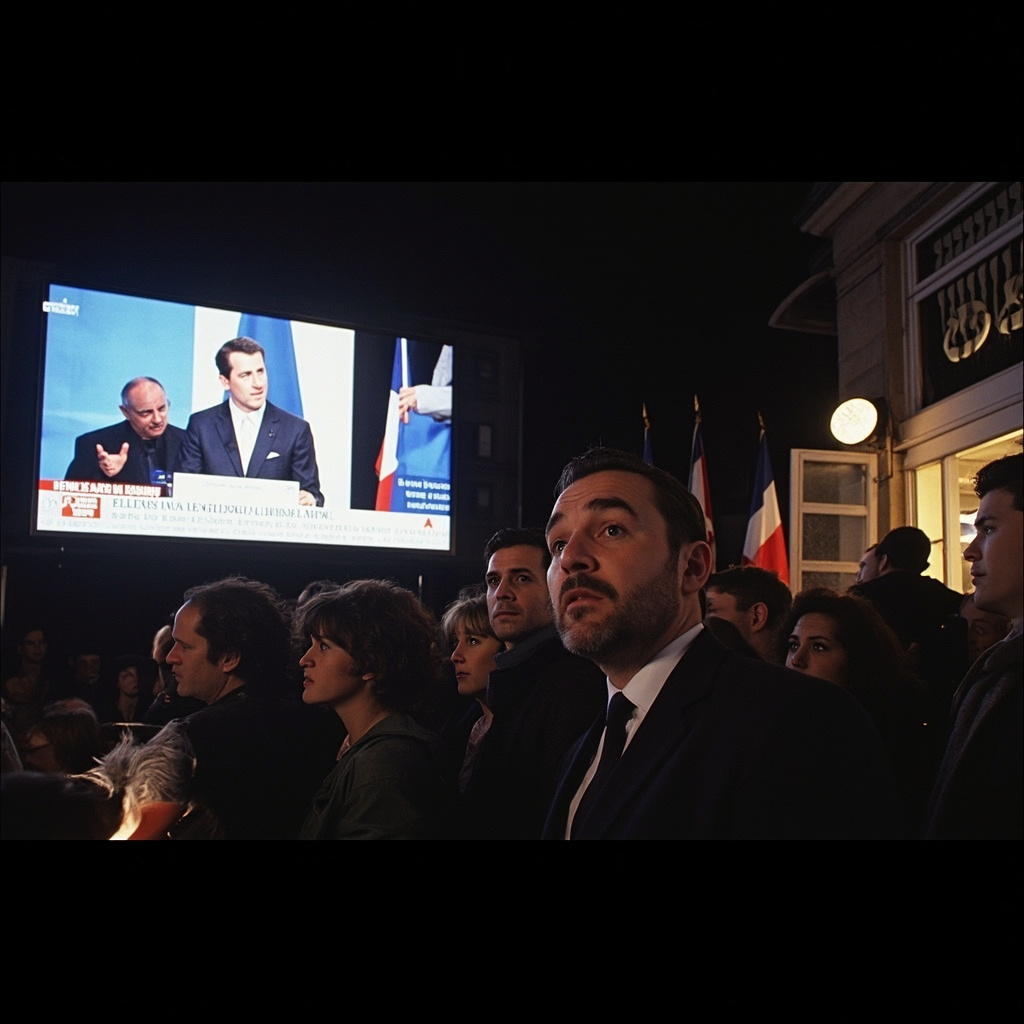
The first round of the French presidential election produced a result so shocking that it redrew the map of European politics: Jean-Marie Le Pen, the leader of the Front National, finished second with 16.86 percent, edging Jospin into third place at 16.18 percent [4]. Chirac, the sitting president, took 19.88 percent. The runoff would pit the conservative incumbent against the far right. The Socialist candidate — the sitting prime minister, the architect of the 35-hour week, the man who had reduced unemployment by a third — was eliminated.
Jospin announced his withdrawal from politics that night. "I take full responsibility for this failure," he said, standing at a podium with the composure of a man who had already made his decision before the results were announced. He never ran for office again.
The defeat was not merely electoral. It was epistemological. Jospin had governed competently, delivered measurable improvements in the lives of French workers, and expanded civil rights. He had done, by the standards of social democracy, exactly what social democrats are supposed to do. And it was not enough — because the election was not fought on the terrain of policy. It was fought on the terrain of identity, immigration, and the fear that France was losing itself. Le Pen did not need to offer a governing program. He needed to offer a grievance. He did.
The Warning Nobody Heard
The 2002 result was treated, at the time, as a French peculiarity — a product of voter fragmentation, Socialist complacency, and the specific toxicity of Le Pen père. The political class rallied behind Chirac in the second round, handing him 82 percent of the vote in a "republican front" against the far right. The crisis was declared resolved. Lessons were claimed to have been learned.
They had not been learned. They would not be learned for another fourteen years, and then only through repetition on a continental scale.
The populist sequence that followed was not a coincidence. It was a pattern — and Jospin's defeat was Chapter One. The Netherlands in 2002: Pim Fortuyn's List won 26 seats in parliament nine days after his assassination. Austria: Jörg Haider's Freedom Party joined the government. Hungary: Viktor Orbán returned to power in 2010 and never left. The United Kingdom, 2016: Brexit. The United States, 2016: Trump. France again, 2017 and 2022: Marine Le Pen reached the second round both times, improving her father's vote share each time. Italy, 2022: Giorgia Meloni. Argentina, 2023: Javier Milei. The thread was visible from 2002, if anyone had bothered to follow it.
Jospin saw it and said so, though not loudly enough and not early enough. In retirement, he wrote books and gave occasional interviews in which he argued that the left's failure was not programmatic but perceptual — it had delivered policy without delivering meaning. The 35-hour week improved lives. It did not answer the question that Le Pen was asking: Who are we, and who gets to belong?
The Lesson That Persists
The obituaries from the Guardian, the Times, and Le Monde all note the 2002 defeat, and all frame it as a trauma from which French socialism never recovered [5][6][7]. This is accurate as far as it goes. The Socialist Party has been a diminished force since Jospin's departure, its base fragmented among Mélenchon's France Insoumise, Macron's centrist project, and the Greens.
But the more durable lesson is not about French socialism. It is about the limits of technocratic competence as a political strategy. Jospin governed well. He governed honestly. He governed with a seriousness of purpose that his contemporaries — Chirac, Berlusconi, Schröder — often lacked. And he lost to a man who governed nothing and promised only rage.
The 35-hour week endures. The PACS endures. The warning endures, too, though it took the form not of a speech or a manifesto but of an election result: the moment a competent social democrat discovered that competence, in the face of populist energy, is a necessary condition for power but not a sufficient one.
Lionel Robert Jospin. Born July 12, 1937, Meudon, France. Died March 22, 2026, Paris. He gave France shorter hours and longer weekends. He did not give it an answer to the question that outlived him.
-- CHARLES ASHFORD, London
Sources & X Posts
News Sources