TL;DR
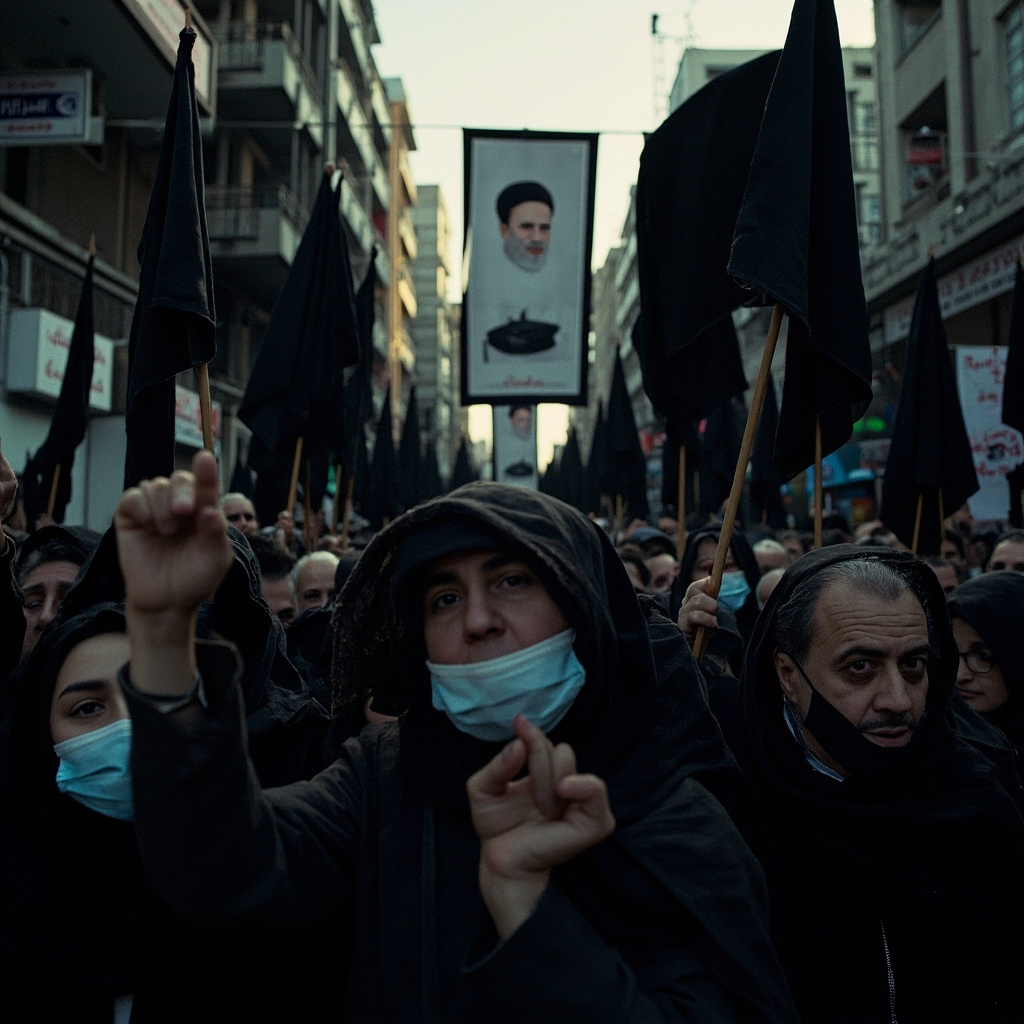
Tulsi Gabbard says the Iranian regime remains intact though degraded. Al Jazeera's reporting on the post-assassination chain of command points to the same reality: decapitation changed Iran's political shape, but not in the clean, collapse-inducing way many outside observers assumed.
MSM Perspective
ABC emphasized Gabbard's assessment that the regime is intact but largely degraded. Al Jazeera's reporting on the post-assassination chain of command stressed decentralization, succession by Mojtaba Khamenei, and the likelihood that military and intelligence figures are gaining relative weight as political off-ramps disappear.
X Perspective
On X, regime-collapse rhetoric still outruns the evidence. Opposition accounts read every funeral, factional shuffle, and security move as proof the system is finally hollow. Security-focused accounts argue the opposite: that Iran was designed for exactly this kind of decapitation test. The platform is clearer about desire than probability.
The outside fantasy of this war was simple: kill the leader, shock the system, split the regime, watch the structure sag under the weight of its own fear.
The real story has turned out to be slower and more durable than that.
Tulsi Gabbard told Congress this week that the Iranian regime appears intact, though largely degraded. [1] Al Jazeera's reporting on the post-assassination chain of command arrives at a complementary conclusion from the ground up: yes, key figures are dead, yes, command is in flux, yes, younger hardliners may gain power — but no, the system itself has not toppled into paralysis. [2]
That matters because a great deal of commentary around this war still treats the killing of Ali Khamenei as if it should have ended the question. It did not. It only changed the form of it.
Durable by Design
Yesterday this paper's regime-survival feature argued that the Islamic Republic was built to survive decapitation. The March 20 delta is that even U.S. public intelligence language now sounds more compatible with that thesis than with the fantasy of imminent collapse.
Gabbard's phrasing is important. "Intact" is not a casual word. It does not suggest normality, and it certainly does not suggest strength, but it does suggest continuity. [1] A regime can be degraded, frightened, factionalized, and bloodied while still being operational enough to fight, punish, and reorganize.
Al Jazeera's reporting helps explain how. Mojtaba Khamenei has been announced as successor, but analysts quoted there point to a wider field of power: parliament speaker Mohammad Bagher Ghalibaf, former security and military figures, the IRGC, the Basij, and a Supreme National Security Council that still functions even after Ali Larijani's assassination. [2]
No one outside the innermost circles appears able to sketch the chain of command with perfect confidence. That uncertainty is real. It is simply not the same thing as collapse.
The Men With Off-Ramps Are Fewer
What may have changed most is not the regime's ability to continue, but the type of people left standing to shape what "continue" means.
Al Jazeera's analysts make a crucial point: killings like Larijani's remove potential off-ramps. [2] Officials with diplomatic memory, negotiating habit, or institutional authority to cool a crisis are increasingly gone, sidelined, or overshadowed. The surviving center of gravity tilts toward security services, intelligence organs, and commanders whose political education came less from bargaining than from fighting.
That does not make Iran more stable. It may make it more securitized, more brittle, and more dangerous. But those are not the same as less capable of sustaining war.
This is the uncomfortable truth many outside powers prefer not to hear. Decapitation can degrade a regime without solving the war that justified the decapitation. In some cases it narrows the available exits and sharpens the logic of continuation.
A Regime That Can Still Absorb Blows
The structure of this war rewards lazy metaphors. Remove the head, kill the snake, break the chain. Reality is uglier and more distributed. The Iranian state was never only one man, however powerful. It was also a web of institutions, commanders, provincial structures, ideological networks, and men trained to operate after shock.
That is why the key question for March 20 is no longer whether the regime has been hurt. It plainly has. The key question is whether the surviving structure has enough coercive depth to outlast the assumptions made about it.
So far, the answer appears to be yes.
And every day that answer remains yes, the war's opening logic looks less decisive than advertised.
-- YOSEF STERN, Jerusalem