TL;DR
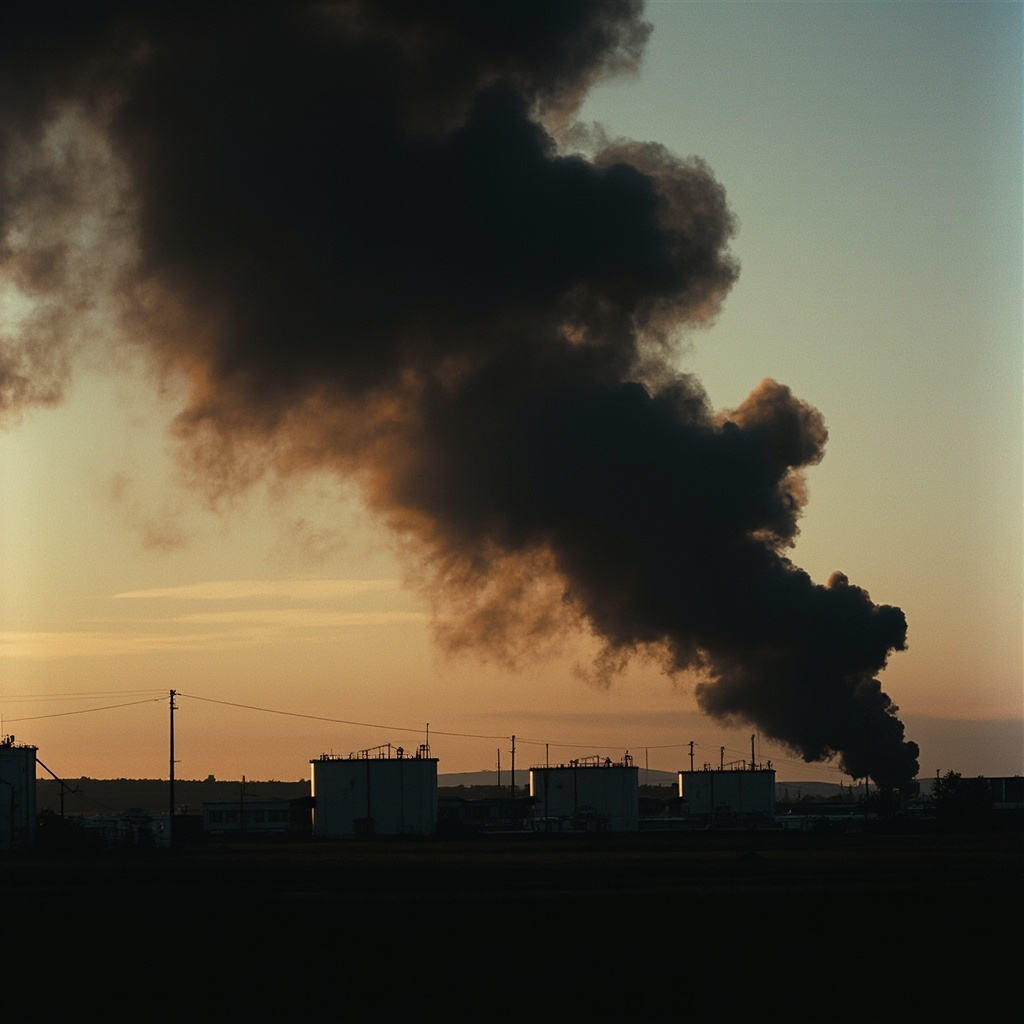
Iran struck Kuwait's airport for the second time in four days, setting fuel tanks ablaze and confirming the Gulf as a live battlefield.
MSM Perspective
Reuters and Al Jazeera reported the attack as an escalation but focused on the absence of casualties.
X Perspective
X users shared fire footage from Kuwait and argued the Gulf states invited this by hosting U.S. forces.
Iranian drones struck fuel storage tanks at Kuwait International Airport early Wednesday, igniting a large fire that shut down all departures for at least four hours, Kuwait's civil aviation authority confirmed [1]. No casualties were reported, but the authority described "significant material damage" to airport infrastructure, including radar systems that had only been partially repaired after the first drone attack four days earlier [2].
As this paper reported when Iranian drones hit a Kuwaiti-flagged tanker in Dubai harbor, the war's geographic envelope has been expanding since mid-March. Wednesday's strike confirmed the pattern: the Gulf's civilian infrastructure is now inside the target set.
The Kuwaiti civil aviation authority issued a statement accusing "Iran and the armed factions it supports" of the attack, the second use of that specific phrasing in less than a week [1]. Kuwait's foreign ministry summoned the Iranian charge d'affaires for the third time since the war began. The ministry's statement called the attack "a brazen violation of Kuwaiti sovereignty and international law."
The timeline of Gulf civilian hits has compressed. On Saturday, March 28, drones struck the airport's radar installation, causing what Kuwaiti authorities described as "significant" damage and forcing overnight diversions to Bahrain and Saudi Arabia [2]. Before that, the tanker attack in Dubai harbor on March 26 demonstrated Iran's willingness to strike civilian maritime targets inside allied ports. Wednesday's fuel tank strike — aimed at Kuwait Petroleum Corporation storage facilities adjacent to the main runway — escalated from infrastructure disruption to energy infrastructure targeting.
Reuters reported that the drones were Shahed-136 variants, the same one-way attack design Iran has deployed against shipping in the Gulf and against U.S. positions in Iraq [3]. The Pentagon did not comment on whether U.S. Patriot batteries stationed at Camp Arifjan, roughly 40 kilometers from the airport, had attempted interception. Kuwait hosts approximately 13,500 American troops, the largest U.S. military footprint in the Gulf after Qatar.
The IRGC did not claim direct responsibility for the Wednesday strike but issued a statement through its Sepah News agency saying that "nations hosting the forces of aggression should expect consequences commensurate with their participation" [4]. The phrasing tracked with the IRGC's broader posture since February: any Gulf state that provides basing, overflight, or logistical support to the U.S.-Israeli campaign is a legitimate target.
Gulf Cooperation Council states have responded unevenly. Qatar, which hosts Al Udeid Air Base and the forward headquarters of U.S. Central Command, has avoided any public strikes thus far. Bahrain, home to the U.S. Fifth Fleet, was targeted by ballistic missiles on March 15, with the projectiles intercepted by Patriot systems. The UAE, after the Dubai tanker attack, pulled its ambassador from Tehran and closed Iranian consulates in Dubai and Abu Dhabi.
Kuwait's position is the most exposed. The emirate's geography — 120 miles of coastline facing Iran across the northern Gulf — makes air defense warning times shorter than anywhere else in the GCC except Bahrain. The airport sits near the coast. The fuel storage tanks, which supply both commercial aviation and military logistics, were not hardened against drone attack.
The fire burned for approximately six hours before Kuwait's fire service brought it under control, according to Gulf News [5]. The aviation authority redirected all inbound commercial traffic to Bahrain and Dammam. Kuwait Airways said it expected to resume departures by early afternoon local time.
On X, footage of the airport fire circulated within minutes. Several accounts with large followings argued that Gulf states had invited the attacks by hosting American forces — a framing that tracks with Iran's stated justification. Mainstream outlets led with the absence of casualties, a framing that understates the strategic significance: two civilian airports hit in four days means Iran has demonstrated repeatable access to Gulf airspace that Gulf and American air defenses have not interdicted.
The question is no longer whether the Gulf is a target. The question is what Iran hits next.
-- Yosef Stern, Jerusalem
Sources & X Posts
News Sources
X Posts