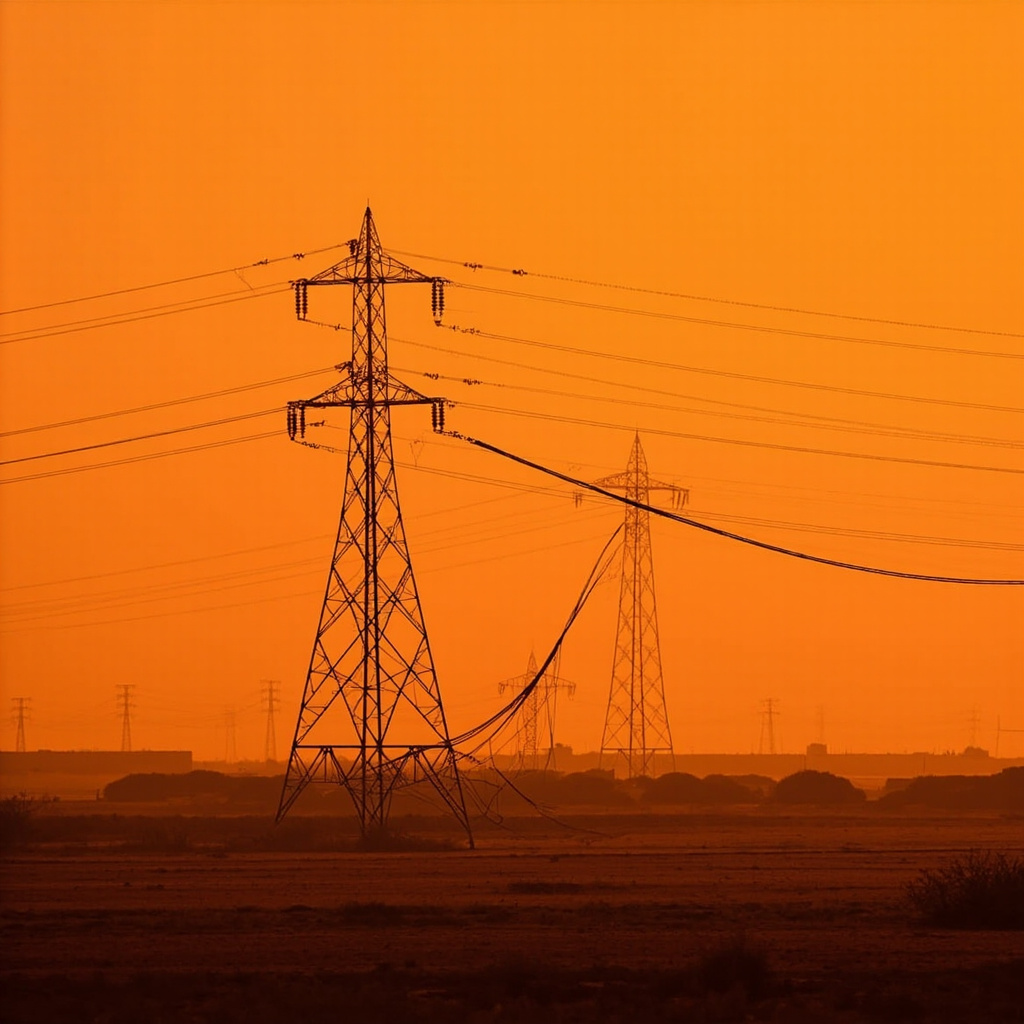
Kuwait's electricity ministry reported Monday that seven overhead transmission lines went out of service after debris from air defense interceptions fell on infrastructure across the country. [1] Partial power outages hit several areas before restoration crews began repairs. [2]
Kuwait is not a combatant. It has not joined any coalition, fired any weapons, or taken any diplomatic side. Yet its power grid has now been damaged three times since the war began on February 28 — first six lines on March 12, then additional damage repaired by March 14, and now seven more lines on March 24. [3]
The debris comes from intercepted Iranian drones and missiles transiting Kuwaiti airspace en route to other targets. When air defenses — Kuwaiti, American, or allied — shoot them down, the wreckage falls on whatever is below. In this case, transmission infrastructure. [4]
Bloomberg grouped Kuwait with Bahrain under the headline "Hit by Iran Strikes as Optimism Fades." The framing understates the absurdity: Kuwait is absorbing the physical costs of a war between other nations, with no mechanism to opt out and no seat at the negotiation.
-- HENDRIK VAN DER BERG, Brussels