TL;DR
The BBC, NBC, and Psychology Today have all published looksmaxxing investigations this quarter — the trend has outgrown its incel origins.
MSM Perspective
BBC published its investigation on March 14; NBC and Psychology Today followed, all framing it as a concerning trend among teen boys.
X Perspective
X's looksmaxxing community has normalized the language of facial optimization to a point where mainstream media coverage reads as late discovery.
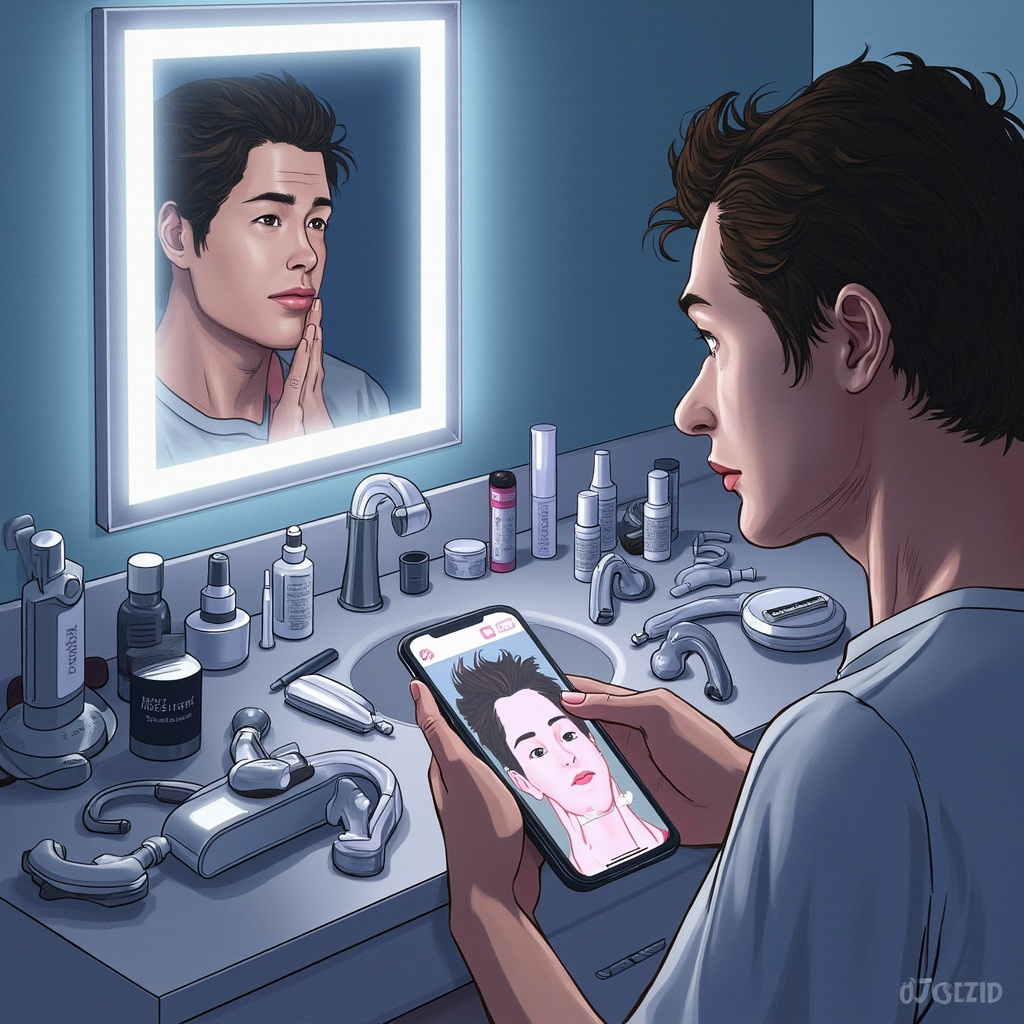
The looksmaxxing movement — men pursuing aggressive appearance optimization through surgery, supplements, and digital facial analysis — has crossed from niche internet subculture to mainstream media concern. The BBC published an investigation on March 14 documenting young men sculpting their jaws and scoring their facial symmetry. [1] NBC News followed with a video segment on February 25. [2] Psychology Today ran a clinical assessment on March 3 warning that male beauty ideals are becoming "more defined and demanding." [3]
The trend's intellectual roots lie in incel forums, but its current audience is far broader. WAMU reported that some of the most extreme practitioners advocate injecting themselves with unregulated hormones and peptides. [4] The University of Virginia's student publication traced the ideology to eugenic beauty standards, arguing the movement repackages old hierarchies in the language of self-improvement. [5]
What makes looksmaxxing distinct from earlier men's grooming trends is its quantification. Practitioners use AI-driven apps to score facial ratios, track jaw development, and benchmark against algorithmic beauty standards. The cosmetic industry has noticed: the male skincare and surgical market is growing faster than the female equivalent for the first time.
The movement grew on X and TikTok simultaneously, with influencers building audiences in the hundreds of thousands by promising "softmaxxing" and "hardmaxxing" transformations.
-- MAYA CALLOWAY, New York
Sources & X Posts
News Sources