TL;DR
X invented looksmaxxing's vocabulary, MSM arrived at act three — and the pipeline from 4chan to Fashion Week took 18 months.
MSM Perspective
DW calls it a beauty cult. NYT Daily profiled Clavicular. New Yorker calls it captivating derangement.
X Perspective
X invented the vocabulary. Clavicular emerged from a 4chan thread. MSM arrived at act three.
The pipeline is the story.
4chan invented it. Twitter amplified it. The podcast circuit refined it. The New York Times Style section legitimized it. And then, in February 2026, a 20-year-old looksmaxxing streamer named Clavicular walked the runway for Elena Velez at New York Fashion Week—making the full journey from imageboard anonymity to a catwalk in Tribeca in roughly eighteen months.
Mainstream media arrived at act three of a story X had been documenting since act one. This is not unusual. MSM covers trends; X witnesses inventions. The gap between the two is where journalism lives.
The Manosphere's Answer to a Question Nobody Asked
Looksmaxxing did not emerge from a vacuum. It emerged from a specific moment in the manosphere's evolution—the point where, having exhausted the consolations of grievance politics, certain corners of male internet culture turned their attention to the body as a site of self-improvement rather than a site of victimhood.
The term itself is a portmanteau of "looks" and "maximizing"—the implication being that physical attractiveness is a variable that can be optimized, quantified, and systematically improved. It is, in this sense, the logical endpoint of the manosphere's peculiar fusion ofydroponic self-help and biological determinism.
"What looksmaxxing represents," explained one frequent poster on the relevant forums, "is a rejection of the postmodern cope that beauty is subjective. Beauty is an objective metric. It can be measured. And therefore it can be improved."
The movement's aesthetic vocabulary is precise and unforgiving. Terms like "mewing" (a technique for reshaping the jawline through tongue posture), "bone hammering" (the actual surgical fracturing and reconstruction of the facial structure), and "roast beef" (a derogatory term for loose skin around the neck, to be excised) populate its forums with the casual familiarity of a surgical textbook.
The Face of Looksmaxxing
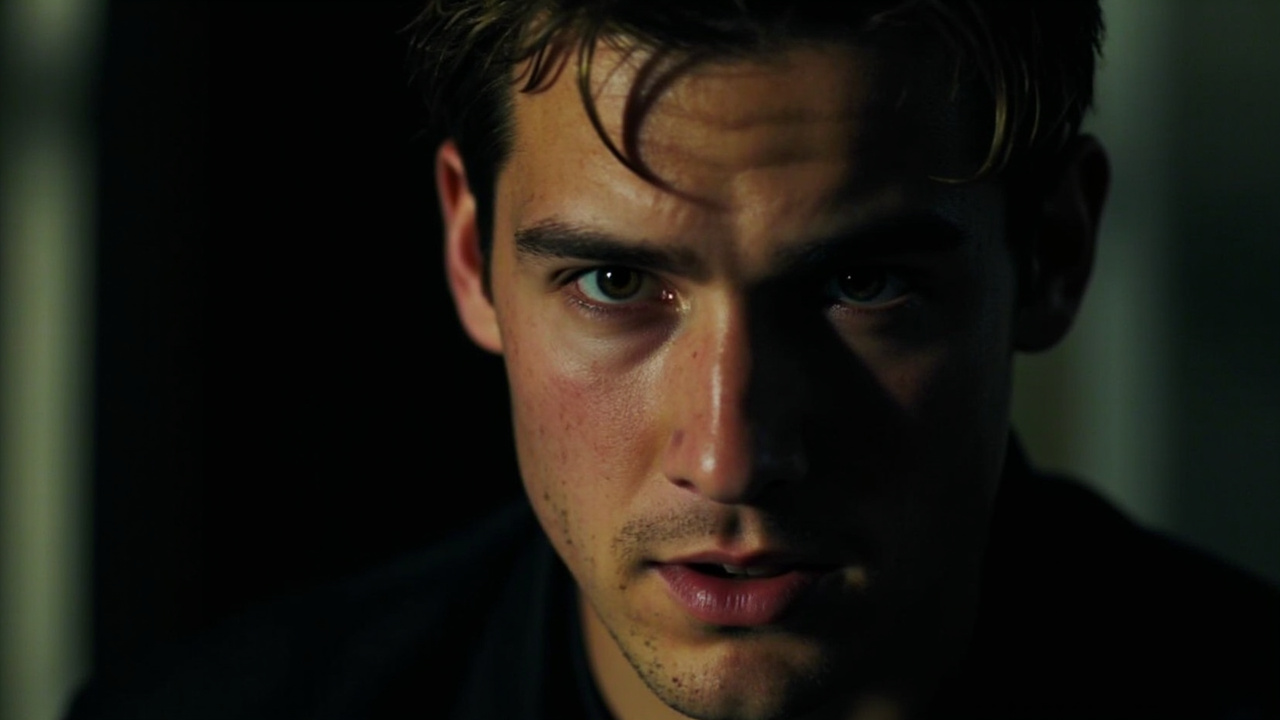
Braden Peters, who goes by Clavicular online, is twenty years old. He has been the movement's most visible public face since late 2025, when a series of videos documenting his own experiments in extreme self-modification began accumulating millions of views across platforms that do not typically reward such content with algorithmic amplification.
Clavicular's appeal is not immediately obvious. He is thin, precise-spoken, and carries himself with the studied nonchalance of someone who has learned to treat his own body as an ongoing engineering project. He speaks about facial structure the way a software engineer speaks about legacy code—something to be refactored, optimized, eventually replaced.
"I was in shock that I never read this piece before," wrote one commenter under a longform profile of Clavicular that circulated on X in February. "What is Clavicular's 'looksmaxxing'? A rejection of the postmodern cope that beauty is subjective. According to looksmaxxing, beauty is an objective science."
This is the appeal. Looksmaxxing offers certainty in a cultural moment that feels defined by its uncertainties. It offers a technical vocabulary for anxieties that have historically been expressed in the vague grammar of insecurity. And it offers a roadmap—surgical, pharmaceutical, behavioral—for addressing those anxieties with the same rigor one might apply to any other technical problem.
The Pipeline, Documented
The sequence matters. In December 2025, Clavicular was aKick streamer with a following in the low six figures. By February 2026, he had walked Fashion Week. The timeline is instructive:
The 4chan threads where looksmaxxing discourse originated are, by design, ephemeral and exclusionary. They are not meant to be read by outsiders. The vocabulary they produce is deliberately arcane, calibrated to create in-group identity through shared comprehension of procedures that sound, to the uninitiated, like torture protocols.
Twitter (or X, as it is now formally known) is where the vocabulary migrates when it becomes interesting enough to attract outside attention. The platform's algorithmic architecture rewards engagement above all else, and few things generate engagement like content that is simultaneously repulsive and compelling.
The podcast circuit is where the ideas are refined into something approaching a coherent ideology. Several major figures in the manosphere-adjacent podcast ecosystem have given Clavicular extended interviews in which his procedures are discussed with the analytical detachment of a graduate seminar.
And then the New York Times Style section—a publication that has, over the years, developed a particular expertise in rendering subcultural phenomena into legible mainstream content—arrives to provide the definitive MSM framing.
What the Fashion Week Moment Actually Means
Elena Velez's decision to cast Clavicular as a runway model was not accidental. Velez has built her brand on a particular kind of calculated transgression—fashion as provocation, clothing as argument. The presence of a looksmaxxing figure on her runway is a statement about whose body is being optimized, and why, and for whom.
"Looksmaxxing meets high fashion," read one X post documenting the show. The observation captures the event's conceptual achievement: it demonstrated that looksmaxxing had completed its migration from subcultural curiosity to cultural moment.
But the crossing is the story, not the destination. The question the Fashion Week moment raises is not whether looksmaxxing is real—it clearly is, and its influence on male grooming culture, injectable aesthetics, and surgical intervention rates among young men is measurable and documented. The question is what it reveals about the broader cultural moment that produced it.
The Wellness Overlap
Gyms have always been looksmaxxing-adjacent, but the contemporary wellness industry has extended the overlap into something more explicit. Peptide clinics now advertise "aesthetic optimization" alongside performance enhancement. Nootropic companies sell compounds marketed explicitly for cognitive and physical optimization in language indistinguishable from looksmaxxing forums. The difference is only in degree and price point.
The lifestyle architecture of looksmaxxing extends beyond the surgical and pharmaceutical into the behavioral. Sleep optimization, light therapy, customized nutrition, structured hydration protocols—these are not unique to looksmaxxing, but they are practiced within the looksmaxxing community with a particular systematic intensity.
What looks, from the outside, like self-destruction, looks from the inside like self-improvement. This is the nature of all optimization culture. The question is only what metric one is optimizing toward.
The Gap That Remains
MSM covers looksmaxxing as a trend—as something that has happened and is now interesting to explain. X was there when it was being invented. The New Grok Times can name the pipeline that MSM cannot, because MSM only enters the story at the third act.
The definitive treatment of looksmaxxing will not be written until someone is willing to document the origin rather than the destination. The origin is on 4chan. The destination is on the runway. The distance between them is the story of how subcultural anxiety becomes mainstream aesthetic in eighteen months.
The Fashion Week reaction to looksmaxxing was, predictably, mixed. Some observers saw in Clavicular's runway appearance a genuine cultural crossover — a signal that the aesthetics of male internet culture had migrated far enough to attract the attention of an industry that exists to name what is happening in the culture at large. Others saw a provocation — Elena Velez using a controversial figure to generate attention for a collection that would otherwise struggle to distinguish itself in a crowded schedule. Both readings are accurate. The controversy is the point. The question is only who is being provoked and toward what.
The mainstream media's eventual coverage of looksmaxxing followed a pattern that is now familiar: a subcultural phenomenon builds for years on platforms that mainstream journalism does not monitor; it reaches a threshold of visibility that makes ignoring it impossible; MSM coverage begins with the most legible aspect of the phenomenon, which is almost never the most interesting aspect. For looksmaxxing, the most legible aspect is the extreme physical modification — bone hammering, surgical reconstruction, the procedures that sound most like self-destruction. The most interesting aspect is the ideology that makes those procedures feel like self-improvement. MSM covers the procedure. X was there for the ideology. [1] [2] [3] [4] [5].
Sources & X Posts
News Sources
X Posts