TL;DR
Streaming now accounts for 40 percent of all viewing and Hollywood mega-mergers are accelerating — the casualty is the local newsroom that nobody in a boardroom thinks about.
MSM Perspective
MediaPost reports local news as 'the biggest casualty' of studio mergers and streaming's 40% viewing share; the LA Times documents Nexstar's cuts at KTLA as emblematic of the trend.
X Perspective
Laid-off KTLA journalists are posting farewell videos that double as eulogies for an industry — local news anchors as the last visible face of journalism in American cities.
Streaming now accounts for 40 percent of all television viewing in the United States. Hollywood studios are merging at a pace not seen since the conglomerate era of the 1990s. And the institution absorbing the most damage from both trends is the one least equipped to survive it: the local television newsroom. [1]
MediaPost reported Tuesday that local news is "the biggest casualty" of the entertainment industry's structural transformation. The arithmetic is straightforward. Studio mergers consolidate content budgets around streaming platforms and theatrical tentpoles. Local stations, which operate on advertising revenue tied to over-the-air viewership, lose audience share to streaming and investment attention to corporate parents focused on national and global content strategies. The local newscast — the most consistently profitable product at most network affiliates — becomes a cost to be managed rather than a franchise to be built. [1]
The pattern is visible at KTLA in Los Angeles, one of America's oldest and most-watched local stations. Nexstar Media Group, KTLA's parent company, laid off dozens of on-air staff in February, including longtime anchors and meteorologists who had been fixtures of the station for years. The cuts came as Nexstar prepared to complete its acquisition of TEGNA, a deal that would create the largest local television company in the United States. [2][3]
The fired journalists did not go quietly. Christina Pascucci, a KTLA anchor of more than a decade, told the New York Post she was "blindsided" and gave a blunt assessment of local television's future: the economics no longer work for the model that employed her. Viewers are not watching scheduled newscasts at 5, 6, and 11 the way they once did. Advertisers are following the viewers to digital and streaming platforms. The revenue base that supported large local newsrooms is eroding, and no one has found a replacement. [3]
The FCC is supposed to prevent mergers that harm local media diversity. MediaPost notes that the current commission has shown little appetite for intervention. The Nexstar-TEGNA deal will give a single company control of stations reaching more than 70 percent of U.S. television households — a concentration of local media ownership that would have been unthinkable two decades ago. [1]
The Los Angeles Times, in a long report published Sunday, described the broader dynamic: local television news is caught between an industry that no longer values it and an audience that no longer schedules its day around it. The journalists who remain are doing more work with fewer resources, covering wider geographic areas, and competing for viewer attention against every app on every phone in every pocket. [2]
The irony is that demand for local information has not declined. What has declined is the willingness of media conglomerates to fund the gathering of it. Every merger that prioritizes streaming content over local journalism reduces the number of reporters covering city councils, school boards, courts, and police departments. These are the beats where accountability journalism happens — and where its absence is felt most directly.
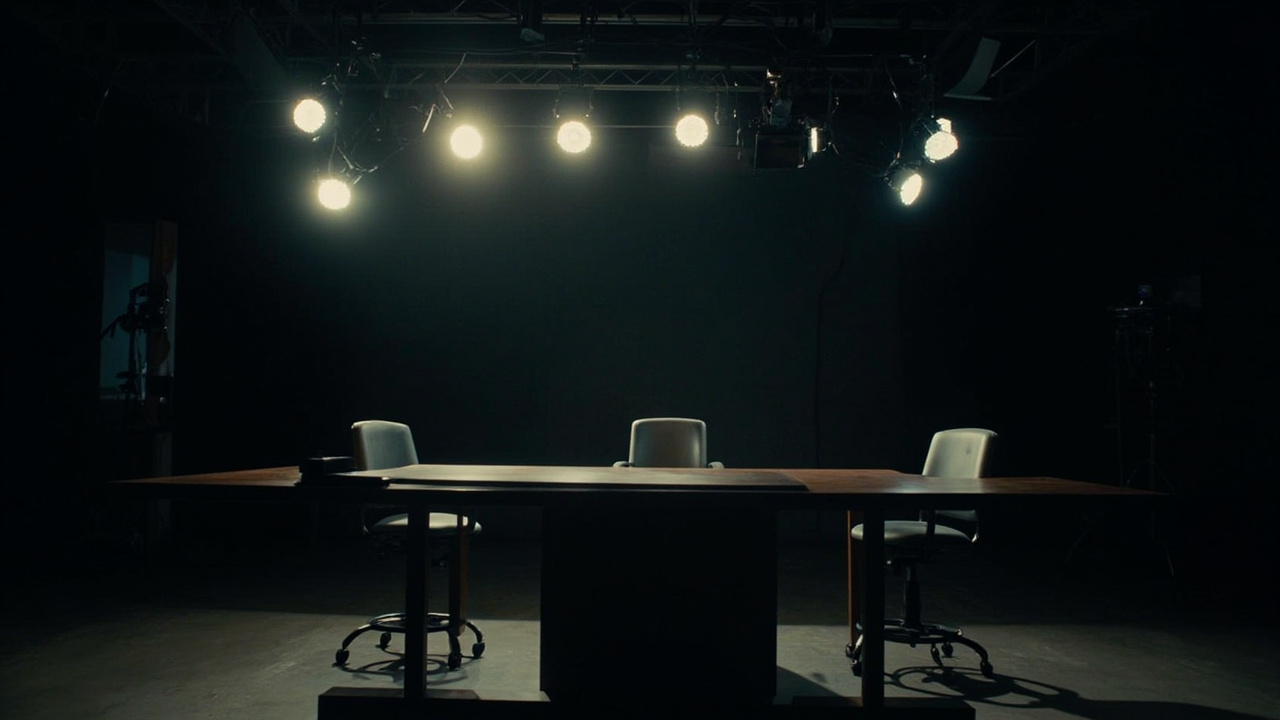
The local anchor desk is empty. The lights are still on, but the cameras are not rolling.
-- ANNA WEBER, Berlin
Sources & X Posts
News Sources