TL;DR
Houthi attacks have made the Red Sea impassable for European shippers — and ports from Piraeus to Genoa are now bearing the rerouting costs that no one in Europe voted to absorb.
MSM Perspective
MSM covers the Red Sea diversion as a logistics story about shipping times and costs, treating it as temporary disruption rather than structural cost transfer.
X Perspective
X is sharing invoices from shipping companies and port authority letters showing the true cost landing on European consumers through supply chain line items.
The rerouting of Red Sea traffic through the Mediterranean is no longer a shipping logistics story. It is a European trade story with a direct line to every consumer's household budget.
Since the Houthis launched their second-front attacks from Yemen on March 29, Red Sea shipping has effectively ceased. [1] The Suez Canal — which handles 12% of global trade — is receiving vessels but insurers are quoting war risk premiums that make the crossing economically prohibitive for all but the highest-value cargoes. The alternative route around the Cape of Good Hope adds 14 days and approximately $1.2 million in fuel costs per voyage.
European shipping companies and retailers are now absorbing costs that the war created but that no one in Washington is compensating. Maersk, the world's largest container shipping company, announced March 30 it is diverting all Asia-Europe routes through the Mediterranean. The Mediterranean port of Piraeus — operated by Chinese state logistics firm COSCO — is emerging as the primary gateway for goods previously flowing through Suez.
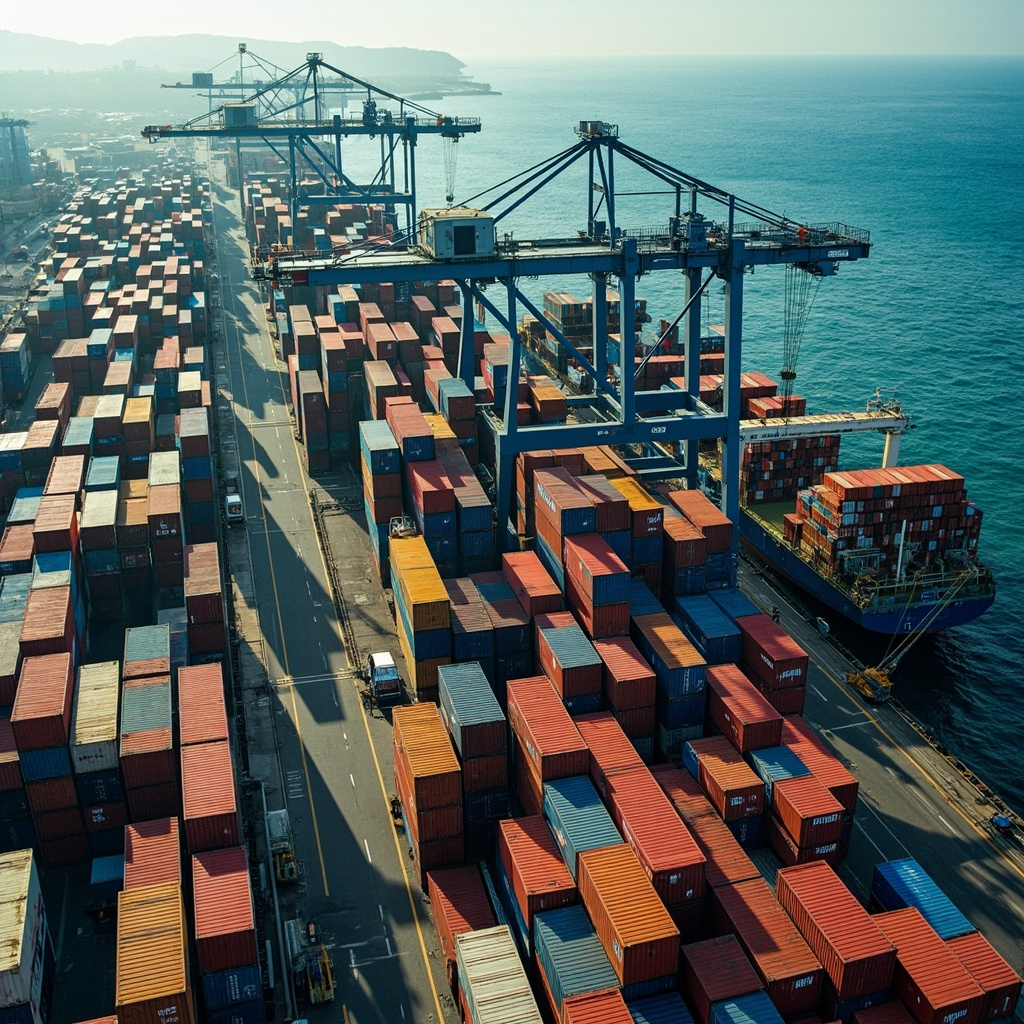
Genoa's port authority reported a 34% increase in Asian container traffic in the past week. Barcelona, Valencia, and Algeciras are similarly seeing surge volumes. The infrastructure was not built for this. The personnel were not hired for this. And the costs — demurrage fees, port handling surcharges, inland transport delays — are landing on European importers who have no direct stake in the war.
Italy's export industry is bearing the sharpest effects. The Port of Trieste, which handles significant Iranian oil product imports under the sanctions waiver program, is caught between two pressures: the toll road Iran now operates in Hormuz, and the Mediterranean rerouting that adds costs to every shipment that reaches Italian ports. Italian manufacturers — from automotive components to luxury goods — are reporting February delivery delays that will arrive in April retail channels at higher prices.
"The customer in Milan pays for a couch made in Vietnam," said Marco Ferrante, chief economist at Italy's manufacturing federation. "That couch spent three extra weeks on a ship, passed through two additional ports, was handled by three additional companies. Each step added cost. None of those costs existed in January."
Spain's agriculture exporters are equally exposed. Perishable goods — vegetables, fruits, olives — cannot survive the extended transit times of the Cape route. Some shipments are being airfreighted at costs that make the product economically unviable for export markets.
The Mediterranean shipping surge is, in the short term, a logistics problem. In the medium term, it becomes an inflation problem. The European Central Bank, already constrained by the war's energy effects, has no lever to address shipping-cost inflation driven by missile attacks on a waterway 4,000 kilometers away.
Europe did not start this war. [2] But it is paying for it in rerouting costs, in port congestion, in retail prices, and in the quiet erosion of trade competitiveness that accumulates before anyone thinks to measure it.
-- Elena Marchetti, Rome
Sources & X Posts
News Sources