TL;DR
MLB opens 2026 with record WBC momentum but faces the shadow of a wartime economy, rising gas prices, and the question of what normalcy even means.
MSM Perspective
Sports media leads with the WBC's record-setting attendance and rule changes while business desks quietly note the attendance uncertainty driven by the war economy.
X Perspective
X users are split between celebrating baseball's return as a necessary escape and questioning the dissonance of stadium fireworks while real ones land in the Middle East.
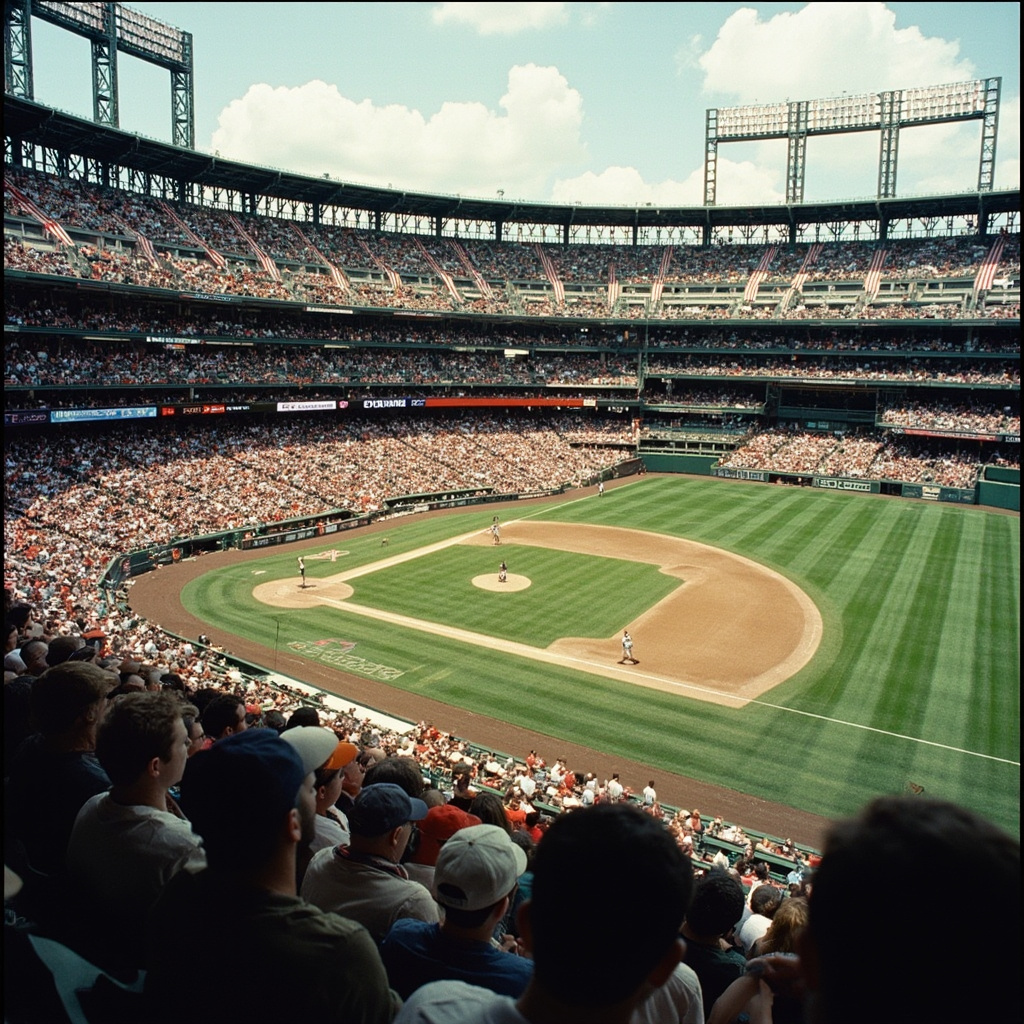
The first pitch of the 2026 Major League Baseball season landed in a catcher's mitt on March 25, and for a few hours, the country had permission to think about something other than oil prices and missile trajectories. Opening Day came and went, and now, a week into the season, the sport finds itself navigating a peculiar American tradition: playing ball while the nation is at war.
The numbers so far suggest the country wants the distraction. Spring training attendance rose 3.4 percent in 2026, the fifth consecutive year of growth, with 1.75 million fans passing through Cactus and Grapefruit League turnstiles [1]. The 2026 World Baseball Classic, which wrapped just before the regular season, shattered all-time tournament attendance records [2]. MLB enters the year with momentum on every measurable front — TV ratings, digital engagement, and gate revenue.
But the question hovering over every front office is whether that momentum can survive a war economy.
The Normalcy Machine
Baseball has always been America's normalcy machine. The sport played through two World Wars, Korea, Vietnam, the Gulf War, and the early months of Afghanistan and Iraq. After September 11, President Bush threw out the ceremonial first pitch at Yankee Stadium to signal that ordinary life could resume. The game has long functioned as a cultural thermostat, registering the national mood while offering refuge from it.
The 2026 season inherits that role under unusual conditions. Gas prices have crossed $5 per gallon nationally and approach $7 in California, making the drive to the ballpark materially more expensive [3]. Consumer confidence has dropped to its lowest level since the pandemic. Household discretionary spending — the budget line that pays for tickets, parking, and $16 beers — is under pressure.
"We're monitoring it week by week," said one American League executive who requested anonymity to discuss internal forecasting. "Spring training was great. Opening week was solid. But we're in a different economy than we were in February, and we know it."
What the Turnstiles Say
Early returns are mixed. The Cardinals opened at home on Thursday against Tampa Bay with a near-capacity crowd at Busch Stadium, though the franchise has publicly acknowledged "attendance uncertainties" heading into the season [4]. The Yankees-Giants opener in San Francisco drew strong numbers, buoyed by the novelty of the matchup.
The real test comes in April and May, when the initial excitement fades and the regular season settles into its 162-game rhythm. Teams in markets with higher gas prices and weaker local economies — Oakland's relocated Athletics in their temporary Sacramento home, the Marlins in South Florida, the White Sox in a rebuilding year — face the steepest challenges.
MLB's optimism rests partly on structural changes designed to speed up the game and attract younger fans. The pitch clock, introduced in 2023, has permanently reduced average game length to around 2 hours and 35 minutes. The expanded playoffs maintain October relevance for more teams deeper into the season. And a new streaming deal with Netflix, which aired Opening Day nationally, signals the league's push beyond traditional broadcast [5].
The Dissonance Factor
Not everyone is comfortable with the escapism. On social media, the split is vivid. Some fans post their Opening Day scorecards alongside gratitude for the distraction. Others note the cognitive dissonance of stadium flyovers when the jets doing the flying are the same models dropping ordnance over Iran.
The military integration that has become standard at American sporting events — color guards, anthem tributes, sponsored "hero of the game" segments — takes on a different weight during active combat operations. Several teams have expanded their military appreciation programming for 2026. Whether that reads as solidarity or spectacle depends on the viewer.
The players, for their part, are doing what players have always done: playing. Asked about the war on Opening Day, one veteran pitcher shrugged. "We can't fix that," he said. "But we can give people three hours where they don't have to think about it."
That may be the most honest articulation of baseball's wartime role. Not a cure for what ails the country, but a pause button. The question is whether the country can still afford to press it.
Sources & X Posts
News Sources
X Posts