TL;DR
The U.S. struck Iran's Natanz uranium enrichment facility for the second time since the war began; Iran says no radioactive leak occurred.
MSM Perspective
Reuters and Al Jazeera confirmed the strike via Iranian state media, with the IAEA calling for restraint from all parties.
X Perspective
Analysts on X noted the attack used bunker-buster munitions and called it a desperate attempt to delay Iran's nuclear capability.
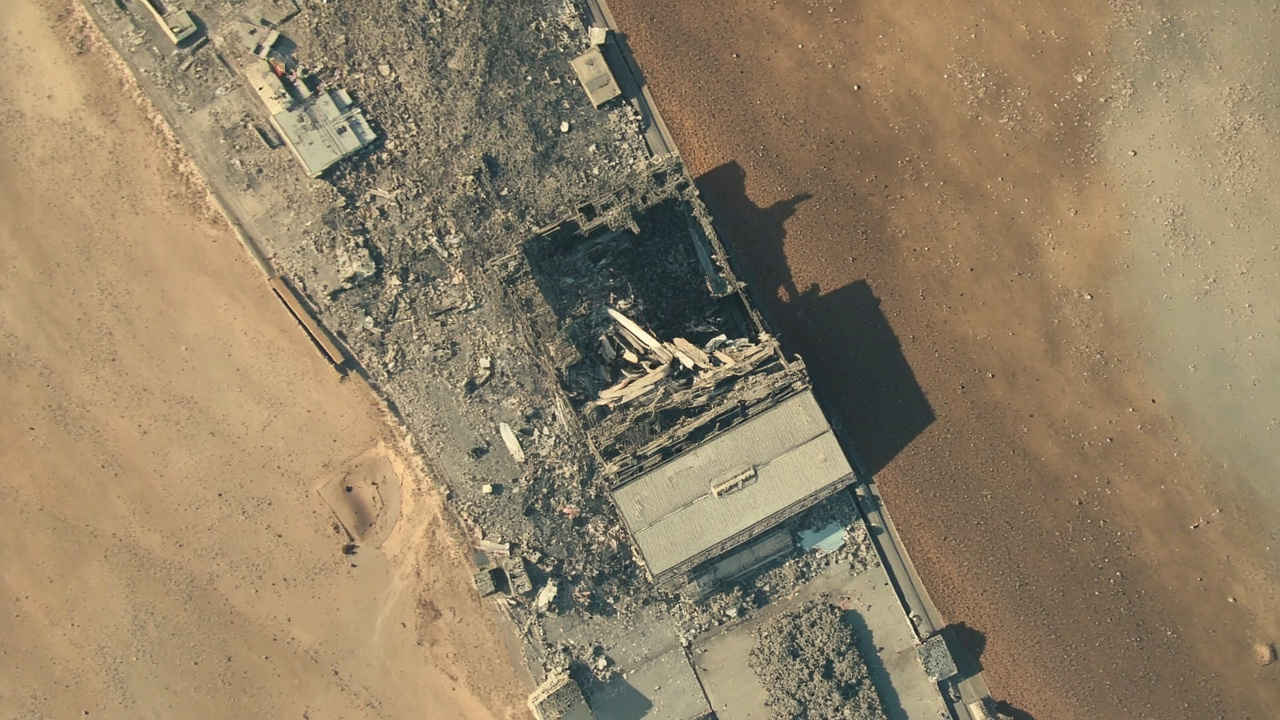
The United States struck Iran's Natanz uranium enrichment facility on Saturday in what has now been confirmed as the second attack on the site since Operation Epic Fury began on February 28 [1]. Iran's Atomic Energy Organization acknowledged the strike but said no radioactive leak had been detected [2]. The International Atomic Energy Agency called on all parties to exercise restraint near nuclear installations.
Natanz, located roughly 250 kilometers south of Tehran, is Iran's primary uranium enrichment site. Satellite imagery from the war's opening days had already shown significant damage from initial strikes. The second attack reportedly involved bunker-buster munitions designed to penetrate the facility's deep underground centrifuge halls [1]. Iran's Tasnim news agency reported that the U.S. and Israel launched the operation jointly early Saturday morning [3].
Iran framed its retaliatory missile strikes on the Israeli cities of Arad and Dimona -- the latter home to Israel's own widely suspected nuclear facility -- as a direct response to the Natanz attack. Nearly 200 Israelis were wounded when at least two Iranian missiles struck residential areas in the southern Negev towns, with Iranian state television calling the barrage a proportional answer to the nuclear escalation [2].
The IDF initially said it was "unaware" of any Israeli role in the Natanz strike, though this is consistent with Israel's long-standing policy of neither confirming nor denying nuclear-related operations [4]. The United States has not publicly attributed the strike to any specific command, though multiple news agencies cited U.S. officials confirming American involvement.
The IAEA has been unable to inspect the damage at Natanz. Iran suspended most agency access early in the conflict, and war conditions have made travel to the site impossible. Before the war, Iran had accumulated a near-weapons-grade stockpile of enriched uranium that Israeli and American officials considered an unacceptable threshold.
The escalatory spiral around nuclear sites has become one of the most dangerous dimensions of the conflict. Iran's attack on Dimona, regardless of whether the nuclear research facility there was damaged, shattered a decades-old deterrence logic in which neither side targeted the other's nuclear infrastructure directly. Israeli analysts warn that the mutual vulnerability now exposed may prove impossible to re-establish through diplomacy alone.
KATU News reported that this was the second confirmed strike on Natanz since the war began, with the first having occurred during the opening phase of Operation Epic Fury [1]. The repeated targeting suggests the U.S. considers the enrichment site a priority throughout the campaign, not merely an opening-night objective.
-- KATYA VOLKOV, Moscow
Sources & X Posts
News Sources