TL;DR
NATO Secretary General Mark Rutte backed US strikes on Iran and urged allies to fall in line, opening a rift with European capitals who were never consulted.
MSM Perspective
Rutte's endorsement of the US campaign deepens the transatlantic split, with key European allies questioning NATO's relevance to a war they didn't authorize.
X Perspective
Rutte is NATO's most enthusiastic American cheerleader since Anders Fogh Rasmussen — and Europe is about to find out what that costs.
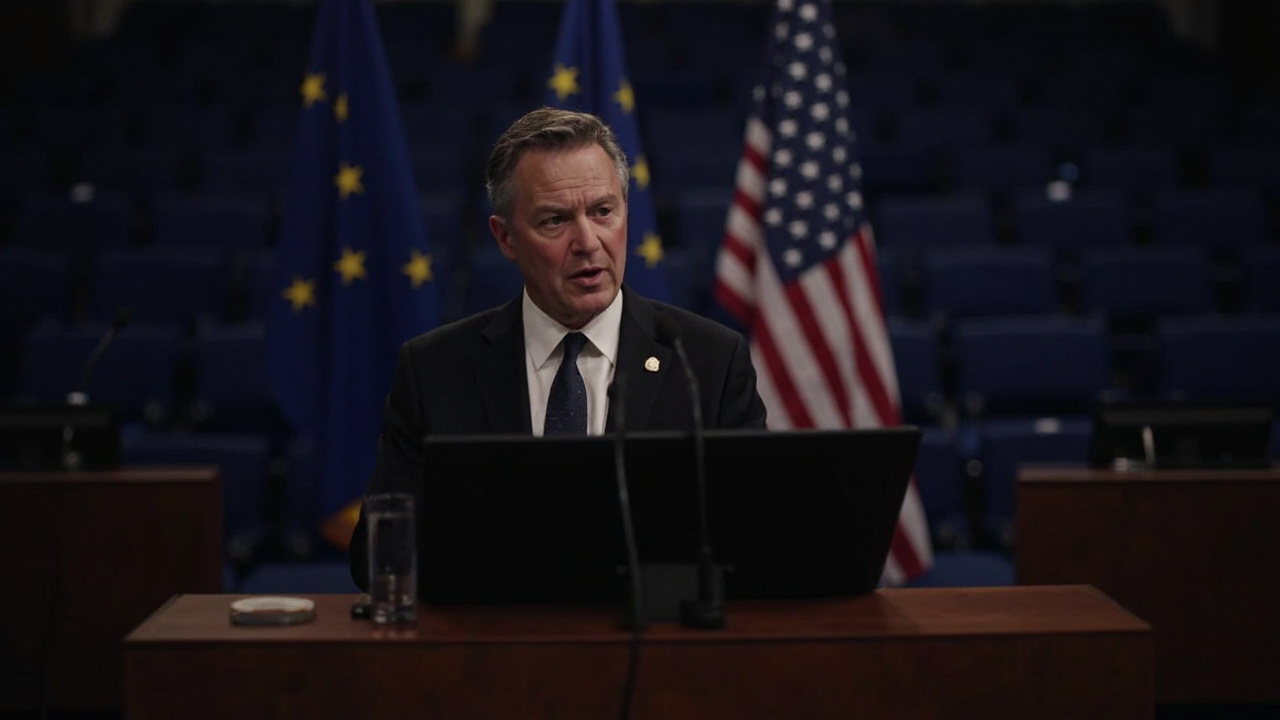
Mark Rutte has made his choice. The NATO Secretary General, speaking over the weekend to a constellation of allied leaders, declared "full support" for the US military campaign against Iran and urged European allies to rally behind Washington — a position that has infuriated capitals from Paris to Berlin to Madrid, none of which were consulted before the strikes began on February 28 [1].
"I spoke with all the key European leaders over the weekend; there is widespread support for what Trump is doing," Rutte told Fox News on Sunday, a claim that is either a diplomatic euphemism of heroic proportions or an outright misrepresentation of the mood in European chancelleries [2].
As we noted in EU Demands Immediate Iran Talks, Von Der Leyen, the European Union's position on the Iran war has been one of escalating alarm. European Commission President Ursula von der Leyen has demanded immediate negotiations. France and Germany have pointedly declined to offer military support. Spain withdrew its frigate from a US-led Gulf task force on March 10. The word "widespread support" does not describe these actions. The word "fury" comes closer.
The structural problem is simple: Rutte speaks for NATO as an institution, but NATO's member states did not collectively authorize the war, did not participate in its planning, and are now absorbing its economic consequences — rising energy prices, disrupted supply chains, and the first energy emergency declarations in the Philippines and parts of Southern Europe [3]. Rutte's endorsement creates the impression of alliance solidarity where none exists.
This is not without precedent. NATO has a long history of secretaries general who align more closely with Washington than with European capitals. Anders Fogh Rasmussen championed the Libya intervention in 2011 over the objections of Germany; Jens Stoltenberg backed NATO expansion in ways that discomforted France. But Rutte's position is unusually exposed because the war with Iran was launched unilaterally — by the United States and Israel, without a UN resolution, without a NATO Article 5 invocation, and without the consent of the allies who host American military bases now under Iranian attack [4].
Kuwait, Bahrain, Jordan, and Qatar — all hosting US military installations that Iran has struck — are not NATO members. They did not ask to become targets. The bases were positioned under bilateral agreements designed for deterrence, not as launch pads for a war those governments did not endorse. Iran's retaliatory strikes on these installations have reignited regional discontent with the American military presence across the Gulf [5].
European anger at Rutte is compounded by the perception that he is freelancing. NATO decisions of this magnitude traditionally require consensus at the North Atlantic Council. No such consensus has been sought, because no such consensus exists. Rutte's statements are better understood as personal advocacy than institutional policy — the Secretary General speaking as a politician who owes his position to American backing rather than as the voice of 32 allied nations [1].
Politico reported that Rutte "sidesteps Trump threats" after allies snubbed a call for Iran war support, a description that captures the awkward choreography: Trump demands European participation, Europeans refuse, and Rutte tries to split the difference by offering rhetorical backing without committing NATO to combat operations [6].
The consequences of this balancing act are already visible. France has accelerated discussions on European strategic autonomy — the long-deferred project to build military capabilities independent of NATO command structures. Germany's defense minister has publicly questioned whether NATO's command arrangements serve European interests in a conflict Europe did not choose. Even the United Kingdom, traditionally Washington's most reliable European ally, has offered only "political support" — a phrase that explicitly excludes military participation [3].
Rutte's gamble is that the war will end quickly, that American power will prevail, and that his early endorsement will position NATO favorably in the post-war settlement. If he is right, his critics will be forgotten. If he is wrong — if the war drags on, if European economies buckle under energy shocks, if the alliance fractures over a conflict that most members oppose — then Rutte will be remembered as the Secretary General who committed NATO's credibility to a war that was never NATO's to fight.
The alliance has survived disagreements before. It survived Suez, Iraq, and Libya. But in each of those cases, the disagreement was about a specific operation. The disagreement now is about something more fundamental: whether NATO's leadership should advocate for wars that NATO's members did not authorize. That question does not have a comfortable answer.
-- HENDRIK VAN DER BERG, Brussels
Sources & X Posts
News Sources
X Posts