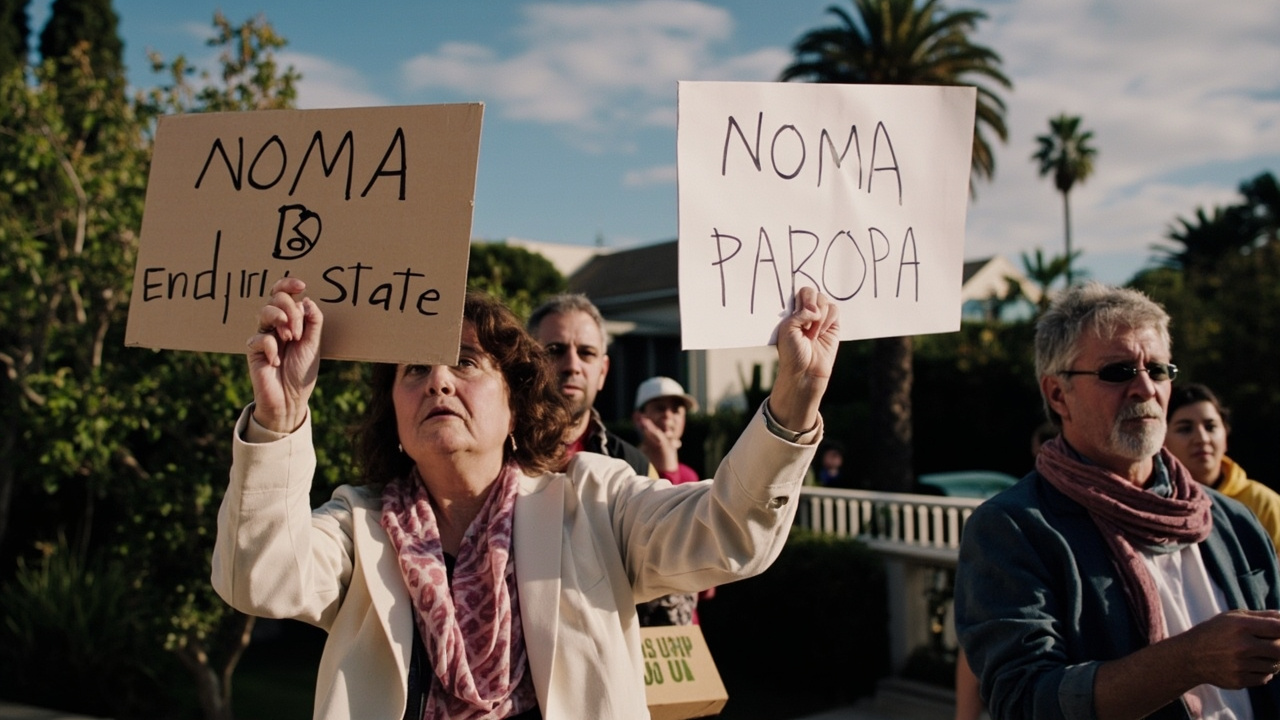
The curious thing about René Redzepi's downfall is not that it happened but that it took so long. The man ran what was, by several measures, the most acclaimed restaurant on Earth — Noma, in Copenhagen, five times named the world's best — and he did so, according to 35 former employees interviewed by the New York Times, by punching his staff, jabbing them with kitchen implements, slamming them against walls, body-shaming them, and publicly ridiculing them in front of their colleagues [1][2].
This was not a secret. Redzepi himself wrote about his anger in a 2015 essay, attributing it to the pressure of maintaining impossible standards and to his own history of being abused by demanding bosses. He went to therapy. He stepped back from daily service. He posted on Instagram about his journey of self-improvement. And then he planned a 16-week pop-up residency in Los Angeles, priced at $1,500 per person, where the well-heeled of Brentwood and Beverly Hills could experience the genius of a chef who had, by his own admission, been unable to stop hitting his employees for the better part of two decades [2][3].
The pop-up was to be hosted at the Paramour Estate, a historic mansion in Silver Lake, in partnership with MAD, the Copenhagen-based nonprofit that Redzepi co-founded to help "chefs and other professionals in food lead the change that their industry — and the planet — need." The irony of this mission statement, in light of subsequent events, requires no elaboration [3].
What changed was not the facts but the volume. The New York Times published its investigation on March 8, detailing a pattern of both physical and psychological punishment that former workers described as systematic. The article landed just as the LA pop-up was preparing to open. Within days, American Express pulled its sponsorship. Resy, the reservation platform, followed. Jason Ignacio White, Noma's former chef and director of fermentation, took to social media to describe his own experiences. An anonymous Instagram account, @noma_abuse, began publishing testimonies [3].
One Fair Wage, the labor advocacy organization, organized daily protests at the Paramour Estate beginning March 11. The protesters have been there every day since. Noma reportedly offered to meet with them on the condition that the protests stop first — a negotiating posture that rather precisely captures the institution's approach to accountability: we will engage with your grievances once you stop publicly expressing them [4].
On March 11, Redzepi formally resigned. His statement acknowledged that he could "see enough of my past behavior reflected" in the allegations to "understand that my actions were harmful to people who worked with me." He said the organization's kitchen culture had been "transformed." He did not specify when the transformation occurred, or what it consisted of, or why it required his resignation if it had already been accomplished [2].
The most contested detail in the reckoning involves a specific claim made by the whistleblower: that an intern was burned in the kitchen. The intern herself has disputed this account, creating a fracture in the narrative that Redzepi's defenders have seized upon. But the dispute over one incident should not obscure the architecture of the broader pattern. Thirty-five people did not independently fabricate stories of being punched. The question is not whether a single burn happened but why a workplace where punching was routine remained venerated by every institution in the culinary world [1][3].
And this is where the whistleblower's ambitions become interesting. Having driven Redzepi to resignation and stripped the pop-up of its marquee sponsorships, the campaign is now expanding its targets. The Michelin Guide, which awarded Noma three stars. The James Beard Foundation, which honored Redzepi repeatedly. The World's 50 Best Restaurants, which placed Noma at the top of its rankings five times. The argument is straightforward: these institutions bestowed prestige on a restaurant that operated, behind the pass, as a site of workplace violence. Their awards were not neutral assessments of culinary achievement. They were endorsements of an enterprise whose labor practices, had they occurred in a factory or an office, would have resulted in criminal prosecution [4].
The culinary industry's response has been, as it invariably is in these moments, a mixture of genuine reckoning and performative hand-wringing. Chef and writer Kenji Lopez-Alt posted his own kitchen rules on Instagram — "no shouting in anger," "no abusive language," "praise in public, correct in private" — and added: "High standards are not an excuse for bad behavior." Eric Huang, the chef behind Pecking House in New York, questioned what made kitchens like Noma's "seem normal" for so long [3].
The answer, of course, is money. And prestige. And the particular mythology of culinary genius that treats cruelty as evidence of commitment — the great man driven mad by his pursuit of perfection, his violence a byproduct of standards so exacting that ordinary mortals cannot be expected to meet them without occasional correction. This mythology is not unique to restaurants. It operates in architecture, in fashion, in film, in any creative industry where the products are beautiful and the labor conditions are not.
Noma closed in Copenhagen at the end of 2024. Redzepi had announced plans for a "Noma 3.0" to reopen in late 2027. That timeline now seems optimistic. The LA pop-up continues — the food must still be served, the leases honored, the remaining 14 weeks of the residency completed — but it continues under a cloud that no amount of fermented plankton can dispel.
A documentary about Redzepi was reportedly in production, with his full cooperation. Its current status is unclear. One imagines the narrative has shifted somewhat since filming began.
-- CHARLES ASHFORD, London