TL;DR
New Yorker (Hannah Goldfield): Bread & Puppet, artisan farmers, Vermont utopia. The Kingdom is a state of mind.
MSM Perspective
The New Yorker (Hannah Goldfield): Warm profile of Vermont utopia. The Kingdom is real.
X Perspective
X romanticizes the Kingdom as escape. The New Yorker finds the people who actually live there.
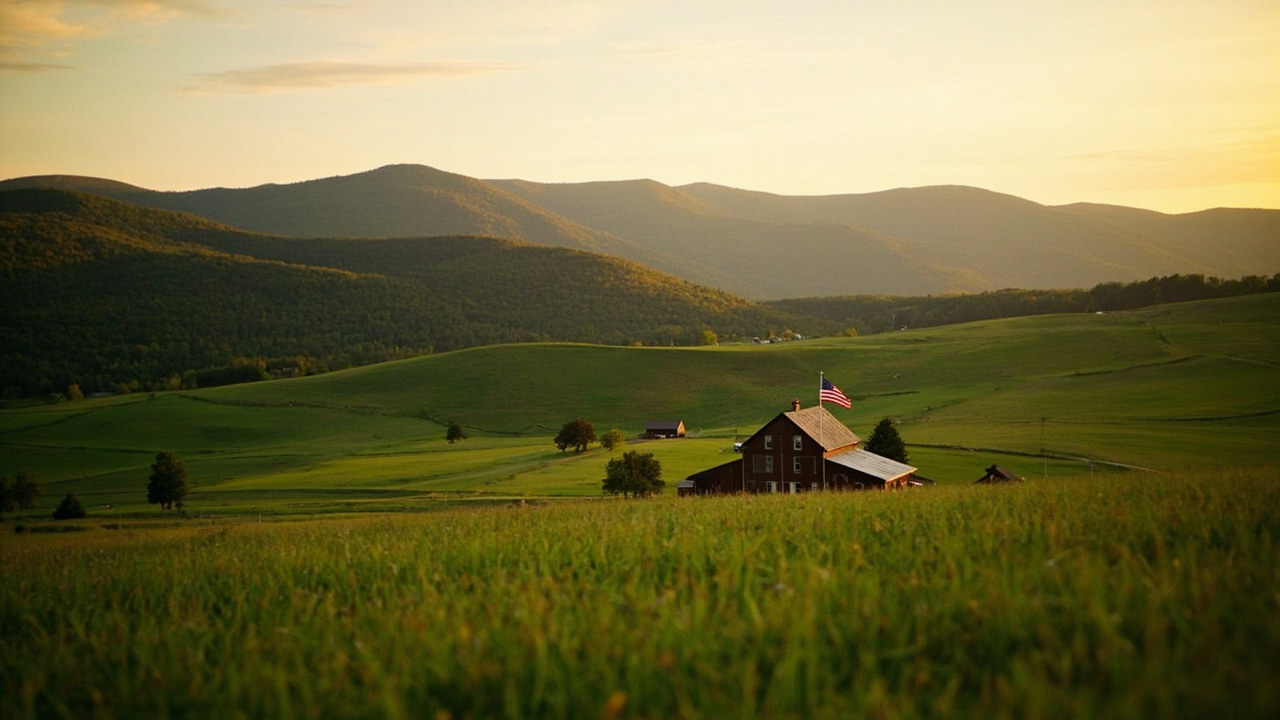
The Northeast Kingdom is what Vermont calls its northeastern corner—three counties that have become, over the course of decades, a destination for people who want to build a different kind of life.
The destination is not new. The Bread & Puppet Theater has been in Glover since the 1970s, performing political spectacle for audiences that drive from Burlington and beyond. The artisan farms have been operating for generations, selling cheese and produce at farmers' markets that have become, in the summers, a form of mild tourism.
Hannah Goldfield's New Yorker profile, published in March 2026, arrived at the Kingdom at a moment when the Vermont ideal—the self-sufficient community, the rejection of mainstream economic life, the commitment to craft over consumption—has become newly attractive to people who have found mainstream economic life increasingly inhospitable.
The Bread & Puppet Theater
The theater was founded by Peter Schumann, a German immigrant who began making bread and serving it with puppet shows in the early 1960s. The bread was meant to be a form of communion—a shared meal before the spectacle. The puppets were meant to be political, crude, immediate.
The theater still operates. The bread is still served. The puppets are still political, though the specific politics have shifted with the decades. What has not shifted is the underlying premise: that community can be built through shared experience, and that shared experience can be created through art.
The Artisan Economy
The Kingdom's artisan economy is not a uniform phenomenon. It includes cheese makers and maple producers, small vegetable farms and livestock operations, craft breweries and bakeries. What connects them is a commitment to production at a scale that is viable for the people doing it, and a relationship to the land that is mediated by craft rather than industrial agriculture.
The economic model is precarious. The artisan producers depend on farmers' markets, on direct-to-consumer sales, on the willingness of customers to pay premiums for products that are more expensive than their commodity equivalents. The model works when the customers exist. It has always been a marginal existence.
What has changed is the appeal. The customers who once bought artisan products as a form of lifestyle consumption—the Brooklynites who bought Vermont cheese as a marker of taste—have been joined by customers who buy artisan products as a form of values consumption. The distinction matters. Values consumption is less sensitive to economic cycles.
The New Attraction
Goldfield's profile captures, without quite stating, the specific character of the Kingdom's current appeal. People are coming to Vermont—not to retire, not to weekend, but to live—in numbers that have increased over the past several years.
The reasons are various. Some are economic: housing costs in metropolitan areas have reached levels that make the Vermont proposition comparatively attractive. Some are political: the sense that a different kind of life requires a different geography. Some are pandemic-era realizations, still being processed, about what matters and what does not.
The Kingdom absorbs these arrivals with the mixture of welcome and wariness that characterizes rural communities everywhere. The newcomers are not always good neighbors. They are not always good at the things that the existing residents are good at—living without infrastructure, maintaining buildings, navigating winter.
But they are coming. And they are staying. And they are building, in the Kingdom's three counties, something that is recognizably a life. [1].