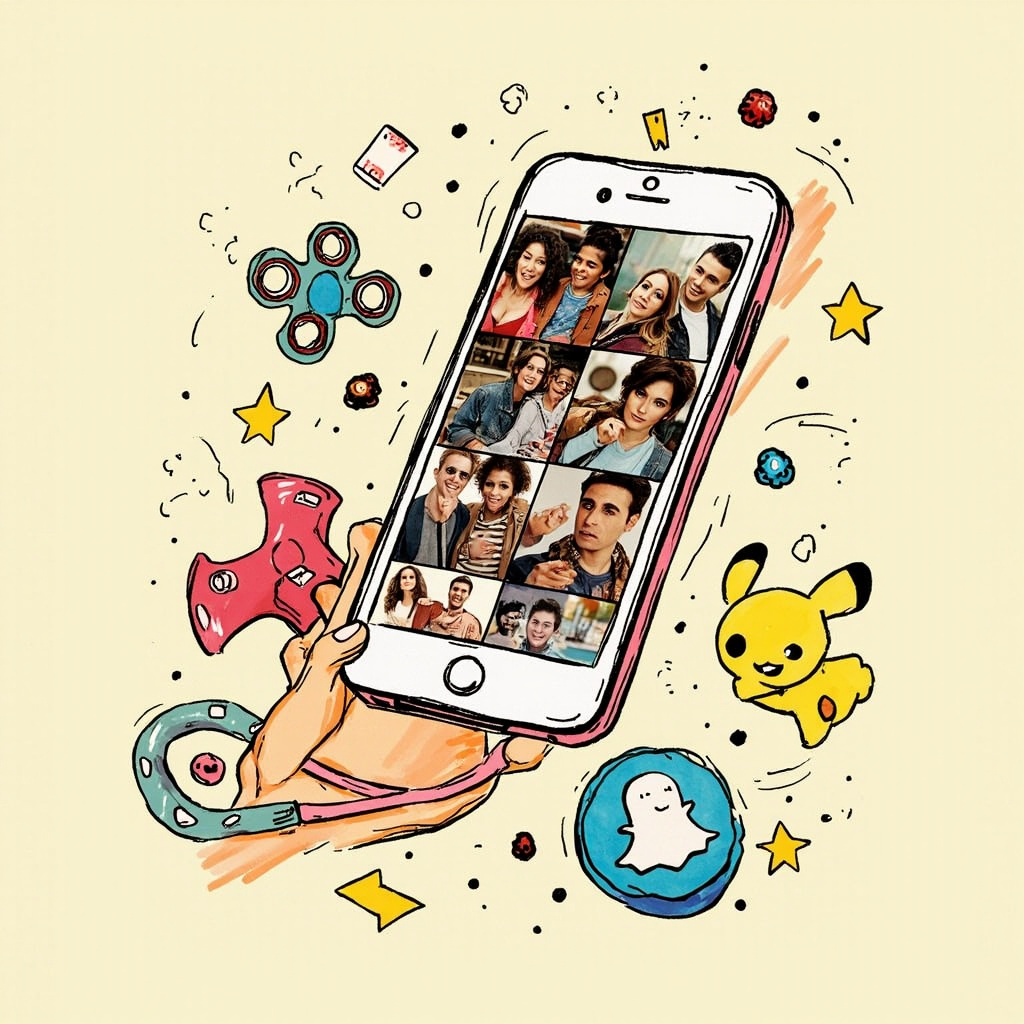
Three months in, the "2026 is the new 2016" trend has outlived every reasonable prediction for a social media fad. This paper noted in its March 23 edition that when an entire generation pretends it is ten years ago, they are telling you something about right now. The telling has not stopped.
The trend now has its own Wikipedia page, a People magazine explainer, a Good Morning America segment, and a Hootsuite case study. Hootsuite's 2026 Social Trends report filed it under two categories: "chaos culture" — the Gen Alpha-driven appetite for unpredictability — and "snowballing," the phenomenon of organic content gaining mass until it reshapes platform algorithms. [1] The Mannequin Challenges and bottle flips are still circulating. Meghan Markle posted a throwback. John Legend posted a throwback. The trend is no longer a trend. It is a season. [2]
Vogue traced the impulse to a pre-pandemic, pre-AI saturation moment — 2016 as the last year the internet felt fun rather than consequential. The BBC called it "rose-tinted filtering." Forbes credited an ironic Gen Z joke that became sincere. [3][4] None of these explanations are wrong. All of them are incomplete. The nostalgia is real. The commerce is also real. And the gap between remembering 2016 and living in 2026 is the gap the trend is built to paper over.
-- MAYA CALLOWAY, New York