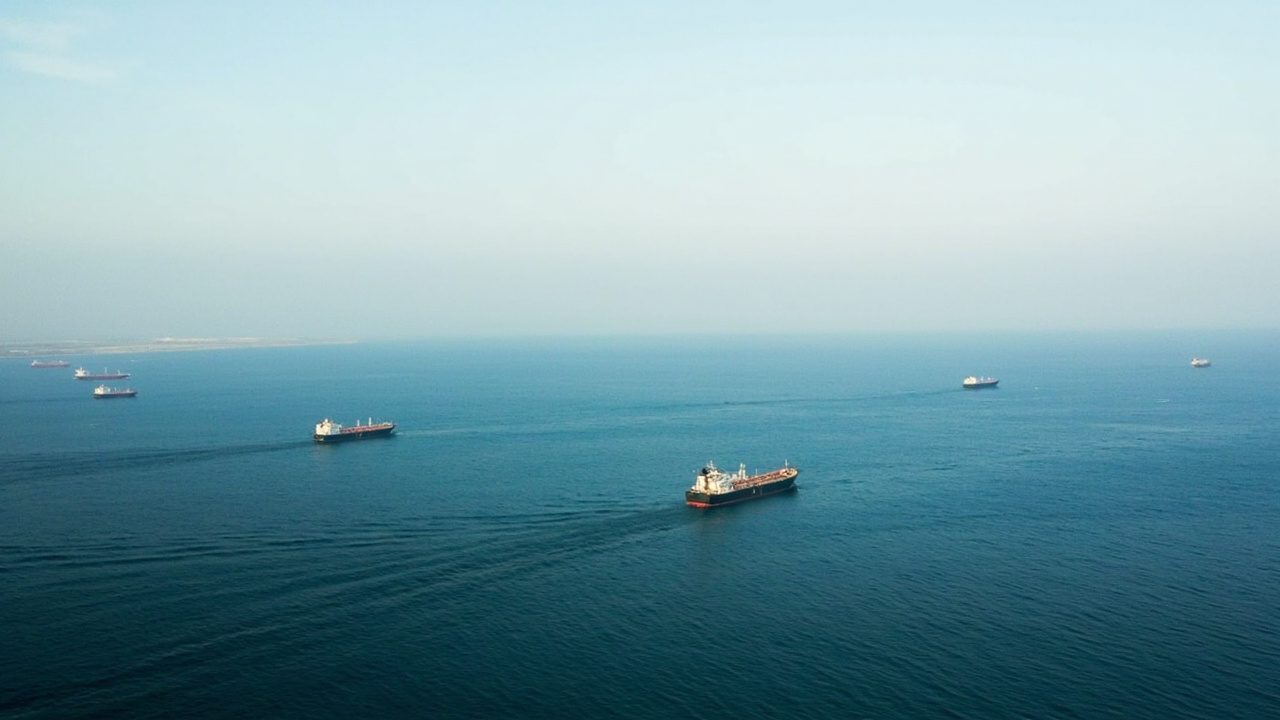
Brent crude opened Monday at $114.09 per barrel, up 1.69 percent from Friday's close, as President Trump's 48-hour ultimatum to Iran -- reopen the Strait of Hormuz or face strikes on power plants -- reached its expiration [1]. U.S. West Texas Intermediate rose 2 percent to $100.29. Both benchmarks are at their highest levels since July 2022, and the trajectory shows no sign of flattening.
The numbers tell the story of a market in distress. Pre-war Brent hovered around $72. In 23 days, the price has risen roughly 55 percent [2]. Friday's close at $112.19 was the week's high, and Monday's Asian session pushed through it immediately. Goldman Sachs issued a note Friday warning that Brent could reach $130 if Hormuz remains effectively closed through April.
August futures, however, are trading at roughly $97 per barrel, suggesting the market expects some form of resolution -- or at least adaptation -- within five months [3]. The backwardation structure between front-month and deferred contracts reflects intense near-term fear combined with longer-term bet-hedging. If the strait reopens, prices will fall fast. If it does not, the August price will look like a bargain.
The real-world costs are already visible. The national average gasoline price in the United States has climbed to $3.93 per gallon, up from $3.12 before the war [1]. In Europe, where refineries are more dependent on Middle Eastern crude, the pass-through has been even sharper. Euronews reported that petrol prices across the continent have risen by roughly 55 cents per liter since February 28 [4].
The International Energy Agency's chief, speaking Sunday, said the global economy is under "major threat" from the Hormuz crisis and that "no country is immune" from the disruption [2]. The strait carries approximately 20 percent of the world's oil and a significant share of global liquefied natural gas supplies. Even limited disruption has cascading effects through refinery margins, shipping insurance, and freight rates.
Monday is the pivot point. Trump's ultimatum was explicit: Iran must fully reopen the strait or face escalation against its power infrastructure. Tehran's military command responded that any attack on power plants would be met with strikes on Gulf oil facilities. The mutual threats create a feedback loop in which the very act of threatening escalation to reopen the strait drives prices higher, making the economic case for de-escalation more urgent while making the political case for escalation more tempting.
The administration's tools for price management are narrowing. Sanctions waivers on Iranian and Russian oil have provided marginal relief. The Jones Act waiver eased domestic shipping constraints. But as one analyst told CNBC, "If we've reached the point of loosening sanctions on the country we are at war with, we're really running out of options."
-- HENDRIK VAN DER BERG, Brussels