TL;DR
Gas crossed $3.80 nationally. Diesel hit $5. Patrick De Haan posted the numbers and X replied with gas station receipts. Stagflation talk is everywhere. The Hormuz closure is worse than anyone predicted.
MSM Perspective
AAA confirms $3.718-$3.79 national average. EIA has sharply raised its price forecasts. OPEC declined to increase production. The IEA released its largest-ever strategic reserve drawdown. None of it moved the needle.
X Perspective
Truckers are posting $5 diesel receipts. Commuters are posting $60 fill-ups. @GasBuddy's Patrick De Haan is threading the supply mechanics — summer blend transition plus Hormuz closure — and getting thousands of replies from people who just want a number on when it peaks. The 'stagflation' hashtag is trending alongside screenshots of Trump's 'prices will come down very quickly' quote.
The national average hit $3.79 a gallon Thursday. Diesel reached $4.97 — approaching $5. [1]
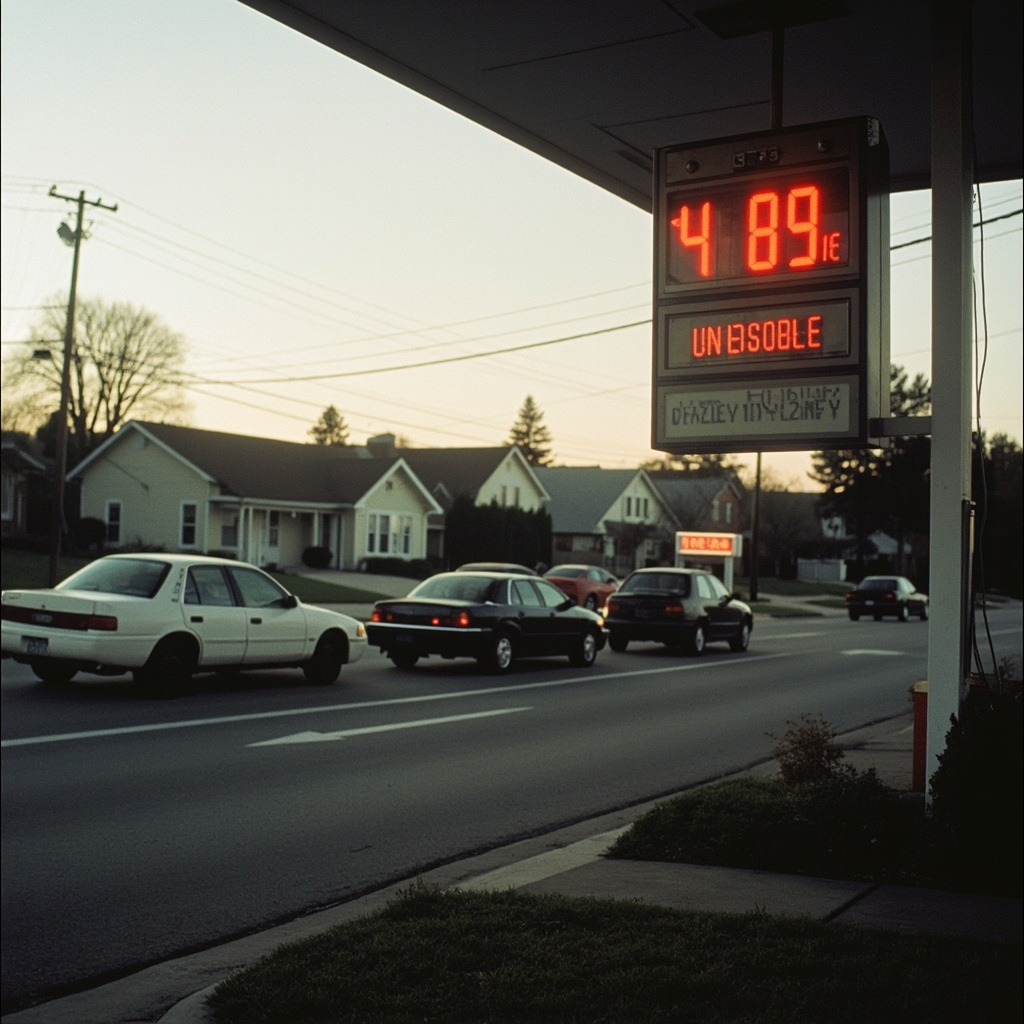
$5.12 diesel at a truck stop in Oklahoma. $4.89 regular in Los Angeles. $3.99 in Ohio. Patrick De Haan of @GasBuddy posted the numbers and X replied with gas station receipts — $60 fill-ups, trucker fuel logs, screenshots of the president's "prices will come down very quickly" quote.
"Third week of a new war and gas goes up 80 cents," wrote one user with 40,000 followers. It got 12,000 likes.
"Trump said prices would come down very quickly," replied someone with a screenshot of that exact quote. 87,000 likes.
Why This Keeps Getting Worse
The Strait of Hormuz is effectively closed. Not metaphorically. Actually. [2]
At least 22 civilian ships have been attacked since the war began. Insurers pulled war risk coverage. Hundreds of tankers dropped anchor in open Gulf waters, unwilling to make the transit. [2]
Bernstein analysts — cited by Reuters — raised their Brent price assumption from $65 to $80. Their worst case: $120 to $150 if Hormuz traffic doesn't resume. [3]
That scenario is looking less like a tail risk and more like the base case.
"Until we see a meaningful resumption of oil flows through the Strait of Hormuz, upward pressure on fuel prices is likely to persist," De Haan wrote. He also noted the transition to summer gasoline formulations — required by the Clean Air Act — is creating a "double headwind" that could push prices higher in coming weeks. [1]
Summer blend transition typically adds 10-20 cents per gallon. This year it's happening during an actual oil war. Fun times.
The Stagflation Crowd Shows Up
X's economics corner has a new favorite word: stagflation.
The OECD's chief economist warned the combination of higher energy prices and disrupted shipping could shave half a percentage point off global GDP growth this year. [4] The Federal Reserve, in its last meeting, noted energy prices represented an "upside risk" to its inflation forecast. [4]
Translation: the things that caused inflation in 2022 are happening again, except this time there's an active war.
For ordinary Americans: a 15-gallon tank fill is running roughly $12 more than a month ago. Over a year of commuting, that's hundreds of dollars. For truckers and logistics companies, diesel at $5-plus is a direct hit to margins already squeezed by everything else.
Trump, at the White House Thursday, said prices would come down "very quickly" when the war ends. He also noted — with characteristic candor — that the United States benefits when crude prices rise because it's the world's largest oil producer.
"We make a lot of money," he said.
The replies were exactly what you'd expect.
What's Actually Driving Prices
Global crude followed a volatile arc since February 28: Brent spiked to nearly $120 a barrel about a week in, then retreated to around $100 as of mid-March. [1] Still roughly 40 percent above the $70 pre-war level.
The IEA announced its largest-ever release of crude from national stockpiles — 172 million barrels from the US Strategic Petroleum Reserve. [1] Oil prices continued rising anyway.
OPEC declined to increase production. [4] Because of course they did.
The consensus among X energy analysts: this doesn't get better until Hormuz reopens, and nobody knows when that happens.
— SAMUEL CRANE, Washington
Sources & X Posts
News Sources