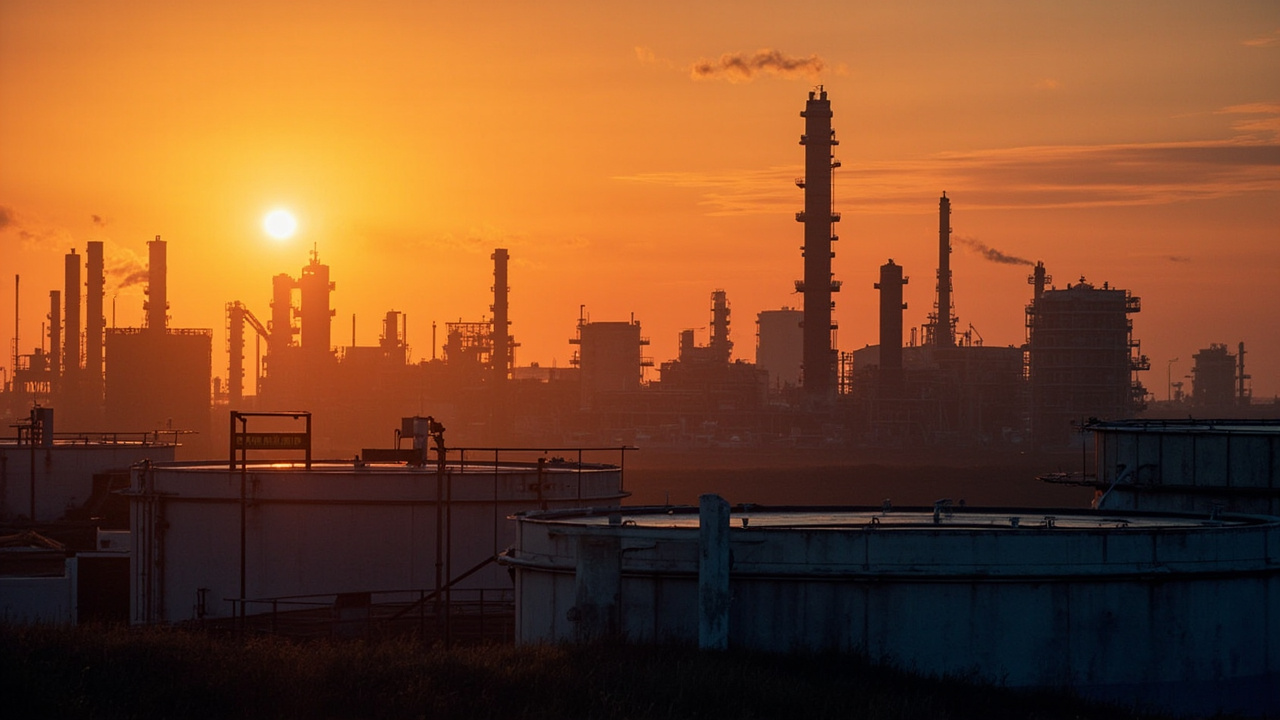
Goldman Sachs put a number on the war premium last week: $25 to $32 per barrel. The market is pricing something specific — not the end of the Iran conflict, but its continuation. WTI closed at $101.40 on Friday, March 27, and the math is not complicated. When the Strait of Hormuz handles roughly 20% of global oil流动性 and has done so at minimal capacity for three weeks, the structural repricing thesis needs to answer one question: what breaks first, the blockade or the economy?
The ceasefire path has not vanished from the board. Iran rejected the US proposal and issued a counterproposal that includes reparations. [1] Rubio is floating an $8/barrel toll on Hormuz shipping if Iran proceeds. [2] Twelve US service members were wounded in a missile attack on a Saudi air base — the first significant American casualties since strikes began. [3] But the market is not pricing these as ceasefire catalysts. It is pricing them as the new operational baseline.
The divergence from Wall Street conventional wisdom is sharp here. Trading desks at major banks are split: the macro team says the premium is temporary and will collapse if Hormuz reopens; the energy team says the infrastructure has fundamentally changed. The Iran conflict has produced what traders are calling a "new floor" — supply chains have rearranged around the assumption of persistent disruption. Qatari flows through the Gulf have not recovered. Iraqi exports are rerouted through Turkey. The $101.40 close is not a ceiling. It is a floor that the market has accepted.
Goldman's $25-$32 war premium calculation is built on three assumptions: Hormuz operates at 40% capacity through Q2, Iranian output stays offline, and no major producer opens spare capacity. The first two assumptions have proven accurate. The third is the variable — and the market has concluded that Saudi Arabia and the UAE will not fill the gap, because they have calculated that the political cost of being seen as the war's beneficiaries exceeds the revenue gain.
This is not a traditional supply shock. In 1973, 1979, and 1990, oil shocks were followed by demand destruction that eventually brought prices back. The 2026 version has a different mechanism. The war has altered where oil physically flows, not just at what price. The ceasefire, if it comes, does not restore the old insurance markets, the old shipping routes, the old supplier relationships. The market knows this. That is why WTI at $101.40 behaves differently than $100 oil did in 2023.
The consumer is already feeling what the trader is abstractly pricing. The national average for gasoline has risen 36% in five weeks. [4] The energy component of core PCE is running at 4.7% annualized. The Fed cannot cut. The market is pricing in a structural floor, and the Federal Reserve is trapped between that floor and an inflation problem it keeps misdiagnosing. [5] This is the second-order effect that the Goldman premium thesis understates: the war premium is not just in oil. It is in everything that moves with oil.
The bond market is pricing this correctly. The 10-year Treasury yield at 4.7% reflects an economy that is not overheating but is not cooling either — it is pricing a war tax that has not yet been formally assessed. The equity market is behind the curve. S&P 500 energy sector has outperformed the broader index by 18 percentage points since the strikes began. Exxon and Chevron are printing cash. [6] The $49 billion Q1 Wall Street bonus pool — concentrated heavily in energy and commodity trading — is a direct reflection of this. [7]
The $101.40 close is not a celebration. It is a verdict. The market has decided that the ceasefire path is not the base case. What comes next is a question the market is not yet ready to answer.