TL;DR
Oil surged past $107 after another tanker attack in Hormuz, then retreated when Trump hinted at a ceasefire exit.
MSM Perspective
Analysts warn that oil volatility is itself a weapon, with Iran using Hormuz disruptions to force diplomatic concessions.
X Perspective
Traders say oil is now a geopolitical sentiment indicator more than a supply-demand market, whipsawing on every Trump statement.
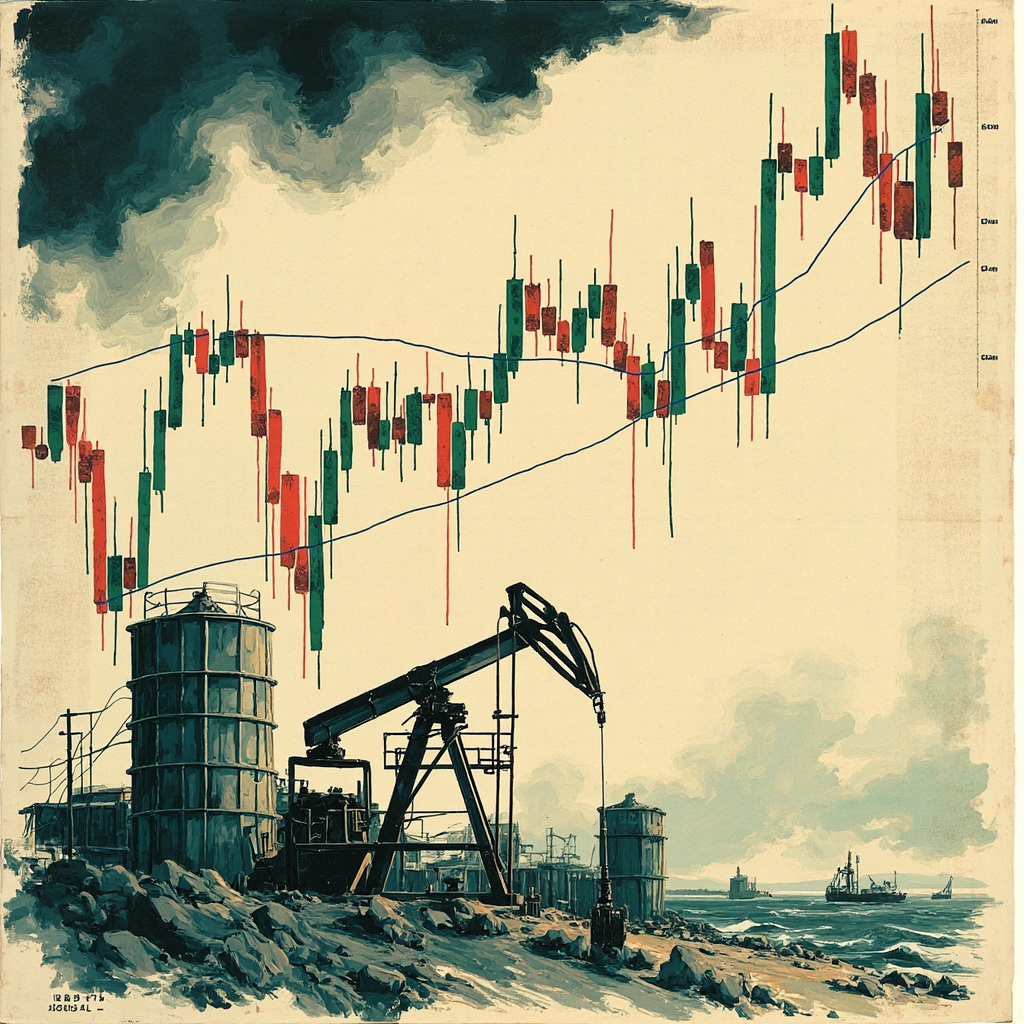
Brent crude surged past $107 a barrel on Monday morning after reports of another tanker attack near the Strait of Hormuz, then fell more than $8 in afternoon trading when President Trump told reporters he expected the conflict to end "very shortly" [1]. It was the most violent single-session swing since the war began on February 28, and it captured in miniature the impossible volatility that has defined energy markets for the entire month of March.
As we detailed in our earlier reporting, oil broke $100 in the second week of March and has not stayed below that threshold for more than forty-eight consecutive hours since. Monday's action pushed March toward the largest monthly price gain ever recorded for Brent crude [2].
The morning spike was triggered by confirmed reports that an Iranian-laid mine damaged a Greek-flagged tanker in the eastern approach to Hormuz, the seventeenth vessel struck since hostilities began. War-risk insurance premiums for Gulf transits have effectively collapsed, meaning most commercial operators are refusing to enter the strait entirely [3]. S&P Global reported that five oil tankers, two gas carriers, and eight dry bulk ships made it through Hormuz in the past week, a fraction of normal traffic [4].
Then came Trump. Speaking to reporters on the South Lawn, the president said he had "productive conversations" and expected an announcement "in the next few days." Oil immediately reversed. Brent settled at $99.40, its first sub-$100 close in four days, before climbing back above $103 in after-hours trading as Iranian officials denied any negotiations were underway [5].
Goldman Sachs warned clients Monday that oil may stay in triple digits for the foreseeable future even if a ceasefire is reached, because physical supply chains in the Gulf will take months to normalize [6]. JP Morgan's worst-case scenario puts Brent at $120 if the conflict extends through April.
The whipsaw has become the pattern. Every Trump statement about an exit ramp sends prices down; every Iranian denial or fresh attack sends them back up. Traders on X have taken to calling Brent crude a "geopolitical sentiment index" rather than a commodity market.
For American consumers, the damage is already done. The national average gasoline price crossed $4 a gallon last week in blue states and sits above $3.50 nationwide, levels not seen since the summer of 2022.
-- DARA OSEI, New York
Sources & X Posts
News Sources
X Posts