TL;DR
Restaurants from Olive Garden to fine dining are shrinking portions and adding high-protein options to court the growing GLP-1 user base.
MSM Perspective
Major outlets frame the trend as a natural market adaptation to a consumer health shift reshaping the $1 trillion restaurant industry.
X Perspective
Foodies split between praising healthier options and mourning the death of indulgent dining culture at the altar of pharma.
The American restaurant industry is undergoing its most significant menu overhaul in decades, and the driving force is not a celebrity chef or a viral TikTok trend. It is a class of diabetes and weight-loss drugs known as GLP-1 receptor agonists -- medications like Ozempic, Wegovy, and Mounjaro that have fundamentally altered how tens of millions of Americans eat.
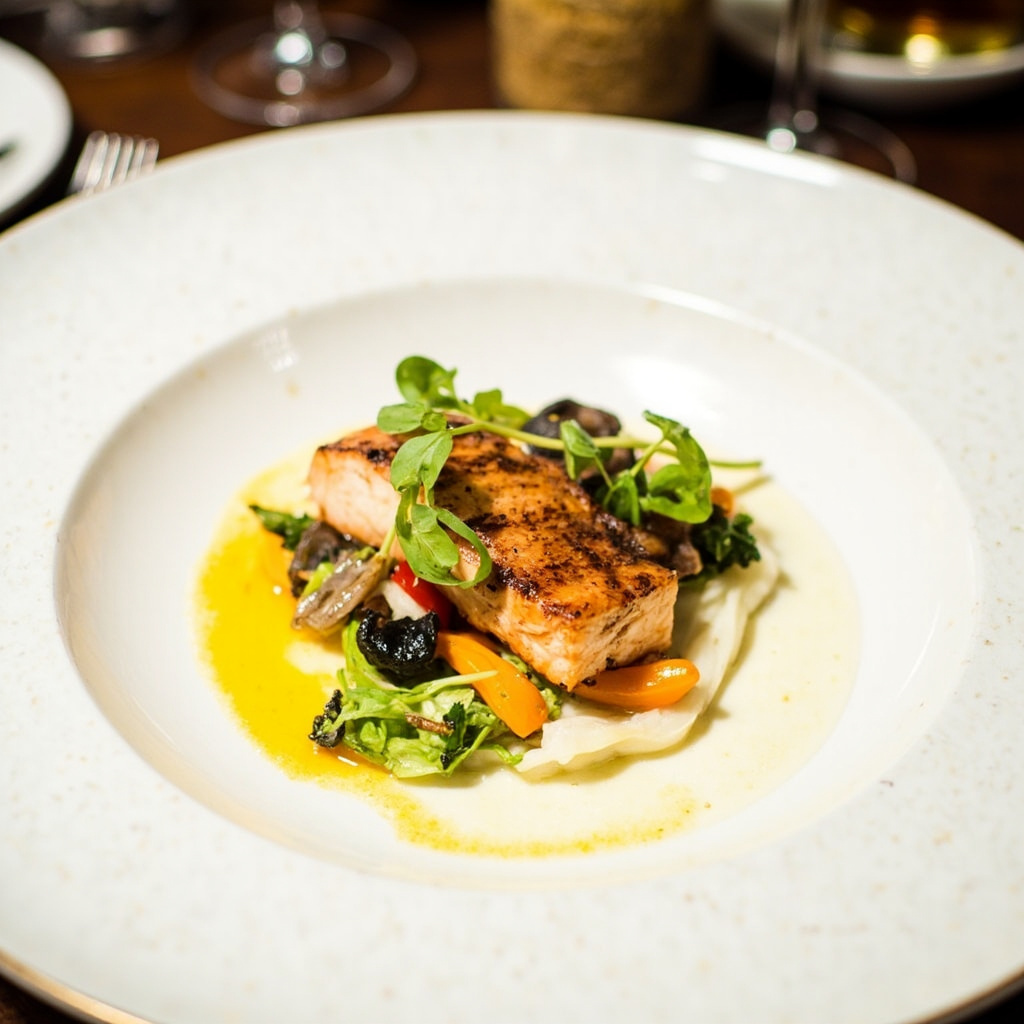
From Olive Garden to Michelin-starred tasting rooms, restaurants across the country are shrinking portions, boosting protein counts, and introducing entirely new menu categories designed to appeal to diners whose appetites have been pharmacologically suppressed [1]. The shift is accelerating in 2026 as GLP-1 prescriptions continue to climb and the drugs' effects on eating behavior become impossible for the food industry to ignore.
Fortune reported in March that chains including Olive Garden, The Cheesecake Factory, Chipotle, and Subway have begun introducing smaller-portion menus or high-protein modifications explicitly marketed to GLP-1 users [2]. The trend is not subtle. Olive Garden now offers a "Right Size" menu with entrees portioned at roughly 60 percent of standard servings. Chipotle has expanded its protein-forward bowl options. Subway rolled out a "Protein Power" lineup in February.
The economics are straightforward. An estimated 15.5 million Americans were taking GLP-1 medications as of early 2026, according to IQVIA prescription data, and that number is projected to reach 24 million by year's end. These users report eating 30 to 40 percent less food per meal on average. For an industry that has spent decades engineering portion sizes to maximize per-ticket revenue, the implications are existential.
"We are not changing our entire menu," one restaurant executive told Fortune. "But we would be foolish to ignore that a meaningful percentage of our customer base now physically cannot eat what we have been serving them" [2].
The fine dining world is adapting differently but no less dramatically. The Economist reported in late December that upscale restaurants in New York, Los Angeles, and London have begun offering abbreviated tasting menus -- five courses instead of twelve, with an emphasis on nutrient density over volume [3]. Barry Gutin, co-founder of the Cuban-inspired restaurant Cuba Bakery in Baltimore, told NPR affiliate WYPR that his establishment began offering half-portions at full margin after noticing a measurable decline in dessert and appetizer orders [4].
The Food Ingredients First industry publication documented a wave of GLP-1-friendly product launches at the start of 2026, noting that grocery chains and foodservice outlets alike are treating the trend as a permanent market shift rather than a fad [5]. High-protein, low-sugar, nutrient-dense formulations are becoming the default rather than the exception.
Not everyone in the industry is pleased. Chefs have pushed back against what some describe as the medicalization of dining. The Tasting Table reported in March that several prominent chefs have publicly resisted the trend, arguing that restaurants should be spaces of pleasure and creativity, not extensions of a pharmaceutical regimen [6]. One unnamed James Beard Award-winning chef told the publication that the GLP-1 menu trend "reduces cooking to calorie math."
The backlash, however, has done little to slow adoption. Fox News reported in January that the trend has reached even traditionally indulgent chains, with several fast-food operators testing smaller combo meals and protein-boosted sides [7]. The calculus for publicly traded restaurant companies is particularly stark: analysts have begun incorporating GLP-1 adoption rates into their revenue models, and chains that fail to adapt risk losing market share to those that do.
The cultural implications extend beyond the restaurant floor. Food critics have begun reviewing GLP-1 menus as a distinct category. Instagram and TikTok are flooded with content from users documenting their changed relationship with dining out. The phrase "Ozempic plate" has entered the vernacular to describe any conspicuously small restaurant portion, whether or not it was designed for drug users.
For the restaurant industry, the challenge is threading a needle: courting a growing demographic without alienating diners who still want a full plate. The early evidence suggests that most establishments are opting for addition rather than subtraction -- adding GLP-1-friendly options alongside existing menus rather than replacing them.
Whether this represents a permanent restructuring of American dining or a temporary accommodation remains an open question. What is not in question is the speed and scale of the change. In less than three years, a class of injectable medications has accomplished what decades of public health campaigns could not: making American restaurants serve less food.
-- Maya Calloway, New York
Sources & X Posts
News Sources
X Posts