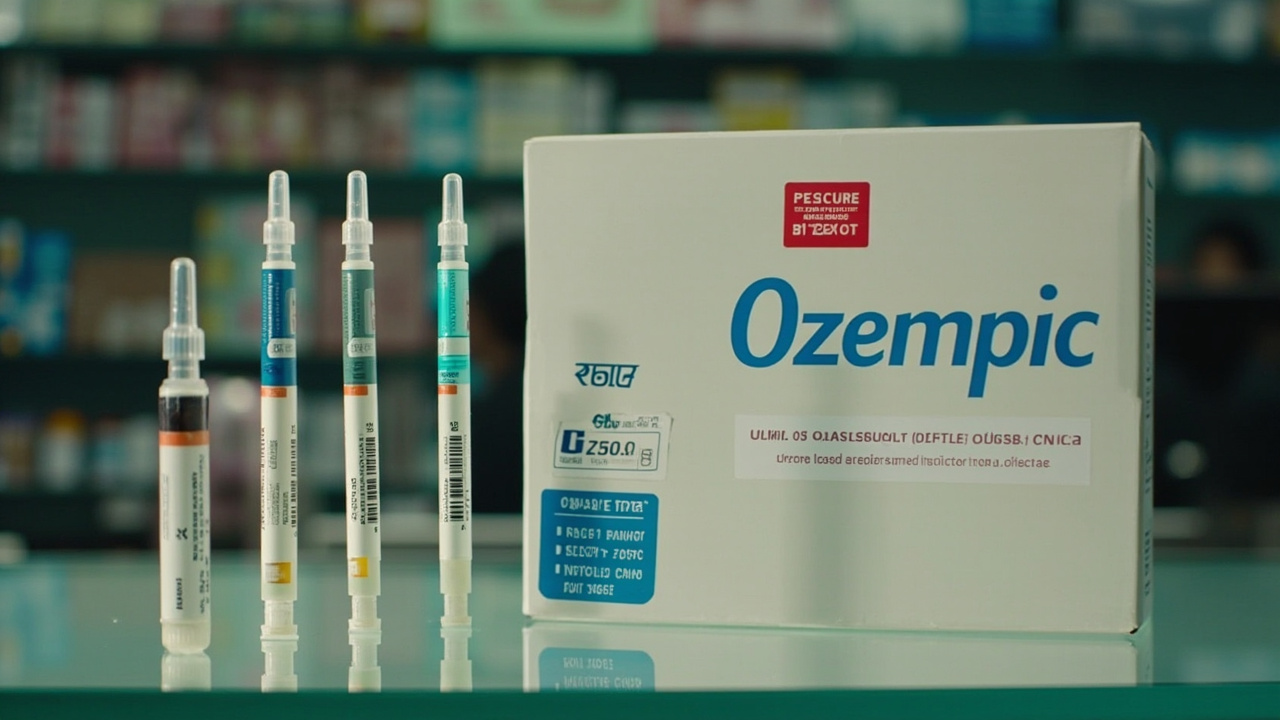
At midnight on March 20, Novo Nordisk's Indian patent on semaglutide — the active ingredient in Ozempic and Wegovy, the drugs that made the Danish company the most valuable in Europe — expired. By 8:00 a.m., Dr. Reddy's Laboratories in Hyderabad had shipped its first batch. Natco Pharma followed by noon. By Friday evening, approximately 50 branded generics were either on pharmacy shelves or in distribution channels across India [1].
The price: 1,290 to 1,600 rupees per month. That is $14 to $19. In the United States, the same molecule costs approximately $936 per month without insurance. The ratio is 50 to 1 [2].
"Come Back After March 20"
In the weeks before the patent expired, endocrinologists across India reported the same phenomenon. Patients were told to wait. Dr. Anoop Misra, chairman of Fortis C-DOC Centre for Diabetes in New Delhi, told Bloomberg he had been "writing prescriptions with a note: come back after March 20" since January [2].
India has more than 77 million people with type-2 diabetes. Semaglutide reduces HbA1c levels by 1.5 to 2.0 percentage points in clinical trials — among the most effective diabetes drugs ever developed. At Novo Nordisk's branded price of $183 per month, it was accessible to perhaps 5 percent of Indian diabetics. At $14, the addressable population multiplies tenfold [1].
This is not a story about weight loss. Not in India. It is a story about 77 million diabetics, a healthcare system spending approximately $80 per capita annually, and a patent system that has just done exactly what it was designed to do: convert a monopoly into a commodity [3].
The Manufacturing Machine
India produces approximately 20 percent of the world's generic drugs by volume. The country's generic infrastructure was built on a deliberate policy choice: India's 1970 Patent Act recognized process patents but not product patents, allowing companies to reverse-engineer any drug. The 2005 amendment restored product patents under WTO pressure, but drugs whose terms have since expired remain open territory. Semaglutide's Indian patent, filed in 2007, ran its 20-year course [3].
Jefferies analyst estimates suggest that semaglutide's active pharmaceutical ingredient can be produced at scale for approximately $3 per monthly dose. The $14 retail price includes the injection pen device, packaging, and distribution margins. At full scale — the kind of volume Indian generics achieve within 12 to 18 months — the retail price could fall below $5 [2].
Jefferies called it a "magic-pill moment" — not for any single company, but for the concept that a drug transforming lives in wealthy countries might actually reach the billions who need it [2].
The Global Cascade
India is the first major market to break the monopoly, but not the last. China's patent expires later in 2026 with at least 15 generic versions in development. Canada's Patented Medicine Prices Review Board has signaled it will not extend exclusivity. Brazil is expected to approve generics within months [1].
The United States is a different story entirely. Novo Nordisk's US patent portfolio extends well beyond the base compound, with formulation patents, device patents, and dosing regimen patents that could maintain some form of exclusivity until 2031 or later. The FDA's generic approval pathway for peptide drugs is more complex than for small molecules, requiring biosimilar-level clinical data that adds years and hundreds of millions of dollars to the development timeline [4].
But the Indian generics will create pressure no patent wall can fully contain. Medical tourism — Indian-Americans flying home to fill prescriptions — is already a significant channel. Cross-border pharmacy services, while legally constrained, have grown since the pandemic. And the political optics of a $14 drug in Mumbai costing $936 in Memphis will intensify the already fierce congressional scrutiny of GLP-1 pricing [4].
Novo Nordisk's share price fell 2.3 percent on the day the patent expired — modest for a company that has lost nearly 40 percent of its market capitalization since August 2024. The company notes that India represents a small fraction of global semaglutide revenue, which exceeded $25 billion in 2025.
This is true but incomplete. What India's launch demonstrates is that semaglutide's manufacturing cost is $3 per month. Every congressional hearing and insurance negotiation will now carry that number. The question is no longer whether semaglutide is expensive. The question is why.
The 50 companies shipping $14 semaglutide from Hyderabad are answering that question with considerable clarity.
-- PRIYA SHARMA, Mumbai