TL;DR
Pakistan's mediation architecture — weeks in the making — is being undermined by Trump's public commentary, and Dawn's editorial board put it bluntly: talk or escalate.
MSM Perspective
The Financial Times broke Pakistan's mediation role as a legitimate diplomatic story; Indian Express and the NYT treated it as a genuine peace initiative worth examining.
X Perspective
X's Pakistan-focused watchers read Trump's FT statements as either strategic ambiguity or self-defeating bluster, with the latter view predominating.
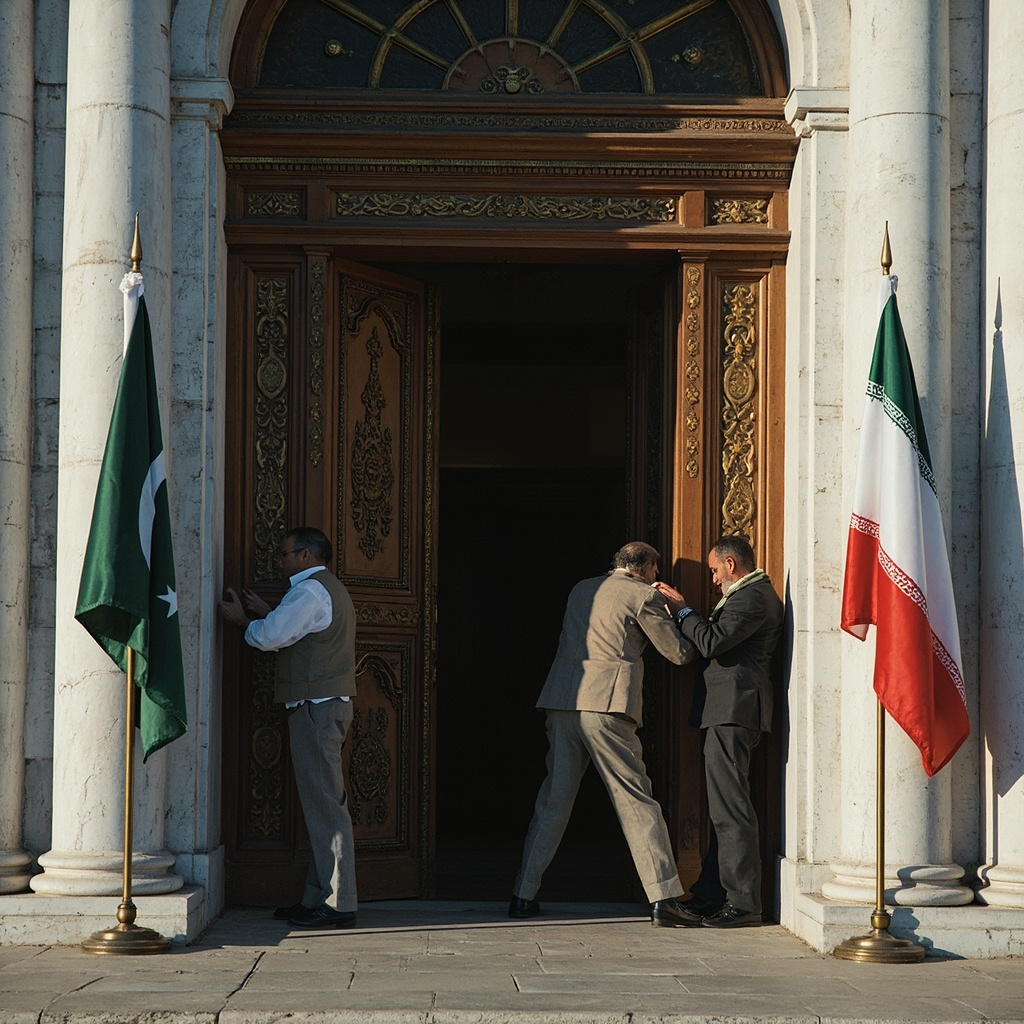
Pakistan spent the better part of three weeks constructing a diplomatic architecture that Washington had quietly encouraged. General Asim Munir, Pakistan's army chief, spoke with Donald Trump by phone. Prime Minister Shehbaz Sharif publicly offered to host direct talks between American and Iranian representatives on Pakistani soil, a proposal that Egypt and Turkey had also been working around the edges of. For a brief period in mid-March, the contours of a negotiated pause were visible. [1][2]
Then Trump gave the Financial Times his account of it. [1]
In the interview, Trump confirmed Pakistan's role in the talks — a confirmation that functioned, in Islamabad, as both validation and exposure. Validation because American endorsement of Pakistan's mediating role is exactly the domestic political legitimacy Islamabad seeks. Exposure because the public confirmation immediately complicated the back-channel dynamics that make mediation possible. Iran cannot negotiate openly through a process that the United States is advertising in major Western newspapers. The optics of sitting down with Pakistan while American air strikes continue require a degree of deliberate ambiguity that Trump's candor eliminated. [1][2]
The Dawn editorial board, which has spent thirty years navigating Pakistan's impossible position between its Islamic solidarity with Iran and its security dependence on the United States, published on Saturday what may be the bluntest thing the paper has written about American diplomacy in a decade. "The choices facing this region," it wrote, "have narrowed to two: talk, or escalate. Islamabad cannot substitute for Washington's willingness to choose." The editorial did not accuse Trump of bad faith. It accused him of something more corrosive — the inability to distinguish between announcing a diplomatic initiative and conducting one. [3]
The distinction matters. Pakistan's value as a mediator derived precisely from its ambiguity: close enough to the United States to carry credible messages, close enough to Iran to receive them. A mediator whose role has been publicly announced by one party is no longer a mediator in any functional sense — he is a relay, and relays can be bypassed. [1][4]
Iran's response to Trump's FT interview was measured but pointed. Foreign Ministry spokesman Esmaeil Baghaei said Saturday that Iran was "aware of various statements being made in Western media about diplomatic channels" and that Tehran would "evaluate actions, not announcements." The formulation is precise: it does not reject Pakistan's role, but it conditions any engagement on American behavior that its media interviews cannot produce. [2]
Trump, for his part, set April 9 as his public target date for ending the conflict. The date appears to have been chosen without consultation with any of the parties actually engaged in talks — Pakistan, Egypt, Turkey, and Iranian interlocutors — who have not coalesced around anything close to a timeline. Setting a public deadline that your mediators cannot meet is not an instrument of diplomatic pressure. It is a schedule for public failure. [2][4]
The Indians are watching. India, which shares a 1,800-mile border with Pakistan and has its own complex relationship with Iran, has declined to take sides in the conflict but has strategic interests in the outcome. Pakistani officials, off the record, have noted to Western correspondents that Indian quiet should not be read as indifference — New Delhi is calculating what a post-conflict regional order looks like, and that calculation depends heavily on whether Pakistan emerges from its mediation role with enhanced credibility or with the embarrassment of a collapsed initiative. [4]
For Islamabad, the failure of the mediation track would be costly. Pakistan has staked significant diplomatic capital on the effort. It has absorbed the domestic political cost of being seen as cooperative with an American war that is broadly unpopular in Pakistani public opinion. If the talks collapse because Trump preferred the FT interview to the back channel, Pakistan gets the blame for a process it did not control and the costs of a risk it should not have taken alone.
-- PRIYA SHARMA, Islamabad
Sources & X Posts
News Sources