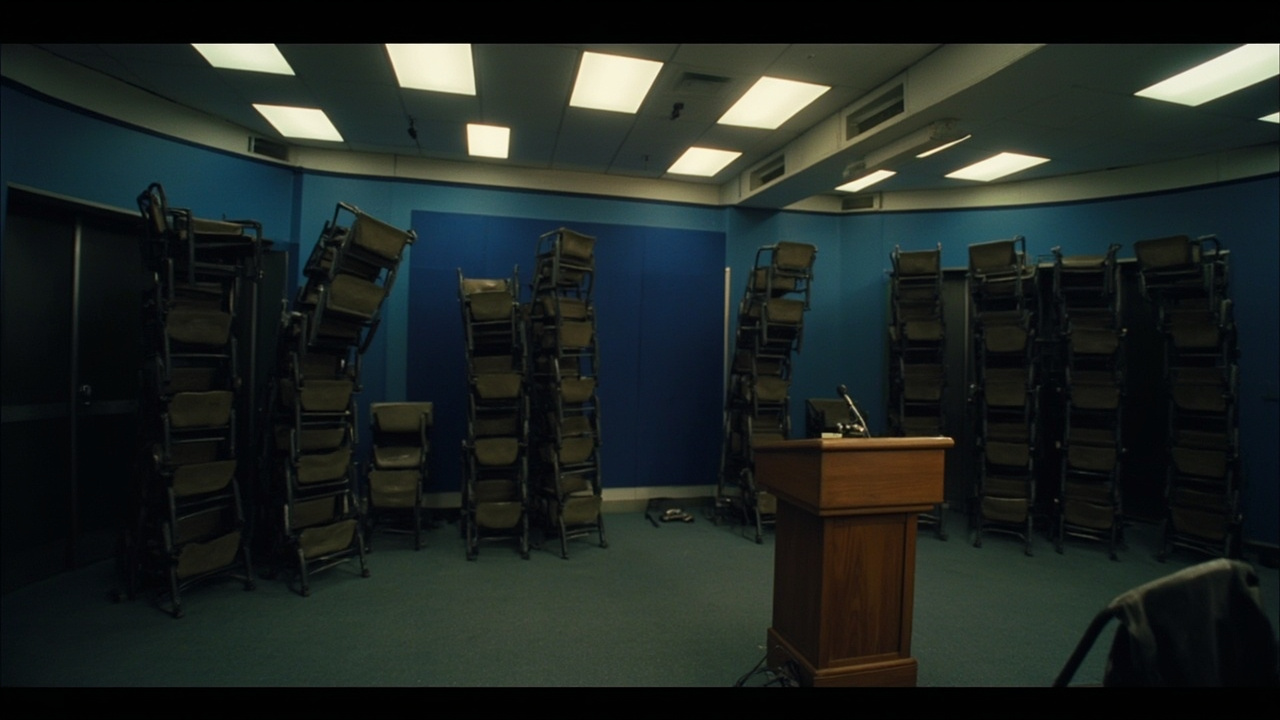
The Pentagon lost in court on Friday. By Monday evening, it had issued a new press policy that its own lawyers described as containing "the same standards, but using different words and using more words" [1]. By Tuesday evening, the New York Times had filed a new motion asking the court to hold the Defense Department in contempt of the order it had issued 72 hours earlier.
This is not how compliance works.
As we reported in Pentagon Lost in Court So It Evicted the Press, U.S. District Judge Paul Friedman vacated the Pentagon's October 2025 media access policy on March 20, finding it violated both the First Amendment and the Fifth Amendment's due process clause [2]. The ruling was specific and sweeping. The policy's requirement that reporters pledge not to seek information from Pentagon employees was unconstitutional viewpoint discrimination. The standards for revoking press credentials were so vague they gave officials "unbridled discretion" to boot reporters for any reason. The court vacated the offending provisions and ordered credentials restored [2].
The Pentagon responded by announcing it would appeal — and then, on Monday, issuing a "revised" policy that managed to be both a defiance of the court's order and an inadvertent admission that the government understood exactly what the court had prohibited.
Here is what the revised policy does, according to Ted Boutrous, the lead attorney for the Times, who appeared on PBS NewsHour Tuesday evening [1]:
It replaces the prohibition on "soliciting" unauthorized information with a prohibition on "intentionally inducing" the disclosure of unauthorized information — a distinction without a difference, since asking questions is how reporters induce disclosures. It declares that promising anonymity or confidentiality to a source constitutes "presumptive evidence" of policy violation — a provision that would criminalize the foundational practice of journalism in every newsroom in the country. And it introduces, for the first time in the Pentagon's history, a requirement that credentialed reporters be escorted at all times within the building [1].
"Instead of abiding by and following the judge's order and opinion, they're defying it, brazenly defying it," Boutrous told PBS. He noted that a government lawyer had literally said in an interview that the new policy contained "the same standards, but using different words" [1].
The new motion filed Tuesday asks the court to compel compliance with the original order. If granted, it would strip the revised policy of its most restrictive provisions and potentially hold Defense Department officials in contempt. Judge Friedman has not yet scheduled a hearing, but the pace of the litigation suggests one is imminent.
The broader context matters. The Pentagon's press restrictions were implemented in October 2025, months before the war with Iran began. Defense Secretary Pete Hegseth's approach to media relations has been consistent: minimize access, control information, and treat independent reporting as an operational security threat rather than a constitutional right [3]. The war has intensified this posture. With American forces engaged in active combat across the Gulf, the Pentagon's incentive to control the narrative has never been stronger.
But as Boutrous argued, the public's need for information has also never been greater. "In a time of war and running up to elections, people need as much information as they can get to try to determine whether to support those policies, to protest and who to vote for," he said, paraphrasing the court's own reasoning [1].
The standoff exposes a tension that is structural, not personal. The military has a legitimate interest in operational security. Reporters have a constitutional right to access government buildings where public business is conducted. The line between these interests has been drawn and redrawn for decades, but it has never been drawn by eliminating the press corps entirely and then replacing it with an escort system that treats journalists as security risks.
More than 30 news organizations walked out of the Pentagon last year rather than sign the original policy's pledge not to seek unauthorized information. Most have not returned. The courtroom may be the only venue where the question of their return will be decided.
The Pentagon has now lost once and been told its rewrite doesn't comply. A second adverse ruling would not merely be embarrassing. It would establish binding precedent that the Defense Department cannot restrict press access based on the content of reporting — a principle that, remarkably, still needs to be established by court order in 2026.
-- SAMUEL CRANE, Washington