The Philippines Department of Energy confirmed on March 31 that the country holds approximately 45 days of petroleum reserves at current consumption rates, down from 62 days when the Iran war disrupted global supply chains five weeks ago [1]. Rolling brownouts have begun in Manila's outer suburbs, and President Ferdinand Marcos Jr. convened an emergency cabinet meeting to discuss fuel rationing options that officials say could be implemented within two weeks.
The arithmetic is unforgiving. The Philippines imports roughly 90% of its petroleum needs, with a significant share historically routed through the Strait of Hormuz. The blockade has forced Manila to source crude from more distant and expensive markets — West African producers, the United States, and the North Sea — but shipping times are longer, spot prices are higher, and the logistics chain was not built for this rerouting [2].
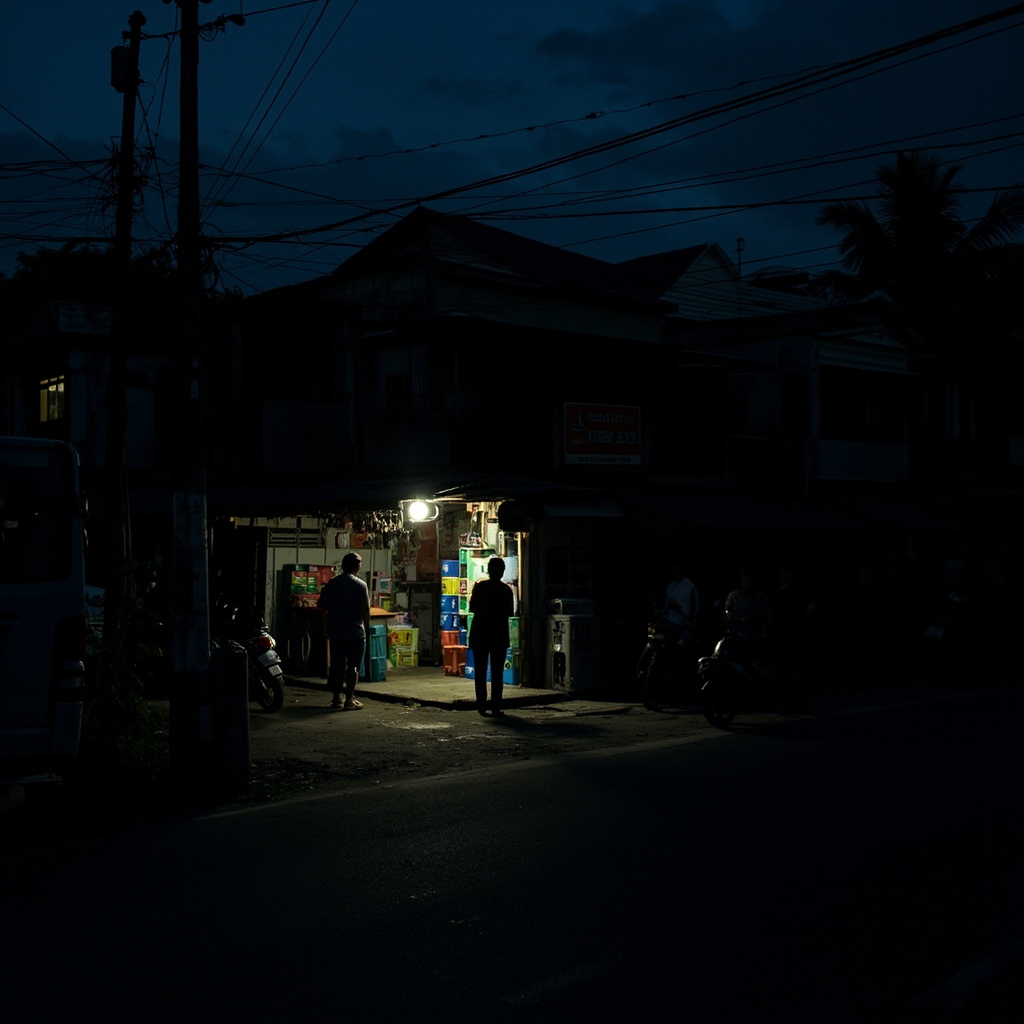
The brownouts started in Cavite and Laguna provinces south of Manila on March 27 and have since spread to Bulacan and parts of Quezon City. The National Grid Corporation of the Philippines confirmed that power generators dependent on imported fuel oil are operating at reduced capacity, with some plants cycling off entirely during non-peak hours to conserve supply. Affected households experience four to six hours without electricity per day, typically in the late morning and early afternoon [3].
For the estimated 2.3 million people in the affected areas, the impact is immediate and tangible. Refrigerated food spoils. Home businesses that depend on electricity — small-scale manufacturing, laundry services, internet cafes — shut down during outages. Schools have shortened their days. Hospitals in the affected provinces have activated backup generators, but diesel for those generators comes from the same constrained supply [4].
The government's response has been a mix of conservation measures and diplomatic scrambling. Marcos signed Executive Order 75 on March 29, reducing the work week for all national government offices to four days, effective April 7. The order is expected to reduce government energy consumption by approximately 15%, though the savings are modest compared to total national demand [5].
More consequential is the rationing framework being developed by the Department of Energy in consultation with the Philippine National Oil Company. Under the draft plan, which has not yet been formally announced, private vehicles would be limited to a fixed allocation of fuel per week, enforced through a QR-code system linked to vehicle registration. Priority allocation would go to public transit, emergency services, agriculture, and food distribution. The plan mirrors systems already activated in Sri Lanka and Vietnam, which face similar reserve crunches [6].
The diplomatic track offers uncertain prospects. Philippine Foreign Secretary Enrique Manalo traveled to Riyadh last week to negotiate direct crude purchases from Saudi Arabia, bypassing the Hormuz chokepoint by arranging shipment from Red Sea ports. But the Saudis are themselves struggling with constrained export capacity — their eastern terminals, which handle the majority of crude exports, face the same Hormuz blockade — and Red Sea shipping has been disrupted by renewed Houthi attacks [7].
There is a class dimension to the crisis that statistics obscure. Wealthy Filipinos in gated communities have diesel generators and can afford premium fuel prices. The brownouts fall disproportionately on working-class and lower-middle-class neighborhoods in the urban periphery — the same communities that bore the brunt of the pandemic's economic damage and have not fully recovered.
Street vendors in Cavite told local reporters that their daily earnings have dropped by half since the brownouts began, because customers stay home during outages rather than walking to market stalls in the heat. Small restaurant owners described throwing away meat and fish they can no longer keep refrigerated. A teacher in Laguna said her students cannot complete online assignments when the power is out for six hours during school time [8].
The 45-day number is a countdown, not a forecast. If new supply contracts materialize, if the Hormuz situation changes, if conservation measures bite, the clock resets. But the Philippines' position — import-dependent, geographically distant from alternative suppliers, and lacking strategic reserves of the scale maintained by OECD countries — makes it among the most vulnerable nations in any sustained energy disruption.
Forty-five days is not a crisis. It is the period before a crisis in which a crisis might still be averted.
-- Priya Sharma, Delhi