TL;DR
A Houthi missile attack on Israel and renewed threats against Red Sea shipping have pushed maritime insurance premiums to their highest level since the crisis began.
MSM Perspective
The Washington Post reported Houthi missile attacks as stoking fears of renewed Red Sea disruption; Reuters noted that Western powers failed to secure the Red Sea and Hormuz will be harder.
X Perspective
X is treating the Houthi entry as the moment the war's geographic footprint became unmanageable, with two chokepoints now under threat simultaneously.
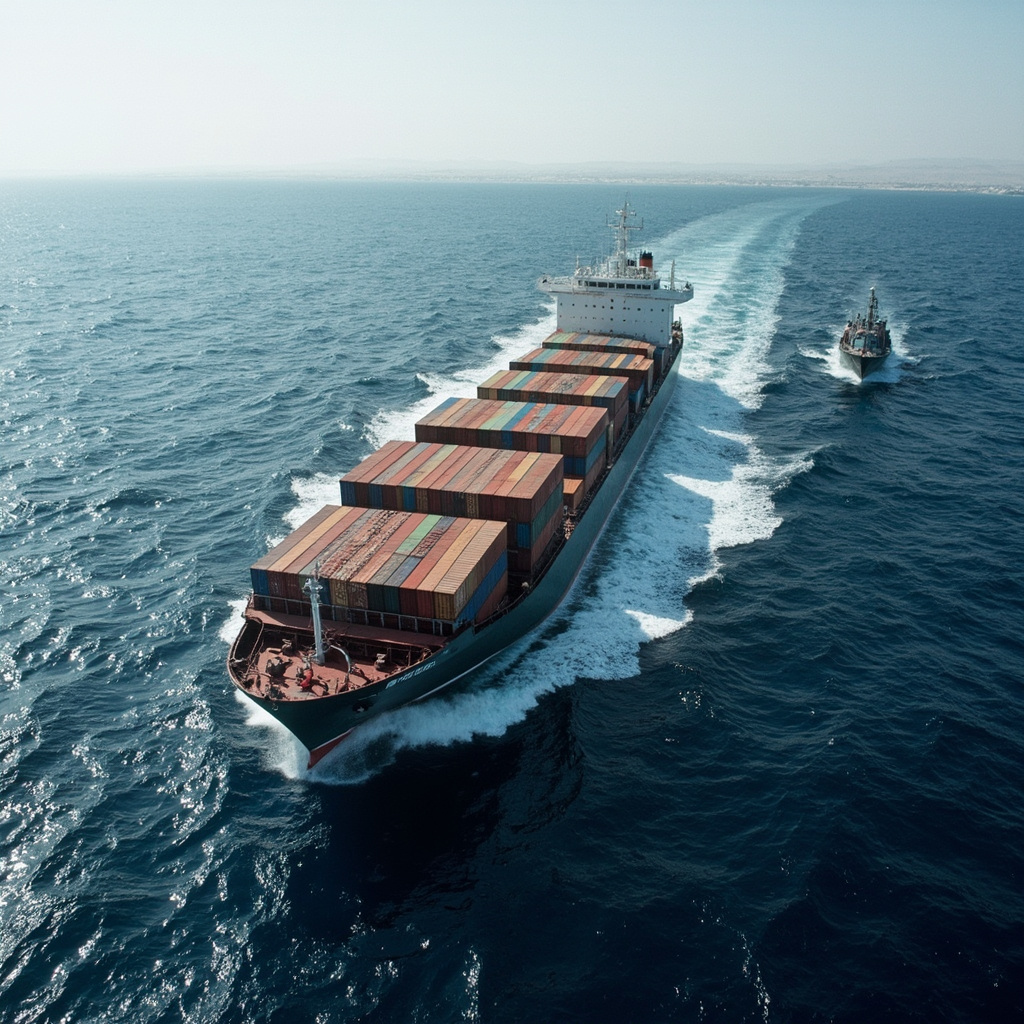
The Houthis launched missiles toward Israel on March 27 and publicly threatened to resume attacks on commercial shipping in the Red Sea. The European maritime security mission EUNAVFOR Aspides warned on Saturday that Houthi forces "may target vessels transiting the Bab el-Mandeb strait regardless of flag or destination." Maritime war risk insurance premiums for Red Sea transit rose 15 percent on Friday, reaching their highest level since the Houthi campaign began in late 2023. [1] [2]
The threat compounds an already severe shipping disruption. The Strait of Hormuz, through which 20 percent of global oil passes, has been partially blocked since Iranian mines and naval patrols began restricting passage in the first week of the war. Oil tankers that rerouted from Hormuz to the Red Sea via alternative Gulf ports now face a second chokepoint. The two-chokepoint scenario that energy analysts treated as a worst case in early March is becoming the baseline. [2] [3]
Reuters reported on March 25 that Western powers "were unable to secure shipping in the Red Sea" during the 2023-2025 Houthi campaign despite billions in military spending and a multinational naval task force. The Hormuz situation is harder to manage because the strait is narrower, the Iranian military is more capable than the Houthis, and the volume of traffic is vastly larger. [3]
The economic consequences are already visible. Shipping container rates from Asia to Europe have risen 40 percent since the Houthi threat resumed. Insurance costs for individual voyages through the Red Sea now exceed $100,000, a cost passed directly to importers and ultimately to consumers. The war premium that Goldman Sachs estimated at $25-32 per barrel of crude does not yet account for the Red Sea disruption. [1] [2]
For countries that depend on Red Sea shipping lanes for food and fuel imports, particularly in East Africa and South Asia, the renewed threat is not an insurance calculation. It is a supply chain crisis arriving on top of the oil price shock the war already produced. [3]
-- DARA OSEI, London
Sources & X Posts
News Sources