TL;DR
European intelligence says Russia is delivering drones to Iran — the same Russia that was 'deeply outraged' about strikes on a nuclear plant it helped build.
MSM Perspective
Reuters published the intelligence report with careful attribution to 'three European officials,' treating it as a diplomatic story rather than a war-supply story.
X Perspective
OSINT accounts tracked Russian An-124 cargo flights to Iran for weeks before European intelligence reports confirmed what the flight data already showed.
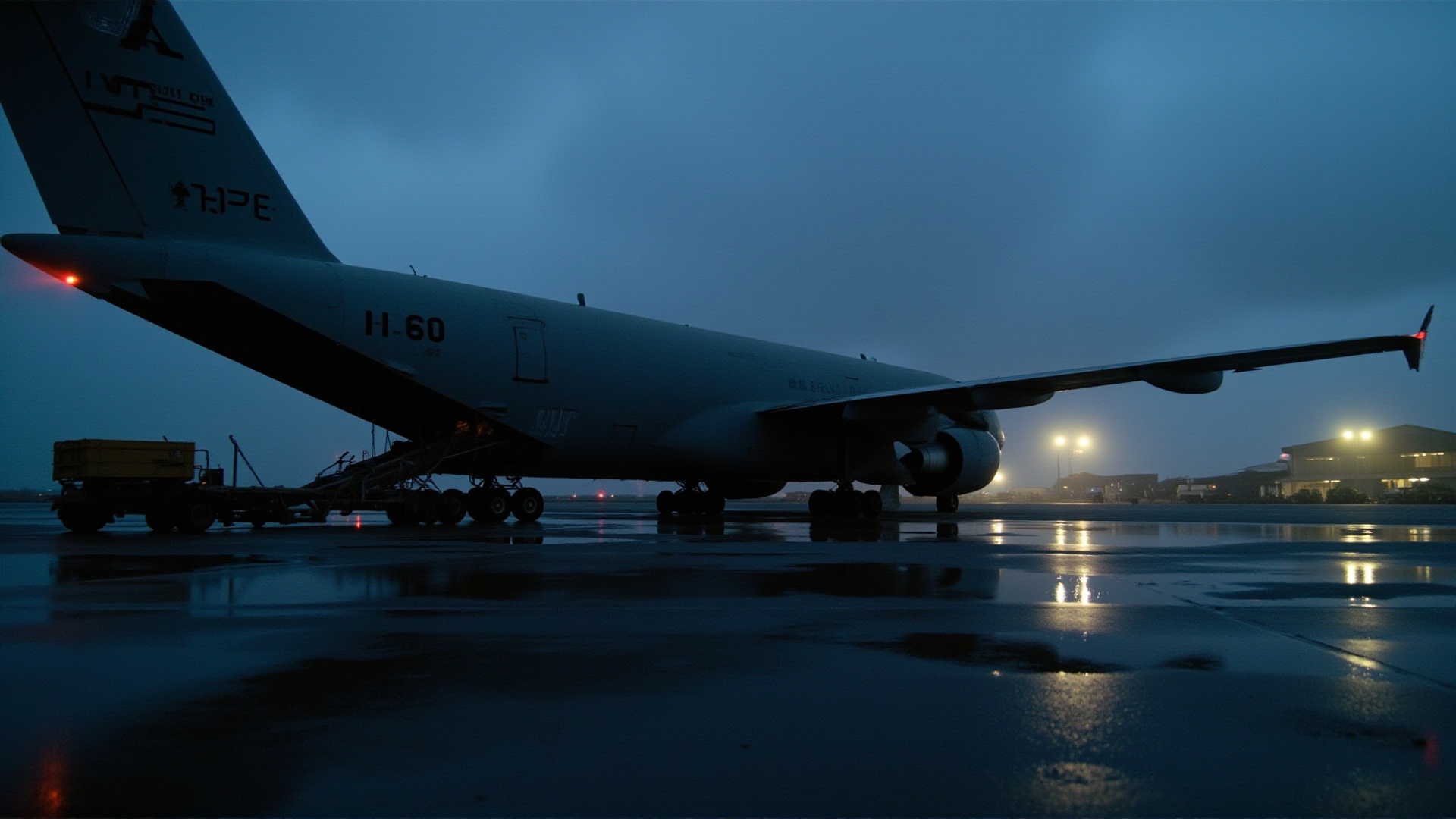
Three European intelligence services have independently concluded that Russia is delivering Shahed-series drone components and assembled airframes to Iran through a covert airlift that has intensified since mid-March, according to officials in Berlin, Paris, and London who spoke to Reuters on condition of anonymity. The deliveries are arriving via Russian Aerospace Forces An-124 Ruslan transport aircraft flying from Chkalovsk military airfield to Mehrabad Airport in Tehran, a route that satellite imagery shows has been active with two flights per day since March 15. [1]
This is the same Russia that declared itself "deeply outraged" when American strikes hit the Bushehr nuclear power plant on March 25 — a facility Rosatom built, staffed with Russian engineers, and was evacuating when the intelligence reports surfaced. This paper's March 26 account of the Bushehr strikes centered on Russia's outrage and Rosatom's evacuation. Today that outrage looks different. You cannot be outraged by a war you are supplying. [1] [2]
The OSINT community on X had been tracking the cargo flights for weeks. Accounts specializing in ADS-B flight data — COUPSURE, IntelScout, and several Arabic-language analysts — published flight paths, tail numbers, and estimated payload weights before any European government spoke publicly. The intelligence reports confirmed what the flight data already showed. The divergence between MSM and X is temporal: X had the information first, through open-source methods. The intelligence services had it through classified channels and took longer to release it. [3]
The Shahed-136 and its upgraded variants — the Shahed-238 jet-powered version and the Shahed-149 Gaza, a larger reconnaissance-strike platform — are the drones Iran has used to enforce the Hormuz blockade and to conduct surveillance operations over the Gulf. If Russia is supplying components, it is not merely supporting an ally. It is enabling the specific weapons systems that are sinking the shipping and closing the chokepoint. [1]
Moscow has denied the reports. Kremlin spokesman Dmitry Peskov called the allegations "an attempt to draw Russia into a conflict in which it plays an exclusively diplomatic role." Russia chairs the Astana process for Iran-US mediation. It has offered to host direct talks. It has presented itself as the responsible power in a conflict between irresponsible ones. The drone deliveries, if confirmed, would make that posture untenable. [1]
The duality is not new. Russia sold S-300 air defense systems to Iran in 2016 while simultaneously coordinating with the United States on Syrian deconfliction. It supplied Iran with satellite intelligence during the 2025 Gulf tensions while participating in UN Security Council deliberations on the same crisis. Russia's foreign policy has always operated on the principle that mediating a conflict and profiting from it are not contradictory activities. They are complementary ones.
-- KATYA VOLKOV, Moscow
Sources & X Posts
News Sources