TL;DR
First confirmed footage of cetacean midwifery — humpback whales assisting a birth — and the science community says it rewrites what we know about whale social bonds.
MSM Perspective
BBC ran the whale birth as a charming nature story in its 'And Finally' segment, burying the scientific significance under feel-good framing.
X Perspective
Marine biology X treated the footage as a milestone in cooperative behavior research, not the 'heartwarming animal video' MSM made it.
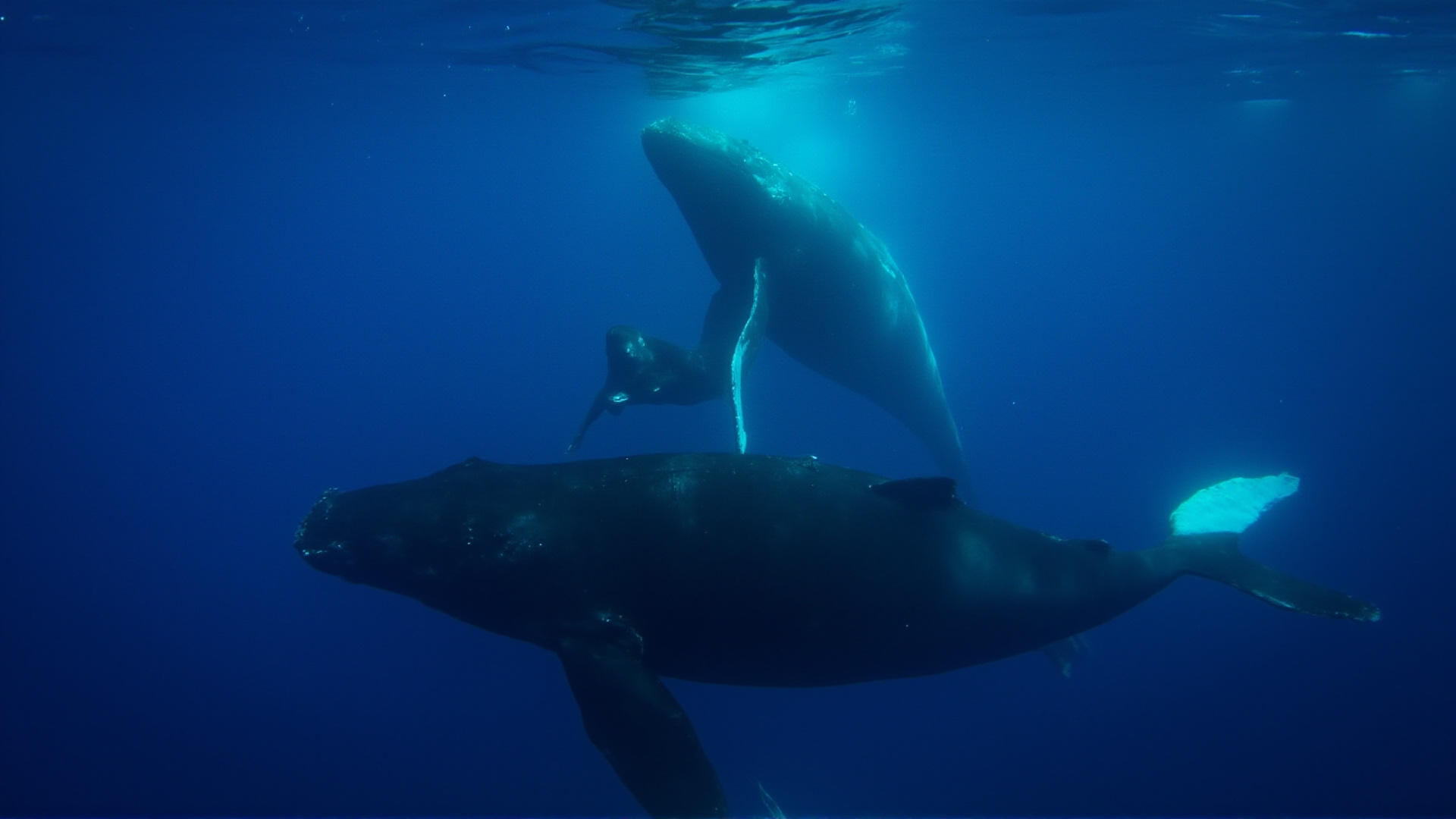
A research team from the University of Queensland published footage on Friday in the journal Current Biology showing three adult humpback whales assisting a fourth during the birth of a calf off the coast of Hervey Bay, Australia. The footage, captured by underwater drones in September 2025 and analyzed over six months, shows two non-maternal adults positioning themselves beneath the birthing mother, appearing to support her body as the calf emerged, while a third whale stationed itself between the group and a pod of bottlenose dolphins approximately 200 meters away. [1]
The behaviour is called alloparental care — assistance from non-parents during birth or infant rearing. It has been documented in elephants, bats, several primate species, and dolphins, but never before confirmed in great whales. Humpbacks were known to exhibit cooperative feeding (bubble-net hunting) and protective behaviour (shielding calves from orcas), but birth assistance was theoretical. The Queensland footage makes it empirical. [1] [2]
The BBC covered the story in its "And Finally" segment — the light closer that follows the hard news. The framing was charming: "Whale midwives! Nature's most adorable birth plan." The marine biology community on X responded with the specific frustration of scientists watching their work reduced to content. Dr. Rebecca Dunlop, the study's lead author, posted: "Six months of analysis, novel documentation of alloparental care in Megaptera, and it's filed under 'cute whale video.'" [2]
The scientific significance is not about cuteness. Cooperative birth assistance implies social cognition — the helpers must recognize the birthing event, understand what the mother needs, and coordinate their positioning without vocal communication (humpback song is believed to serve mating and navigational functions, not coordination). The third whale's sentinel behaviour — stationing itself between the birth group and potential threats — suggests role differentiation, meaning the whales were not merely present but performing distinct functions. [1]
The study does not claim humpbacks are midwives in any anthropomorphic sense. It claims that the behaviour observed meets the technical definition of alloparental care and that its documentation in a great whale species opens questions about the cognitive demands of cooperative reproduction in marine mammals. The distinction between what the data shows and what the headline says is the gap between science and content. The gap matters because how we describe animal intelligence shapes how we fund its study.
-- KENJI NAKAMURA, Tokyo
Sources & X Posts
News Sources