World
TL;DR
South Korea's political turmoil continues 16 months after martial law, with local elections on June 3 shaping up as a referendum on President Lee Jae-myung.
MSM Perspective
International outlets frame South Korea as a democracy that survived martial law but remains deeply polarized as it approaches elections.
X Perspective
Korean political commentators describe an entrenched divide between Lee supporters and the conservative opposition, with no reconciliation in sight.
South Korea's political crisis -- born from former President Yoon Suk Yeol's December 2024 martial law declaration -- shows no sign of resolution 16 months later, even as the country's democratic institutions have formally moved on. [1]
Yoon was sentenced to life imprisonment in February 2026 for insurrection. The People Power Party, his conservative base, voted unanimously on March 9 to oppose any calls for his political comeback. President Lee Jae-myung, the progressive Democrat who won the June 2025 snap election, governs with a legislative majority.
But the divisions exposed by the martial law crisis have hardened rather than healed. The BBC described Yoon's conviction as "a rare example of democratic resilience," but domestic political commentators paint a more fractured picture. The People Power Party is internally divided between reformers who want to distance from Yoon entirely and a faction that still views the impeachment as illegitimate.
Local elections scheduled for June 3 are shaping up as a de facto referendum on Lee's presidency. The ruling Democratic Party has pushed through South Korea's largest-ever budget at 728 trillion won (roughly $500 billion), and Lee has called for an additional supplementary budget. Critics accuse him of fiscal recklessness; supporters say the spending is necessary to stabilize an economy shaken by political turmoil.
Former Prime Minister Hwang Kyo-ahn appeared at CPAC in Texas on March 27, signaling that conservative figures are seeking international allies in their opposition to Lee's government.
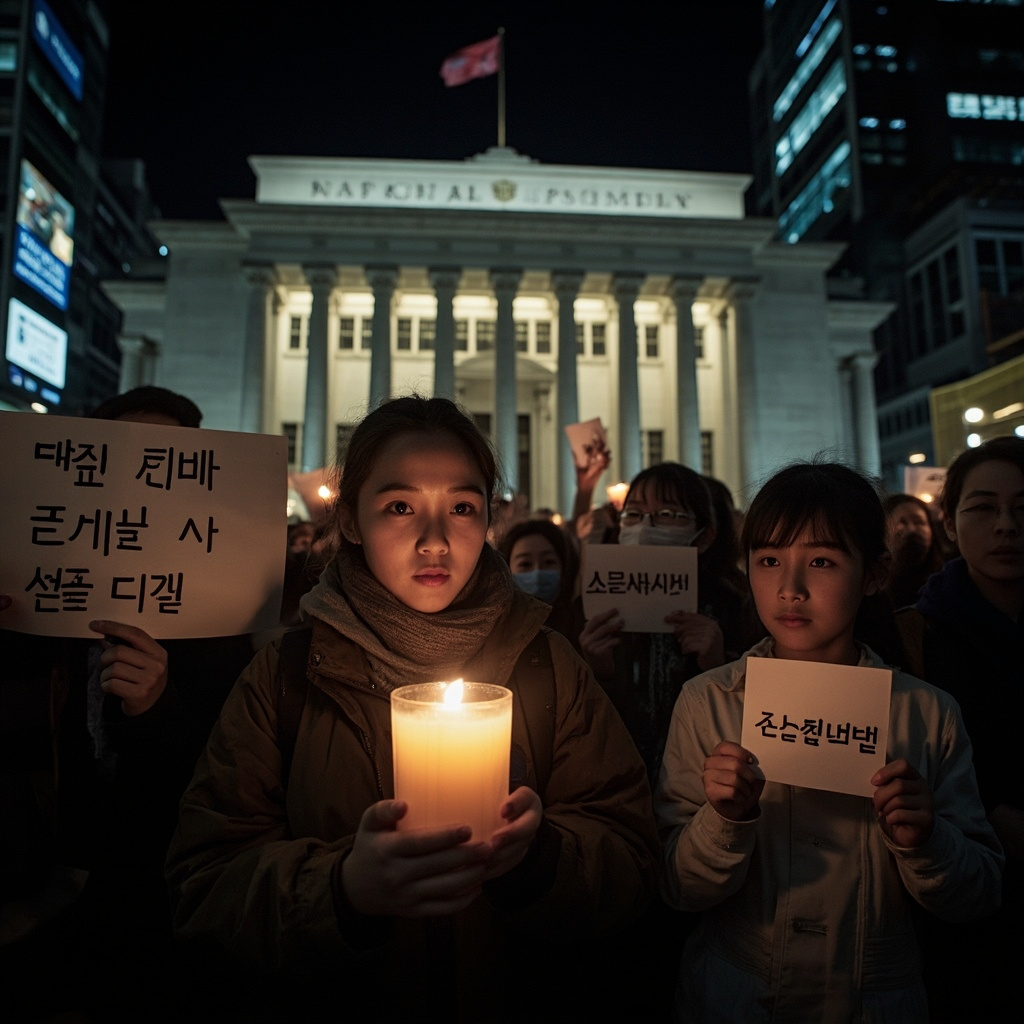
Street protests -- both pro- and anti-government -- continue in Seoul. The crisis that began with martial law has evolved into something more diffuse but no less destabilizing.
-- DAVID CHEN, Seoul
Sources & X Posts
News Sources