TL;DR
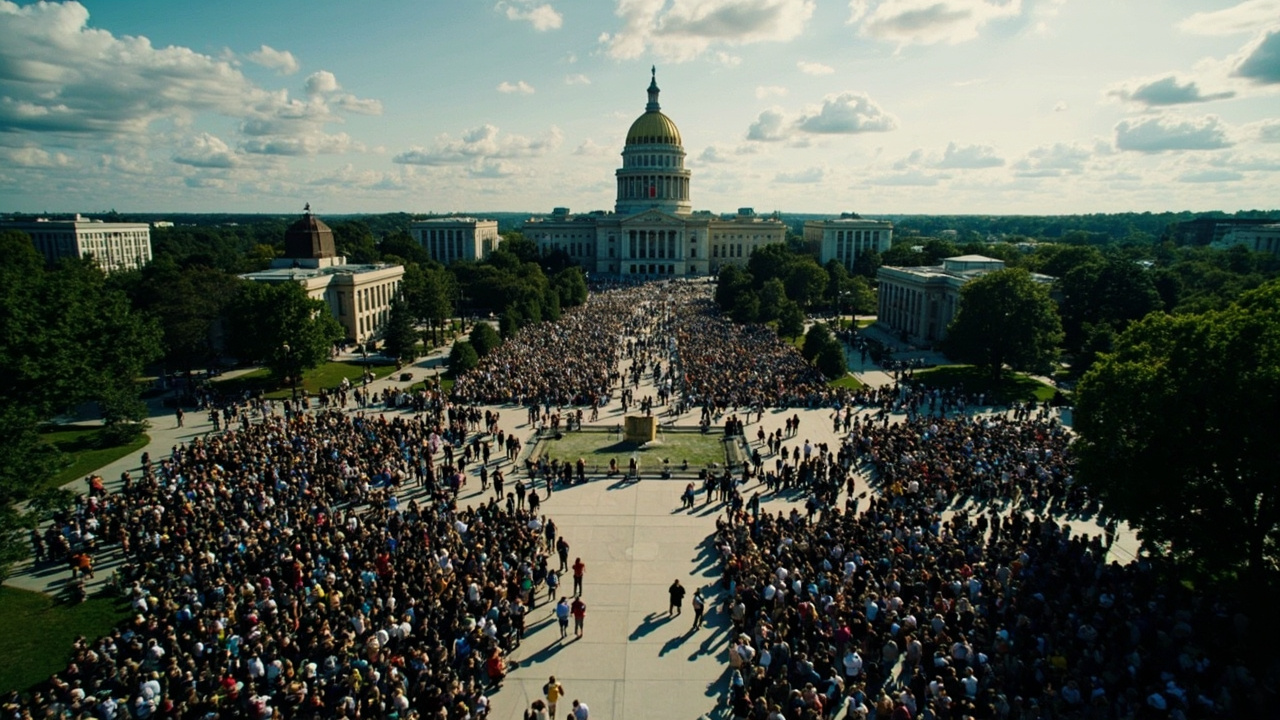
Minnesota's capitol expected 50,000, projected 100,000 — and Bruce Springsteen confirmed the No Kings moment has crossed into generational.
MSM Perspective
FOX 9 Minneapolis-St. Paul: 'massive rally planned.' Bruce Springsteen performing. Joan Baez speaking.
X Perspective
X is tracking the ratio of Minnesota organizers' projections to actual turnout — and the Springsteen effect.
The original projection was 50,000. By Thursday, the number had doubled. By Friday morning, organizers at the Minnesota State Capitol were planning for 100,000.
St. Paul was not supposed to be the center of the world. The city occupies a specific place in the American political imagination — high-tax, high-services, reliably progressive on cultural questions and pragmatic on economic ones. It has a Republican legislature that has spent two years battling the Democratic governor. It has the kind of political infrastructure that produces good policy at a state level and occasional national embarrassment at a presidential level. Minnesota has not voted for a Republican for president since 1972.
None of that explains why 100,000 people are expected to fill the Capitol grounds on Saturday.
The answer has two names. Bruce Springsteen. And the war.
The singer confirmed his appearance on Wednesday, which produced a surge in RSVPs that overwhelmed three separate event registration platforms. His presence transforms a political rally into a cultural event — it signals that the anti-war position has crossed the threshold from partisan to generational. Joan Baez has been there since the beginning of this movement. Jane Fonda arrived Thursday. The celebrity alignment is not incidental to the moment; it is the moment's own self-understanding. These are people who believe they are on the right side of history, and they are willing to say so publicly.
The war is the actual explanation. Minnesota has a large Somali community with family connections to the Horn of Africa. It has a significant Iranian-American population in the Twin Cities. It has universities that have spent two weeks debating whether their endowments are invested in companies that benefit from the Hormuz disruption. The war has made the abstract personal in ways that DOGE cuts alone could not.
The police response is the question X is already asking. Minnesota has a history of contested interactions between law enforcement and protest crowds — the 2020 George Floyd protests produced images that the state has not recovered from politically. The Capitol security posture this week has been described by organizers as "cooperative but visible." No major confrontations are anticipated. The concern is not that the police will suppress the rally. The concern is what happens at the edges — the intersections of a 100,000-person crowd and a city infrastructure designed for 20,000.
The local media in Minnesota has covered this story as a Minnesota story. FOX 9 has provided consistent coverage. The Star Tribune has published three major pieces this week. But the national media has arrived in force — CNN, MSNBC, and a cluster of international outlets that do not usually pay attention to the upper Midwest. They are here because the rally is here. They are here because 100,000 people are expected to do something that will either vindicate the movement's scale claims or produce a number that falls short.
The delta from March 27 is the projection revision. The rally was supposed to be large. It is now supposed to be historic. The difference matters for the movement's narrative, for the White House's response, and for the question that every organizer in every city is asking: does this translate into sustained political engagement, or does it exhaust itself in a single day?
St. Paul will have an answer by Sunday morning. [1] [2] [3] [4] [5].
Sources & X Posts
News Sources
X Posts